

- Allison Truong, MD, FAAD
- Comorbidities, Expert Insights, Patient Care Resources

Psoriasis as a Systemic Inflammatory Disease
Psoriasis is a systemic inflammatory disease comprising three major domains of inflammation: the skin, the bones and joints, and the vasculature. These inflammatory processes are a part of psoriasis, with an evolving terminology, “psoriatic disease,” which comprises the full spectrum of this systemic disease, including comorbid conditions.1
A common comorbidity of psoriasis is atherosclerosis, particularly in forming non-calcified plaques in the arteries. Long-standing research in this area has shown that this specific plaque formation is associated with higher morbidity and mortality in psoriasis patients, including increased risks of coronary artery disease (CAD), myocardial infarction (MI), and stroke.2 Psoriasis is now acknowledged to have a similar inflammatory molecular signature to cardiovascular conditions,3 making early recognition in psoriasis patients crucial to prevent these additional complications of this chronic disease. In some studies, treating systemic inflammation has been shown to be beneficial for psoriasis patients’ cardiovascular health; however, more research is needed to determine which patients benefit the most from early detection and treatment.
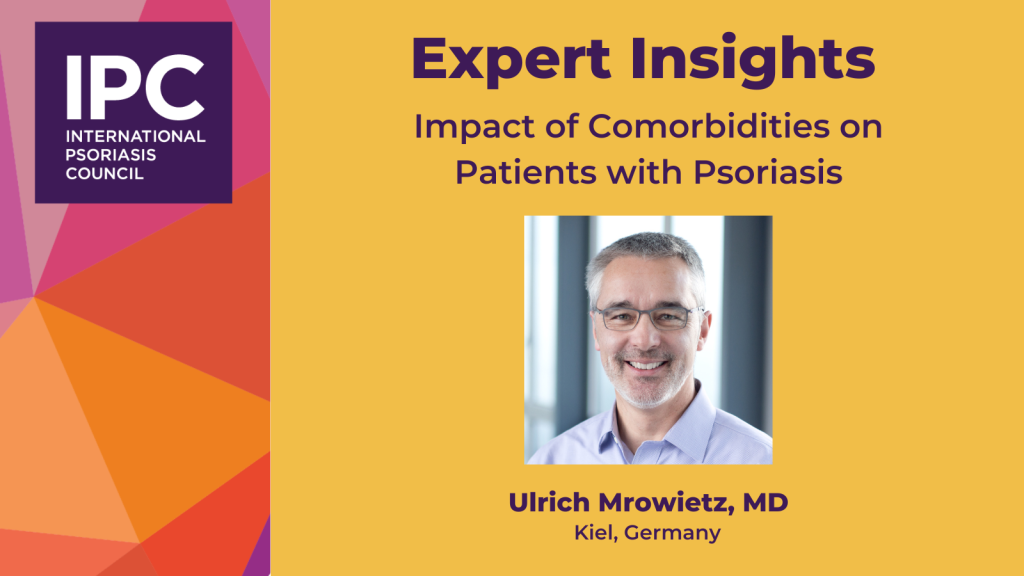
Recently, neuroinflammation was also discovered as another important aspect of psoriasis. Dr. Mrowietz discussed that the mechanism of neuroinflammation in psoriasis may be due to inflammatory cytokines in the microvasculature traversing the blood-brain barrier. Patients with psoriasis are known to experience depression, anxiety, and suicidality more often, which may be linked to neuroinflammation.1 Addressing systemic inflammation in these cases may help patients improve their skin and mental health.
Utilization of a Multidisciplinary Approach to Treating Psoriasis and its Comorbidities
To care for psoriasis patients comprehensively, providers must remain vigilant to the possibility and presence of comorbidities in this patient population and ensure that these comorbidities are treated appropriately via a multidisciplinary approach. Dr. Mrowietz’s thorough approach to caring for psoriasis patients entails carefully reviewing their medical records and paying extra attention to their medication lists. This helps him stay aware of any new conditions since their last visit and safeguards against prescribing medications that could result in drug-drug interactions. Additionally, when appropriate, he ensures that patients receive regular check-ups with their primary care physicians and other medical subspecialists to monitor for and treat existing comorbidities. Finally, he employs a personalized approach emphasizing shared decision-making between the patient and provider, aiming to improve treatment adherence and overall patient health outcomes.
For example, obesity is a prevalent risk factor for the development of type 2 diabetes and coronary artery disease, which are often seen in patients with psoriasis. In Dr. Mrowietz’s practice, patients who are overweight often struggle with medical adherence, which is why he prefers to use biologic injectables with longer intervals for this group of psoriasis patients to ensure better compliance. Dr. Mrowietz emphasizes that the treatment paradigm may soon change for psoriasis patients as research is underway to investigate the use of anti-obesity, anti-diabetic medications (e.g., GLP-1 agonists) for treating psoriasis, specifically. These agents, when used for psoriasis patients who are both obese and diabetic, may provide dual benefits in addressing both weight and systemic inflammation. In the future, he hopes that innovative research will guide improved management of obesity, diabetes, and psoriasis together via a combination treatment approach such as a GLP-1 agonist alongside a biologic injectable simultaneously.
Future Directions for Research on Psoriasis Comorbidities
There is still a critical need for real-world studies and long-term research to better understand the impact of comorbidities in both mild and severe psoriasis patients. Dr. Mrowietz hopes that future clinical trials for new psoriasis medications will include comprehensive data on comorbidities, such as anxiety, depression, diabetes, hypertension, vascular inflammation, and more. Additionally, long-term studies on cardiovascular outcomes such as CAD, MI, and stroke are also necessary to fully understand the impact of psoriasis on overall long-term health. As of now, Dr. Mrowietz reminds healthcare providers to consider comorbidities in every psoriasis patient and provide personalized care, focusing on both the skin and the rest of the body.
References
- Mrowietz U, Sümbül M, Gerdes S. Depression, a major comorbidity of psoriatic disease, is caused by metabolic inflammation. J Eur Acad Dermatol Venereol. 2023;37(9):1731-1738. doi:10.1111/jdv.19192
- Mehta NN, Azfar RS, Shin DB, Neimann AL, Troxel AB, Gelfand JM. Patients with severe psoriasis are at increased risk of cardiovascular mortality: cohort study using the General Practice Research Database. Eur Heart J. 2010;31(8):1000-1006. doi:10.1093/eurheartj/ehp567
- Patrick MT, Li Q, Wasikowski R, et al. Shared genetic risk factors and causal association between psoriasis and coronary artery disease. Nat Commun. 2022;13(1):6565. Published 2022 Nov 2. doi:10.1038/s41467-022-34323-4






Comments are closed.