International Psoriasis Council

Advancing Knowledge. Improving Care.

Visual Differences in Psoriasis on Diverse Skin Types

A CLINICAL EDUCATION TOOL

Purpose
Accurately diagnosing and assessing psoriasis in people with darker skin can be challenging, as many dermatology references often fail to capture the full range of presentations in diverse skin types. This educational tool aims to address these gaps, providing healthcare professionals, students, and researchers with a comprehensive visual reference to enhance diagnostic accuracy and promote equitable care for patients with diverse skin types.

Background
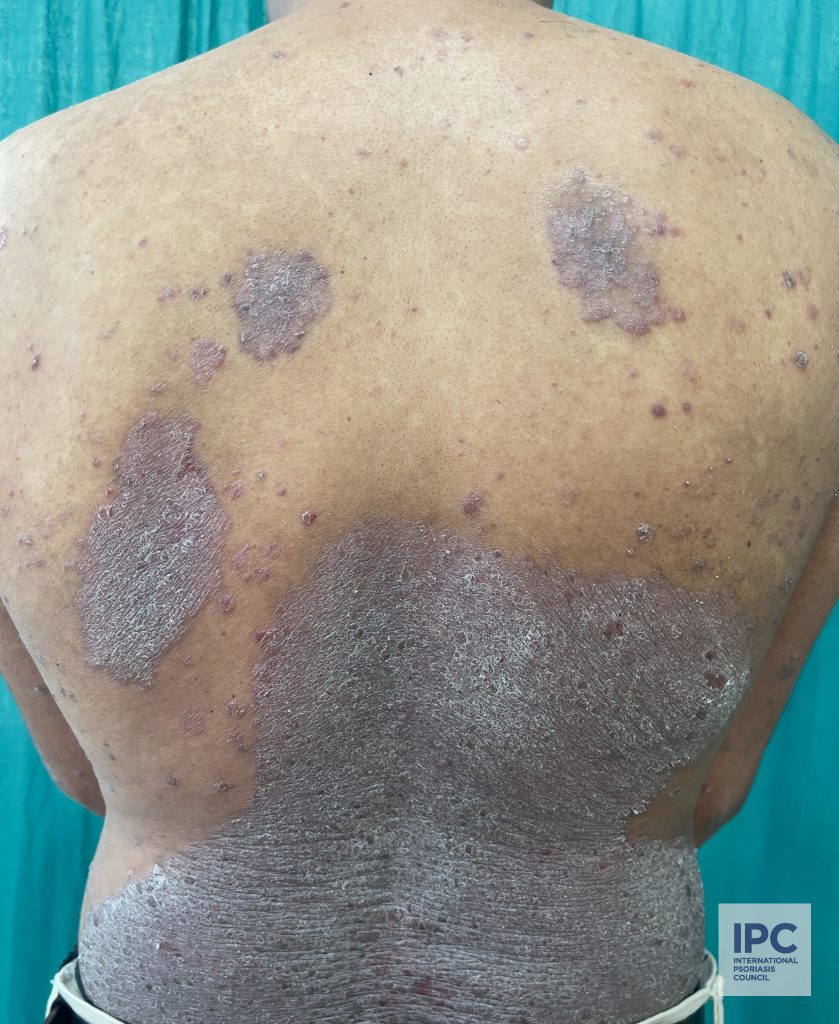
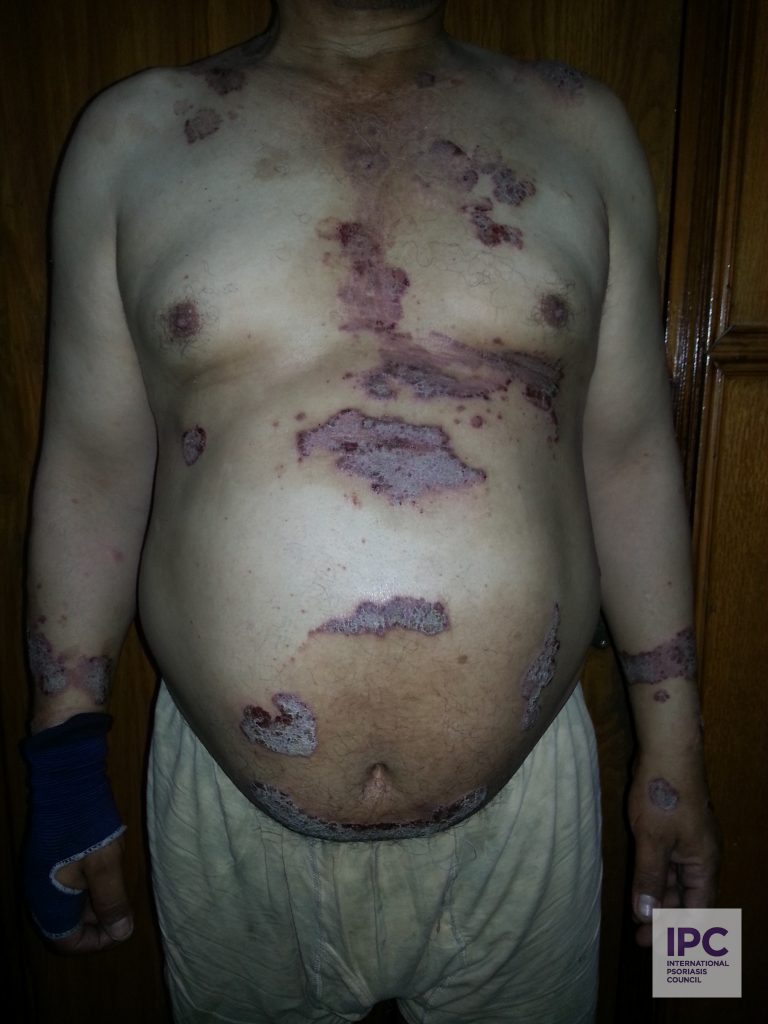
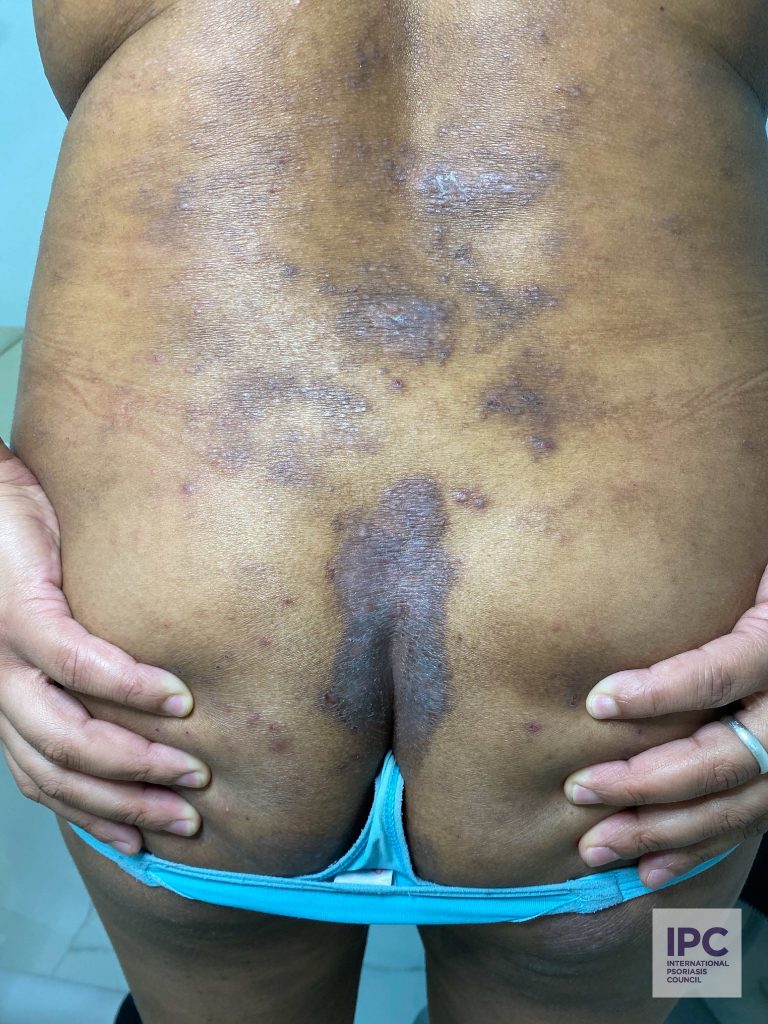
The International Psoriasis Council (IPC) conducted a global survey among dermatologists treating patients with diverse skin types to develop this tool. The questionnaire revealed key differences in psoriasis characteristics across sub-populations—plaque color, scaling, and morphology—commonly underrepresented in dermatology resources. For instance, erythema in darker skin may appear more purple than pink, and post-psoriasis pigmentation changes are more prevalent. These findings, combined with expert feedback, shaped the key characteristics included in this tool.

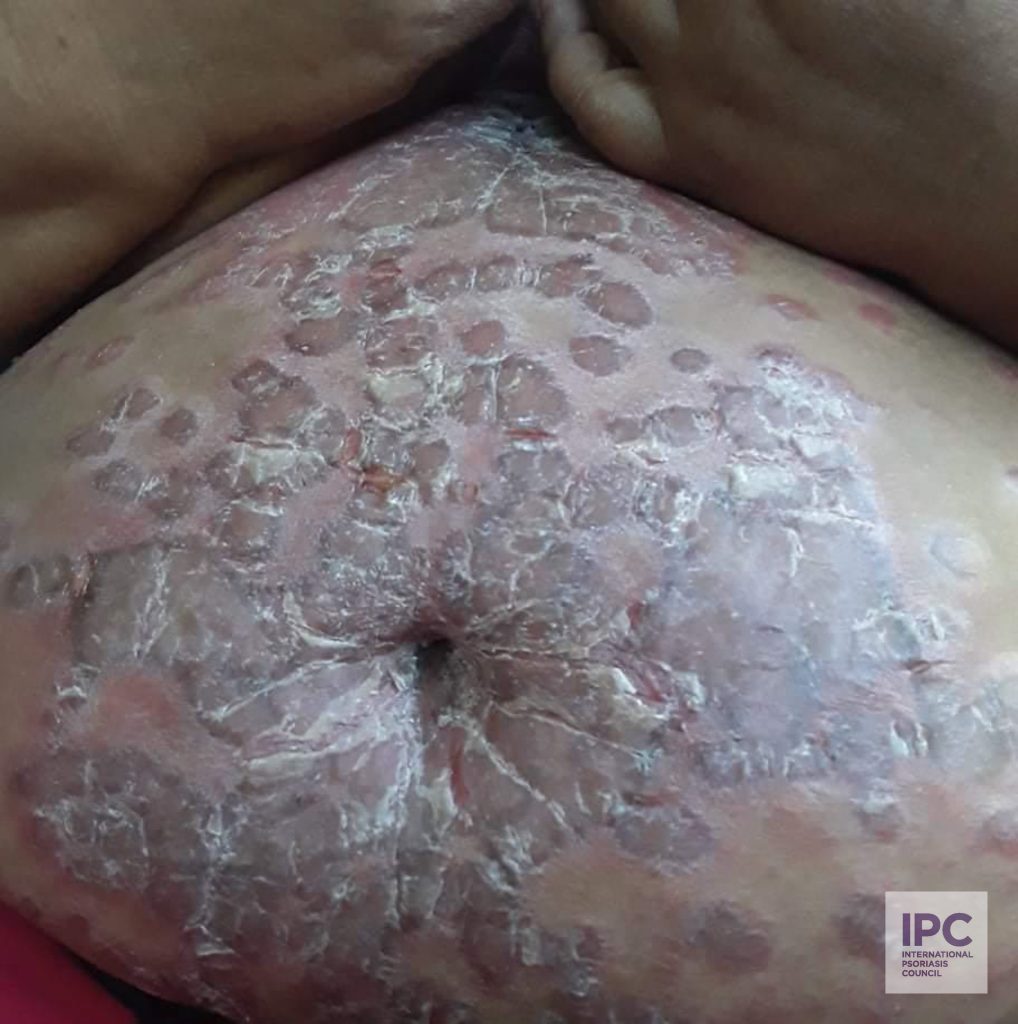
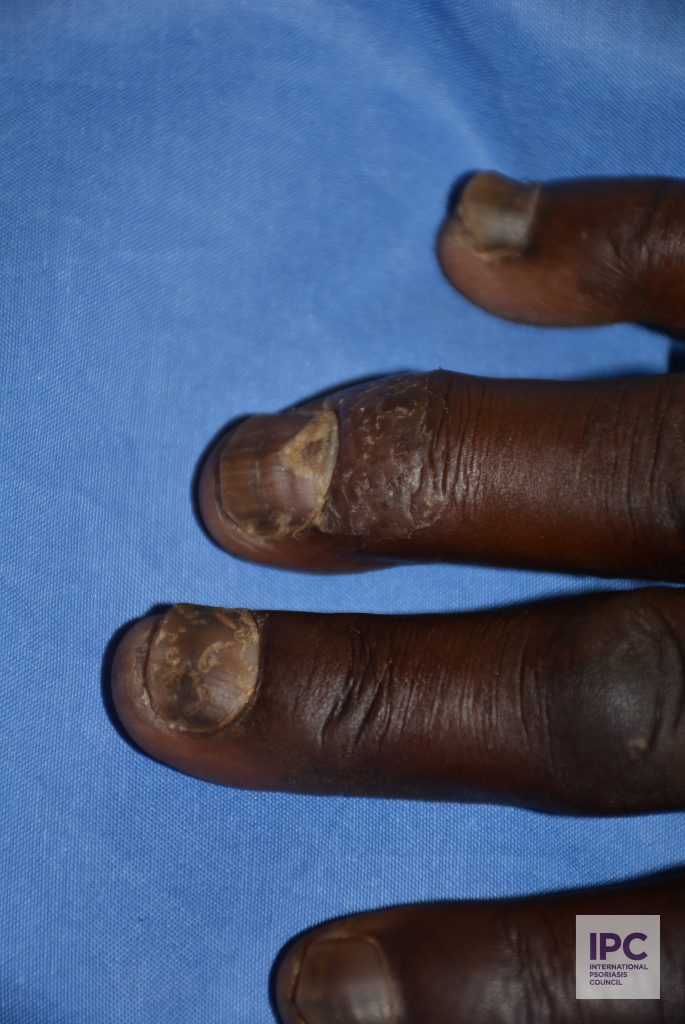
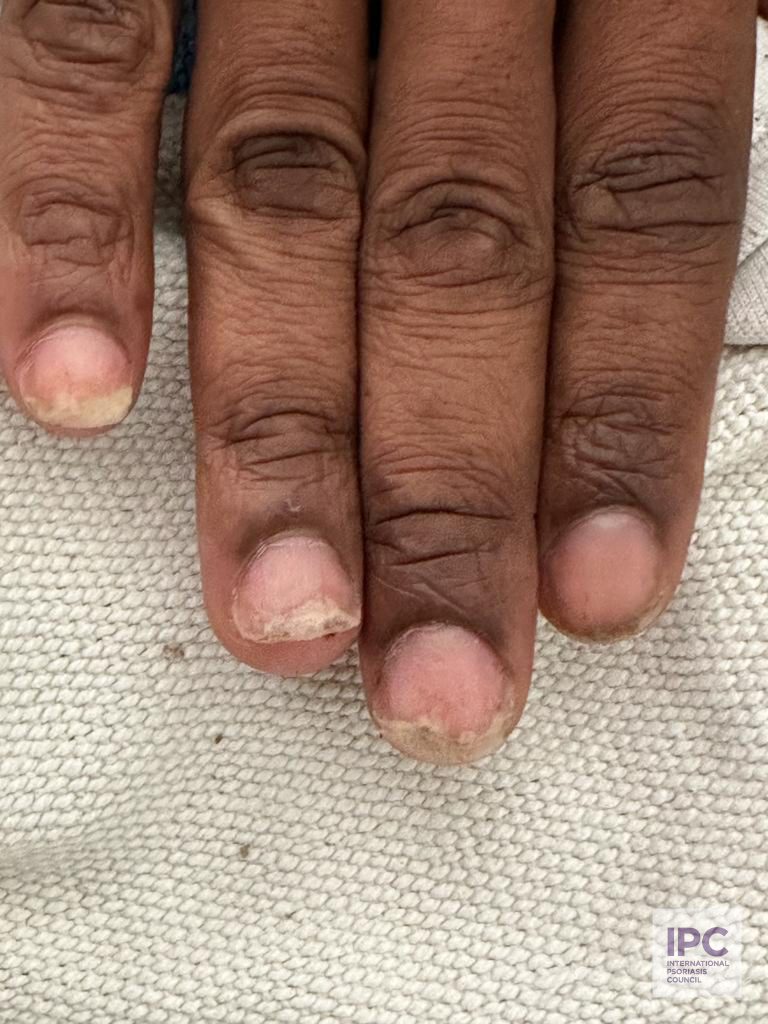
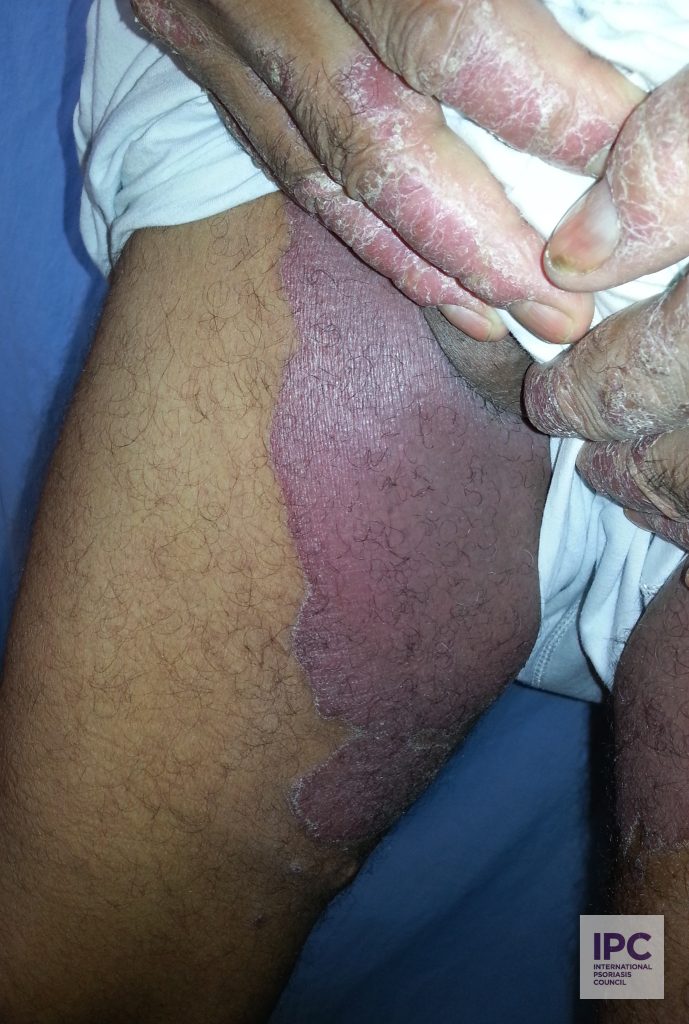
The images included in this tool highlight these differences and emphasize high-impact areas, such as the scalp, genitals, nails, palms, and soles, where psoriasis may present uniquely in individuals with darker skin. Additionally, presentation of psoriasis phenotypes can vary across different skin types, influencing diagnosis. Recognizing the potential for delayed or misdiagnoses due to barriers in care, the gallery includes images of neglected or undertreated psoriasis cases, offering clinicians a clearer view of what may be overlooked in clinical practice.

To provide accurate global representation, we have collected images from all regions – including Africa, Asia, Latin America, Europe, and North America – ensuring a range of diverse skin types, psoriasis types, and clinical settings. This variety enriches the tool, making it an essential resource for improving diagnostic accuracy and care equity worldwide for patients with diverse skin types.

Acknowledgment
We would like to extend our gratitude to the members of IPC’s global network who have generously contributed their photographs and expertise. Their invaluable support is helping to improve psoriasis care for patients with diverse skin types and in all regions.

Explore the Images
Use the buttons below to explore the images organized by the characteristics identified in our questionnaire, which reflect the unique presentations of psoriasis in diverse skin types.


Plaque Color

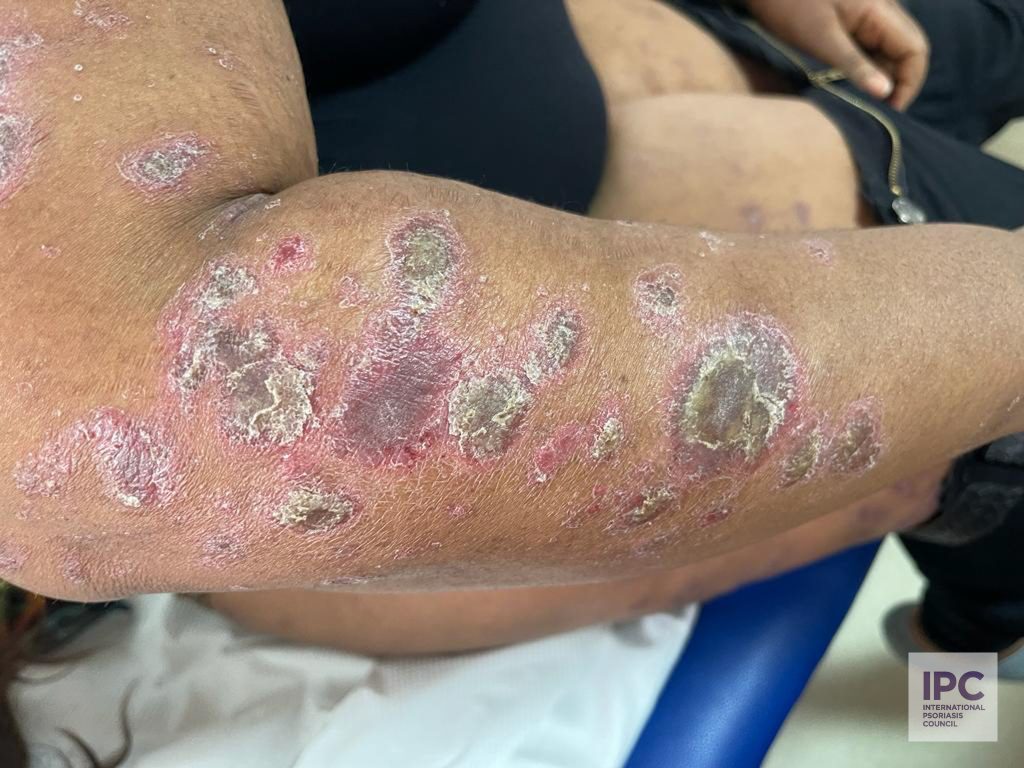
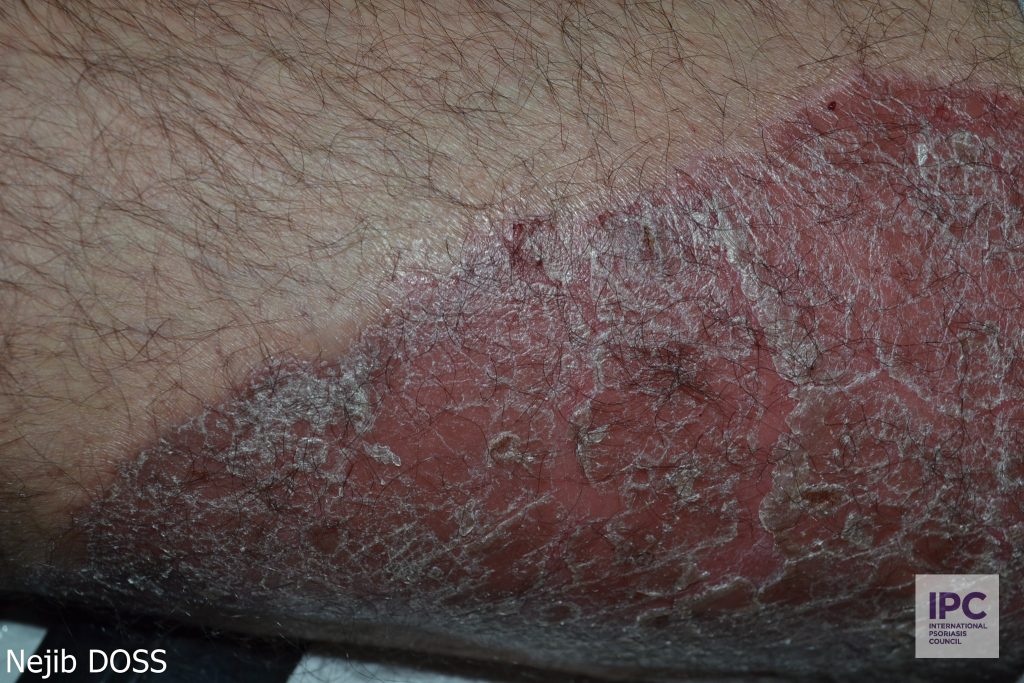
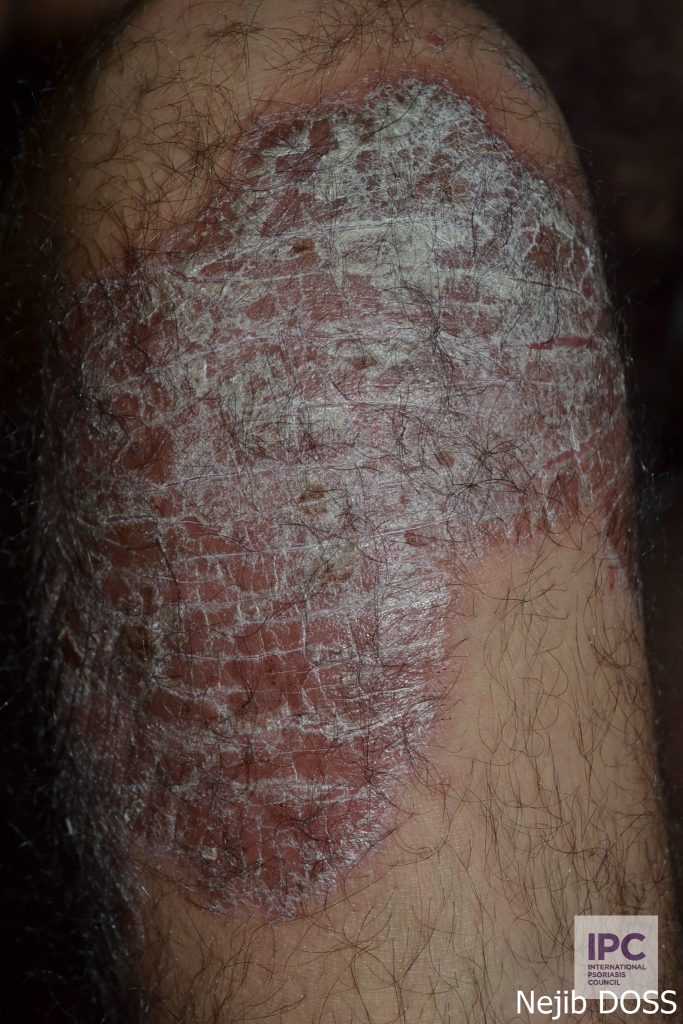
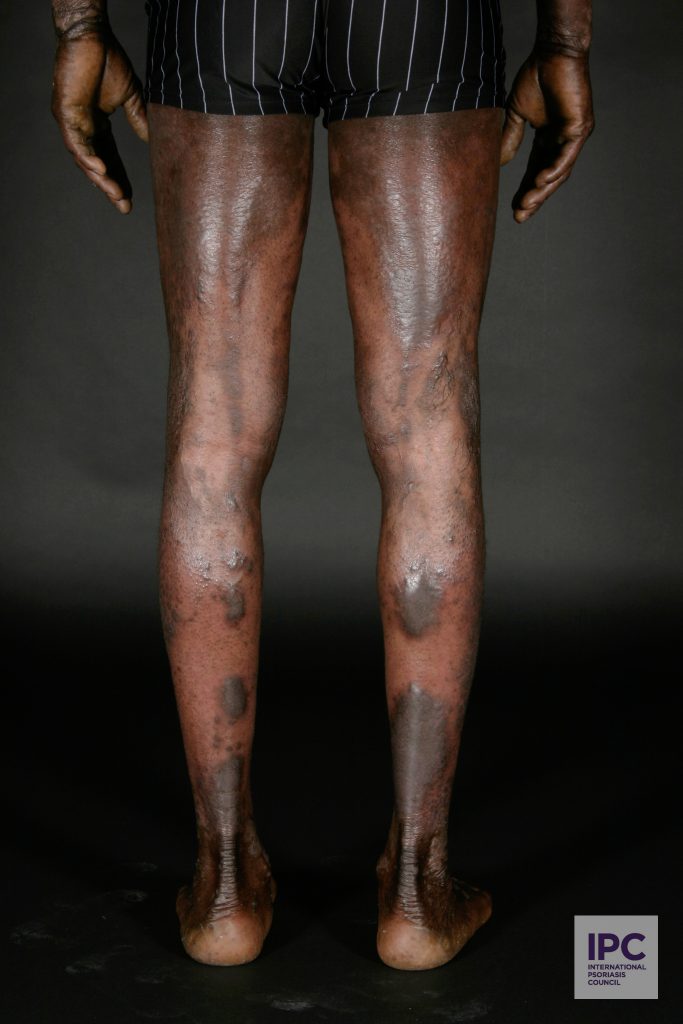
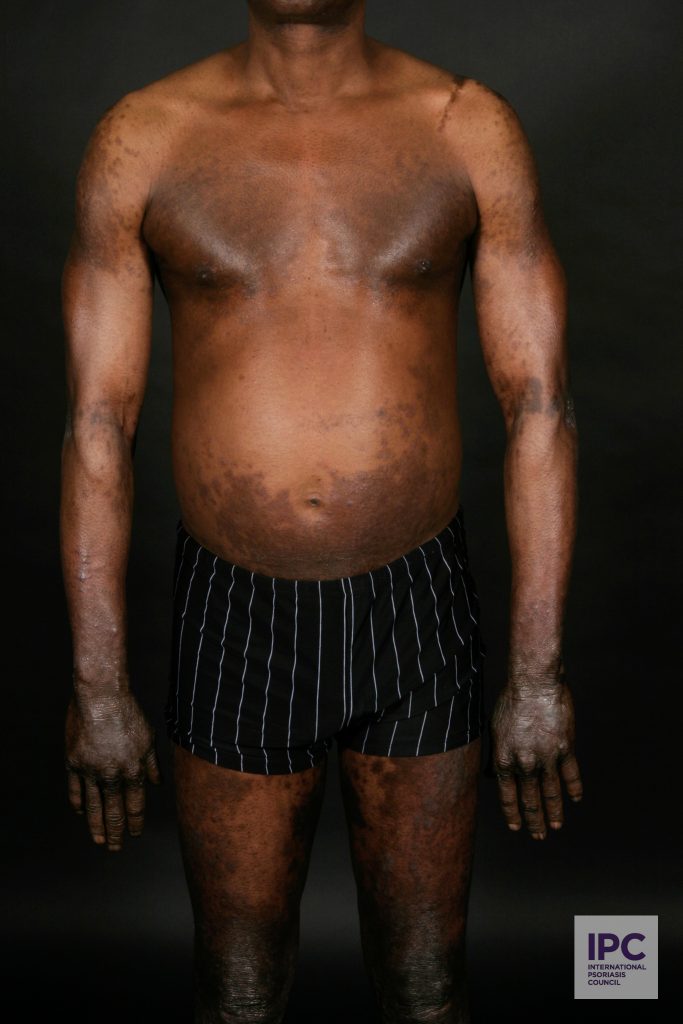
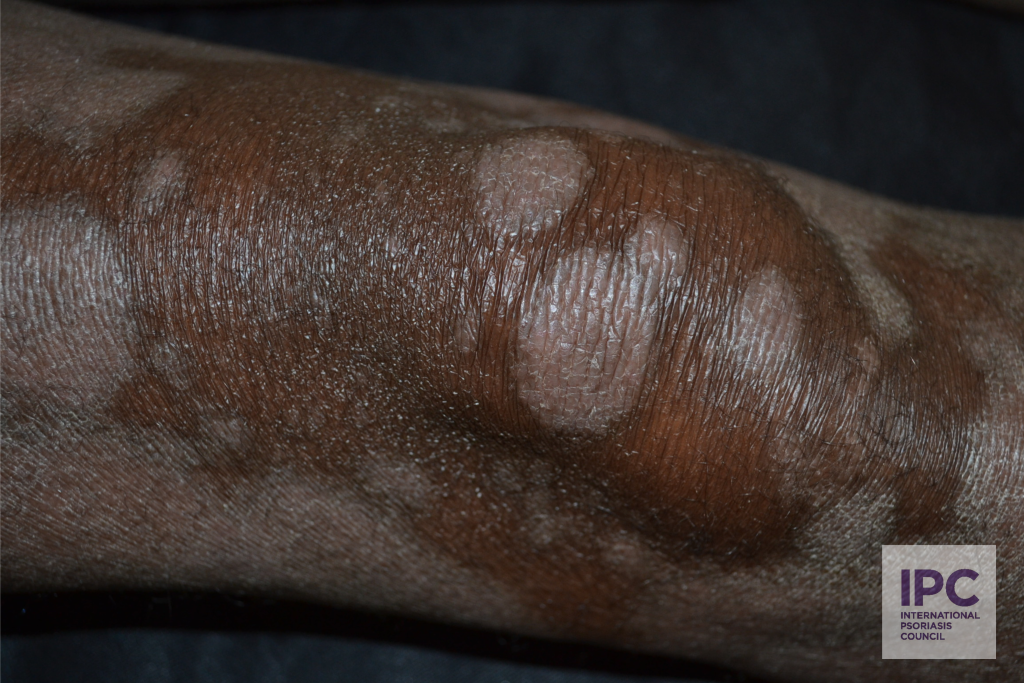
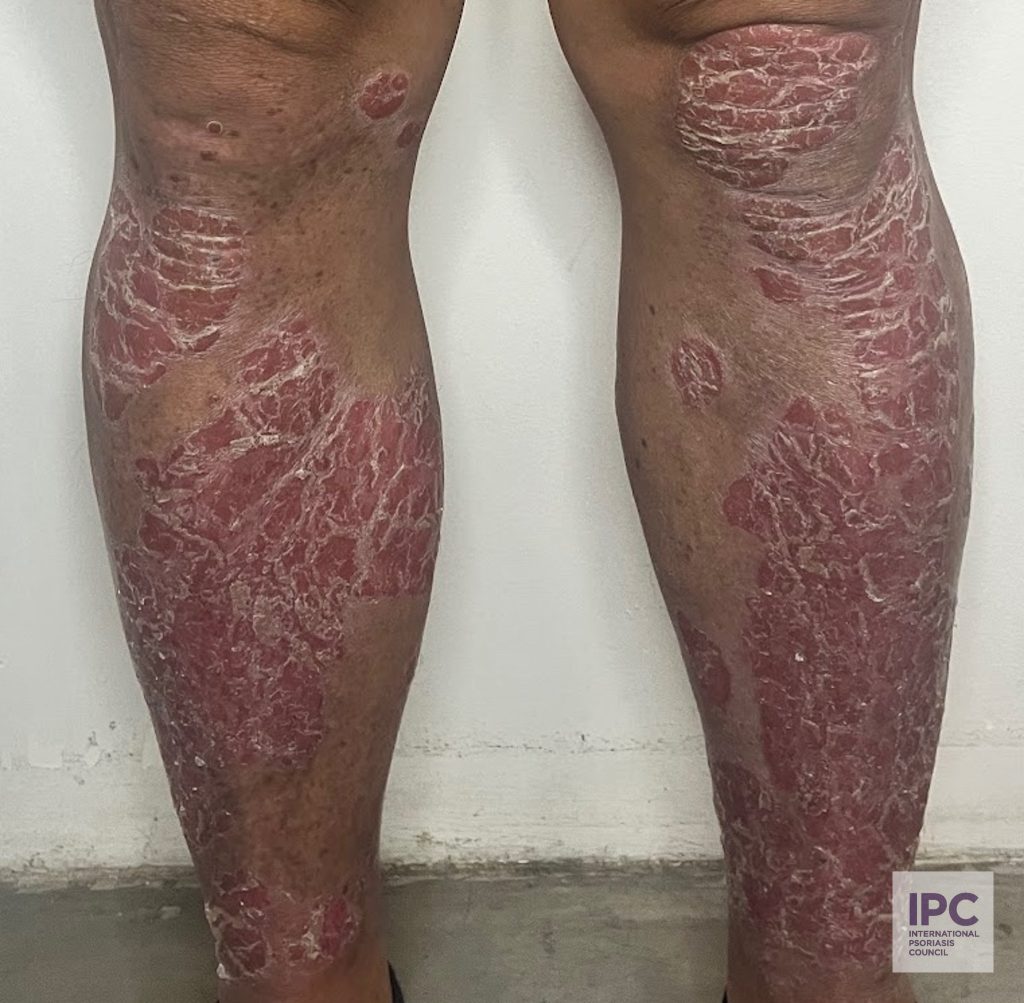
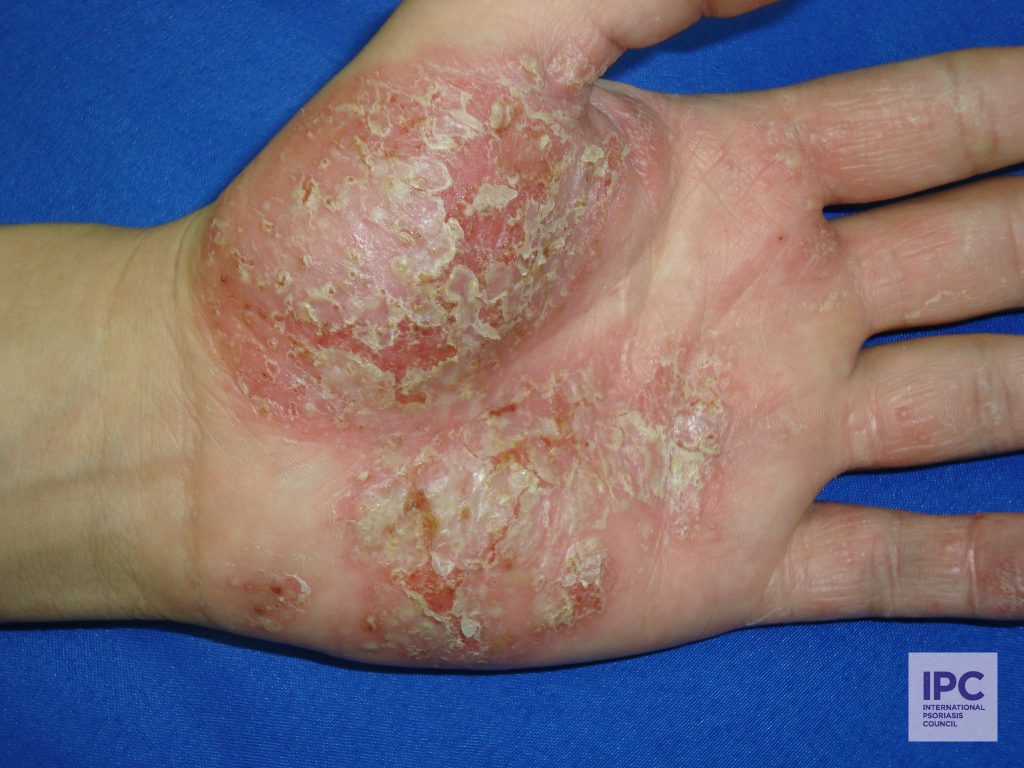
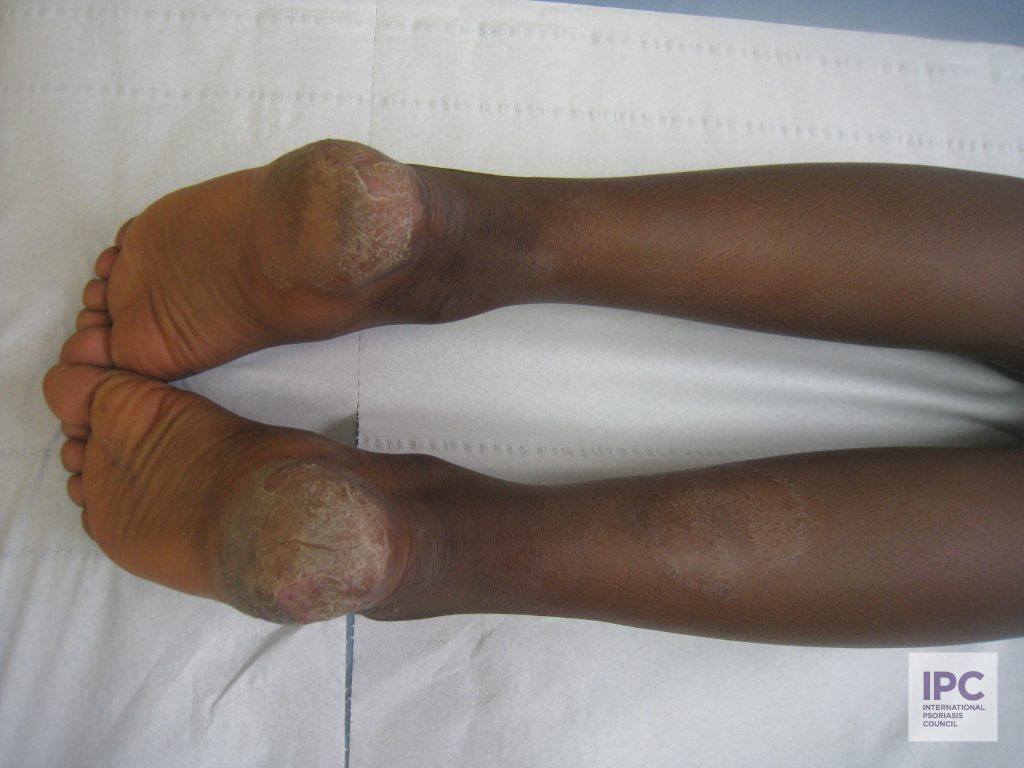
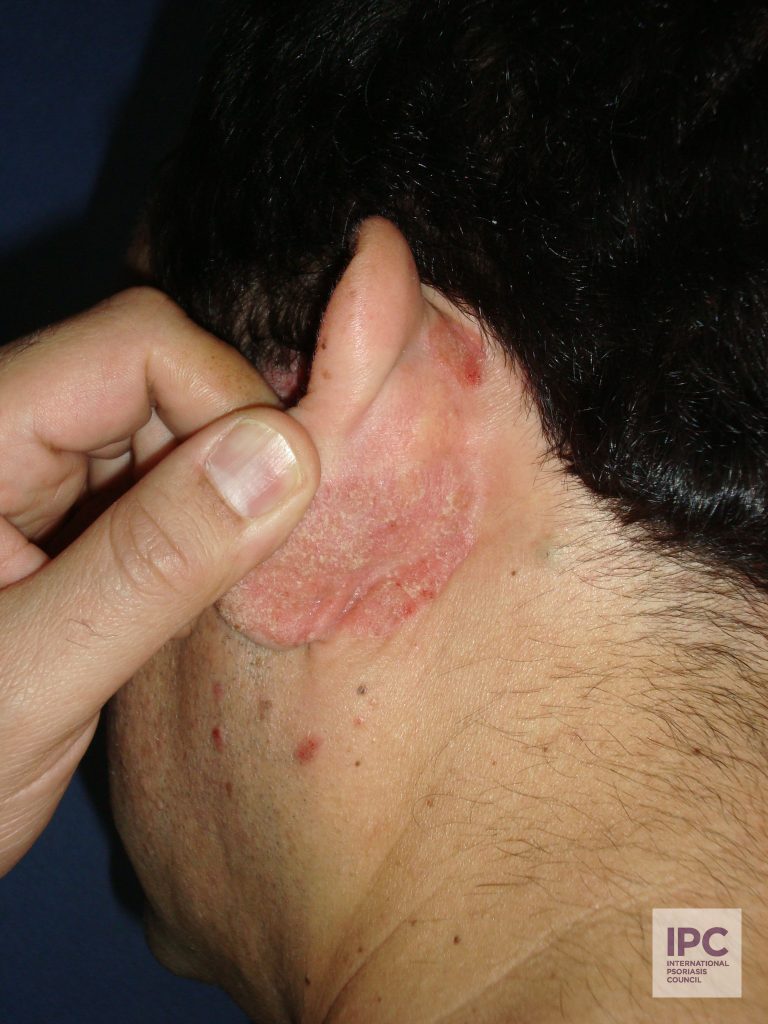
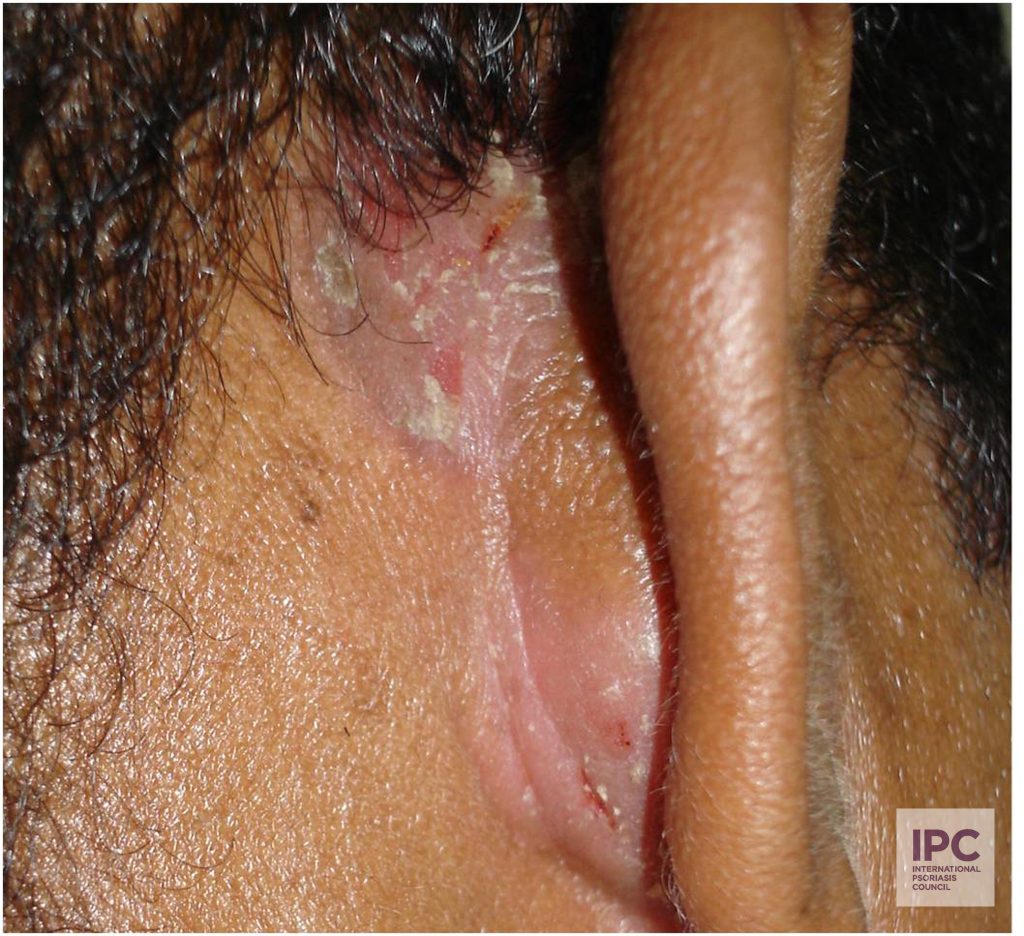
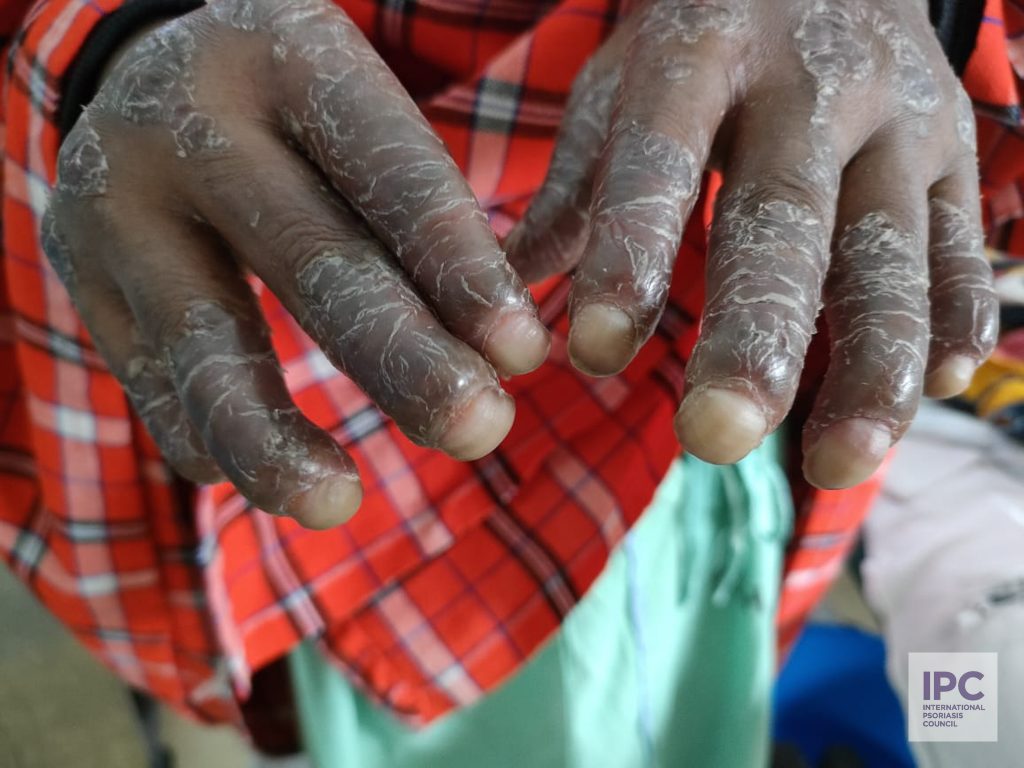
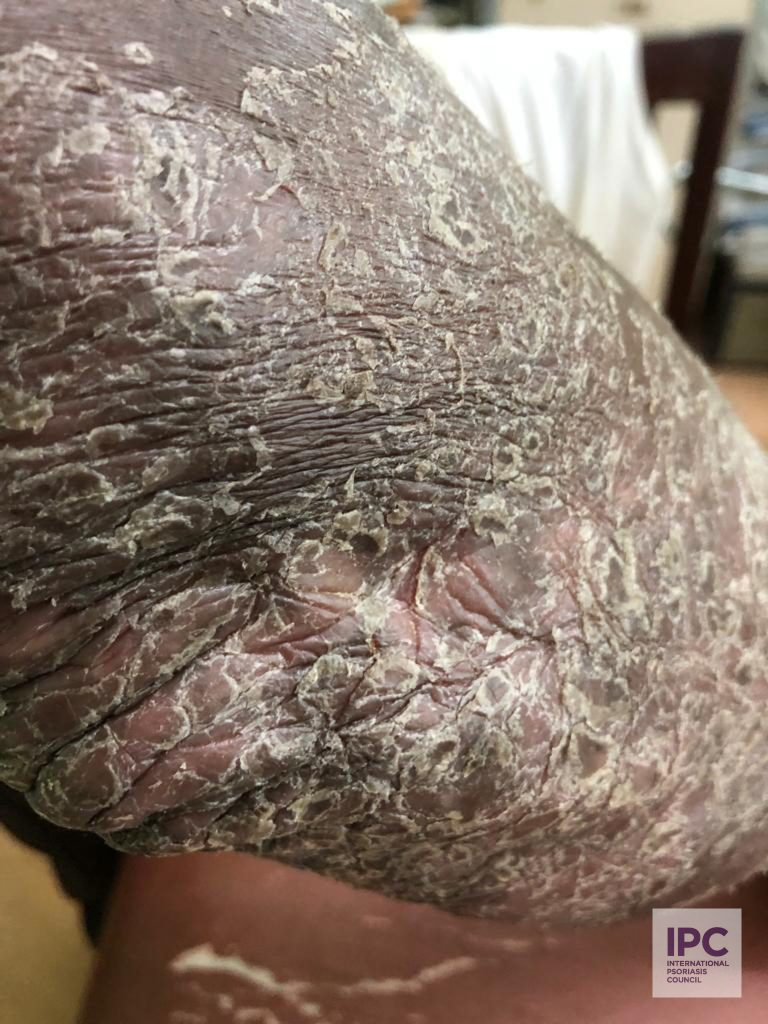
Psoriasis plaques can vary widely in color depending on the patient’s skin type and the severity of the condition. While many dermatology resources often describe plaques as silvery white or pink on lighter skin tones, in patients with darker skin, the presentation can appear different. Plaques may appear more gray, purple, or hyper- or hypopigmented. Notably, pink plaques on darker skin may be more muted or less vibrant pink, distinct from how pink plaques typically appear in lighter skin. This subtlety is often underrepresented in traditional teaching tools.

Country: United States
Phenotype: Palmoplantar psoriasis
Contributed by: Mark Lebwohl, MD
Country: Mauritania
Phenotype: Palmoplantar psoriasis
Contributed by: Nejib Doss, MD
Country: Tunisia
Phenotype: Plaque psoriasis
Contributed by: Nejib Doss, MD
Country: Tunisia
Phenotype: Plaque psoriasis
Contributed by: Nejib Doss, MD
Country: Mauritania
Phenotype: Plaque psoriasis
Contributed by: Nejib Doss, MD
Country: Tunisia
Phenotype: Plaque psoriasis
Contributed by: Nejib Doss, MD
Country: Mauritania
Phenotype: Plaque psoriasis
Contributed by: Nejib Doss, MD
Country: Tunisia
Phenotype: Nail psoriasis
Contributed by: Nejib Doss, MD
Country: Tunisia
Phenotype: Plaque psoriasis
Contributed by: Nejib Doss, MD
Country: Egypt
Phenotype: Plaque psoriasis
Contributed by: Mahira El Sayed, MD
Country: Tunisia
Phenotype: Plaque psoriasis
Contributed by: Nejib Doss, MD
Country: Tunisia
Phenotype: Plaque psoriasis
Contributed by: Nejib Doss, MD
Country: Unknown
Phenotype: Plaque psoriasis
Contributed by: Andreas Pinter, MD
Country: Unknown
Phenotype: Plaque psoriasis
Contributed by: Andreas Pinter, MD
Country: Unknown
Phenotype: Plaque psoriasis
Contributed by: Andreas Pinter, MD
Country: Bangladesh
Phenotype: Plaque psoriasis
Contributed by: Mohammad Samiul Huq, MD
Country: Tunisia
Phenotype: Plaque psoriasis
Contributed by: Nejib Doss, MD
Country: Unknown
Phenotype: Plaque psoriasis
Contributed by: Andreas Pinter, MD
Country: Tunisia
Phenotype: Plaque psoriasis
Contributed by: Nejib Doss, MD
Country: Tunisia
Phenotype: Plaque psoriasis
Contributed by: Nejib Doss, MD
Country: Tunisia
Phenotype: Plaque psoriasis
Contributed by: Nejib Doss, MD
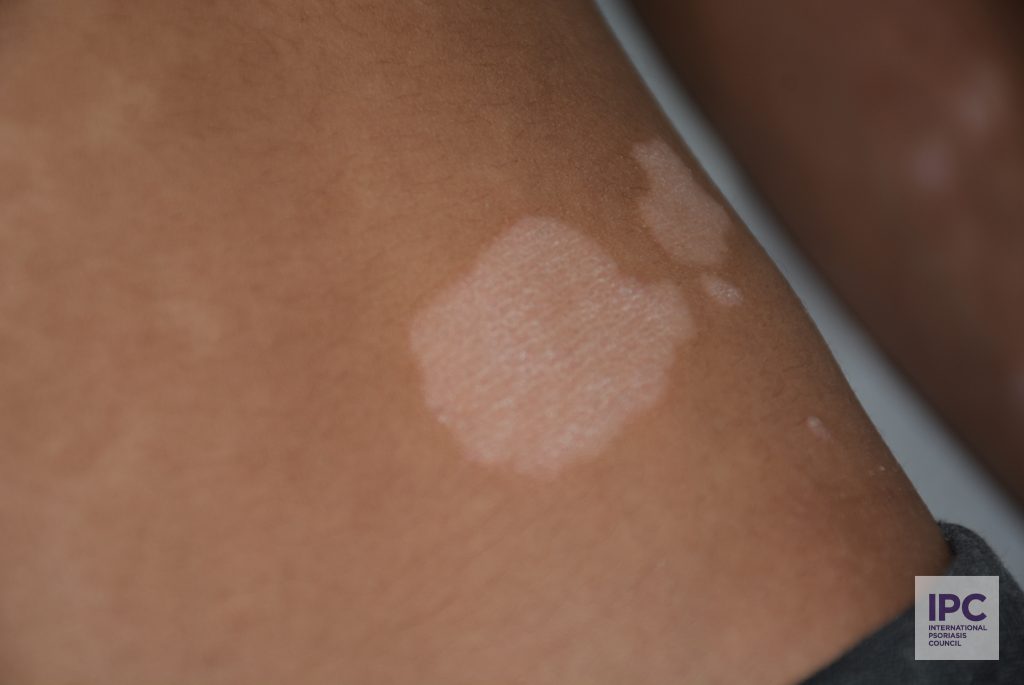
A young patient presents with hypopigmented plaque psoriasis.
Country: Unkown
Clinical Context: A young patient presents with hypopigmented plaque psoriasis.
Phenotype: Plaque psoriasis
Contributed by: Emmanuel Mahé, MD
Country: Bangladesh
Phenotype: Plaque psoriasis
Contributed by: Mohammad Samiul Huq, MD
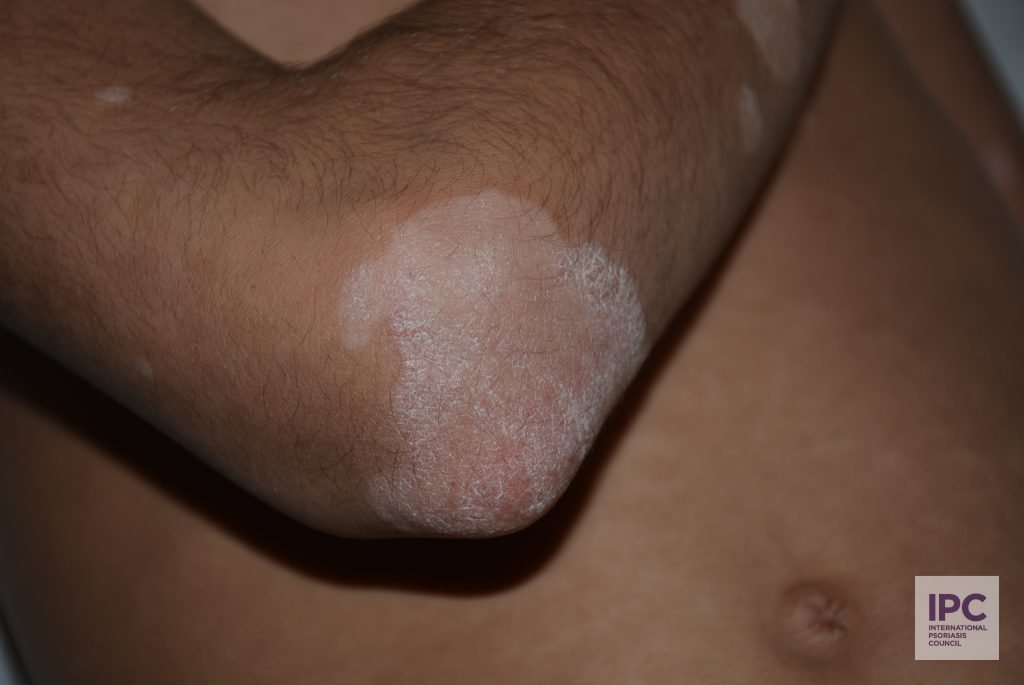
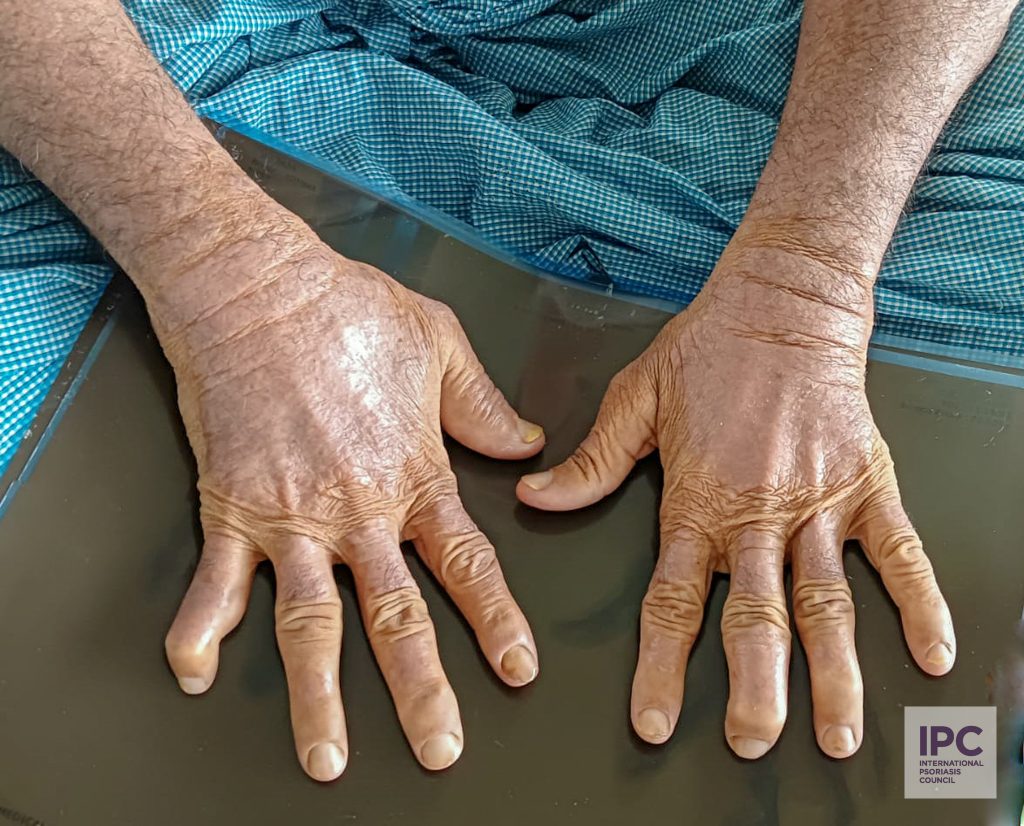
A 31-year-old male patient with plaque psoriasis. Patient presented with a prolonged history of topical steroid use, showing drug induced hypopigmentation on the arms with scaling on the dorsal aspect of both hands.
Country: Bangladesh
Clinical Context: A 31-year-old male patient with plaque psoriasis. Patient presented with a prolonged history of topical steroid use, showing drug induced hypopigmentation on the arms with scaling on the dorsal aspect of both hands.
Phenotype: Plaque psoriasis
Contributed by: Mohammad Rafiqul Mowla, MD, PhD
Country: United States
Phenotype: Palmoplantar psoriasis
Contributed by: Mark Lebwohl, MD
Country: Tunisia
Phenotype: Plaque psoriasis
Contributed by: Nejib Doss, MD
Country: Mauritania
Phenotype: Plaque psoriasis
Contributed by: Nejib Doss, MD
Country: Tunisia
Phenotype: Plaque psoriasis
Contributed by: Nejib Doss, MD
Country: Egypt
Phenotype: Plaque psoriasis
Contributed by: Mahira El Sayed, MD
Country: Egypt
Phenotype: Plaque psoriasis
Contributed by: Mahira El Sayed, MD
Country: Bangladesh
Phenotype: Plaque psoriasis
Contributed by: Mohammad Samiul Huq, MD
Country: India
Phenotype: Plaque psoriasis
Contributed by: Archana Mavoori Bandaru, MD
Country: Indian
Phenotype: Plaque psoriasis
Contributed by: Archana Mavoori Bandaru, MD
Country: Tunisia
Phenotype: Nail psoriasis
Contributed by: Nejib Doss, MD
Patient with psoriasis presented with lichenoid or purple hue.
Country: India
Clinical Context: Patient with psoriasis presented with lichenoid or purple hue.
Phenotype: Plaque psoriasis
Contributed by: Shekhar Neema, MD
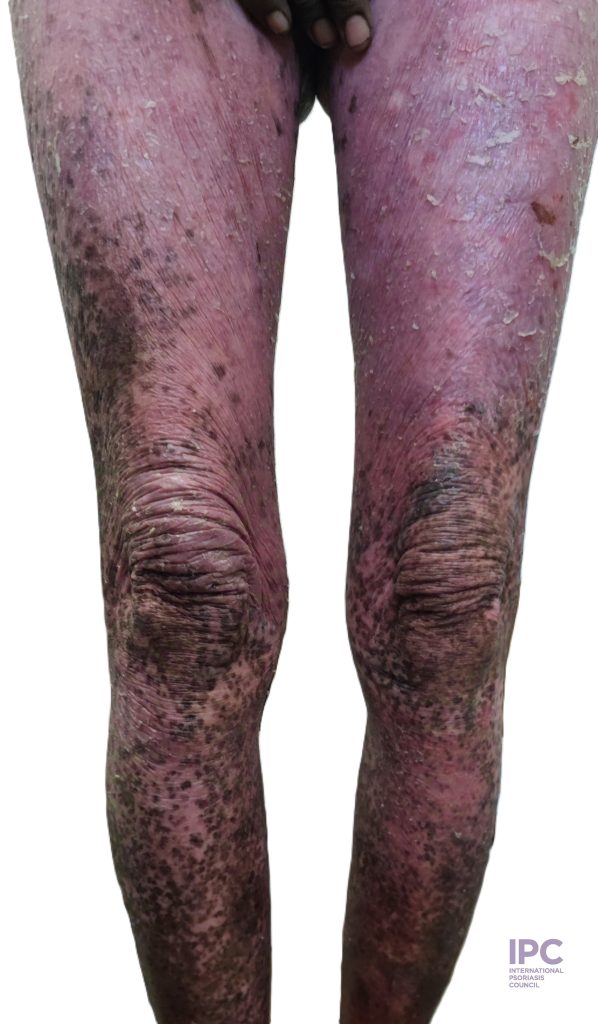
A 27-year-old female presented with skin lesions that have been present for 3 years. Traditional medicine was tried with no improvement.
Country: Ethiopia
Clinical Context: A 27-year-old female presented with skin lesions that have been present for 3 years. Traditional medicine was tried with no improvement.
Phenotype: Plaque psoriasis
Contributed by: Wosen Ketema Bedaso, MD
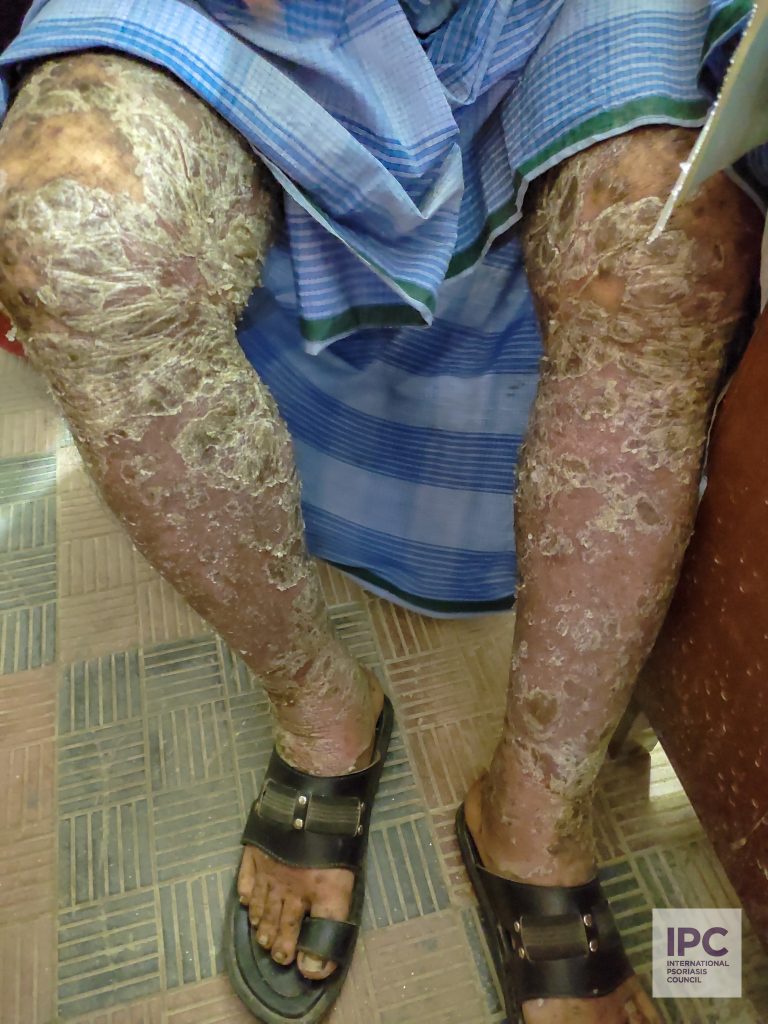
An elderly man presented with purplish plaques with scales that have been present on his legs for 5 years. Upon first presentation, he was treated with topical medicines.
Country: Bangladesh
Clinical Context: An elderly man presented with purplish plaques with scales that have been present on his legs for 5 years. Upon first presentation, he was treated with topical medicines.
Phenotype: Plaque psoriasis
Contributed by: Towhida Noor, MBBS, MD
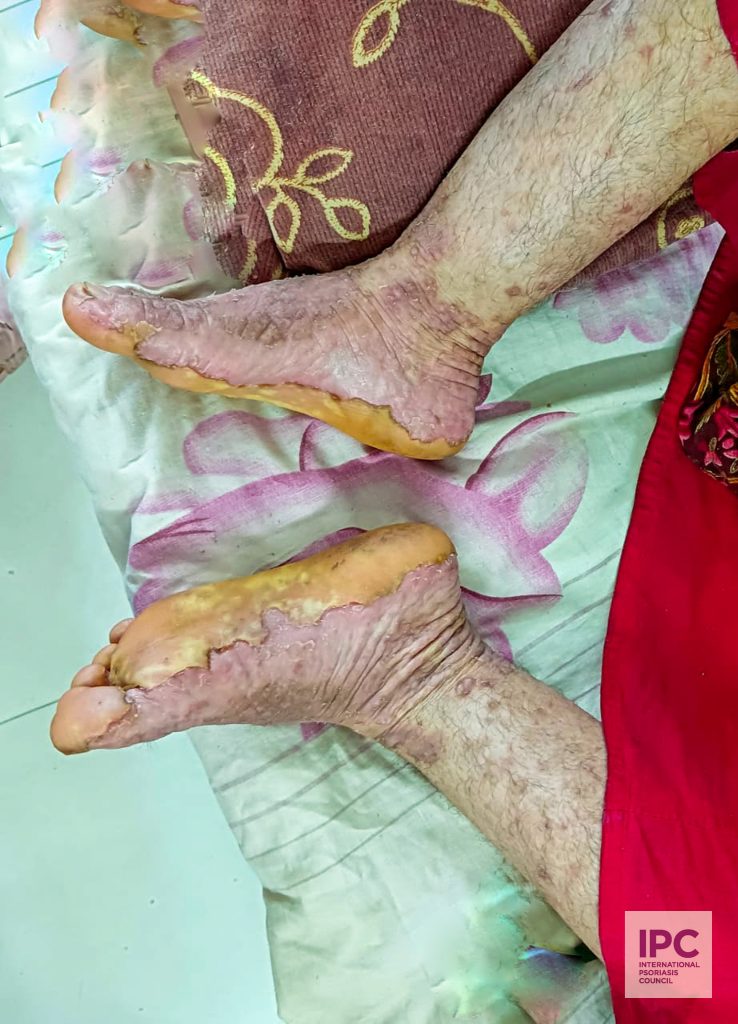
A middle aged male presented with plaques over both feet and hands. He was treated with tapinarof 1% cream for 1 month.
Country: Bangladesh
Clinical Context: A middle aged male presented with plaques over both feet and hands. He was treated with tapinarof 1% cream for 1 month.
Phenotype: Plaque psoriasis
Contributed by: Towhida Noor, MBBS, MD
Plaque Color: More Purple
Country: Egypt
Phenotype: Plaque psoriasis
Contributed by: Marwa Amer, MD, PhD
Plaque Color: More Purple
Country: Colombia
Phenotype: Plaque psoriasis
Contributed by: César Gonzalez, MD
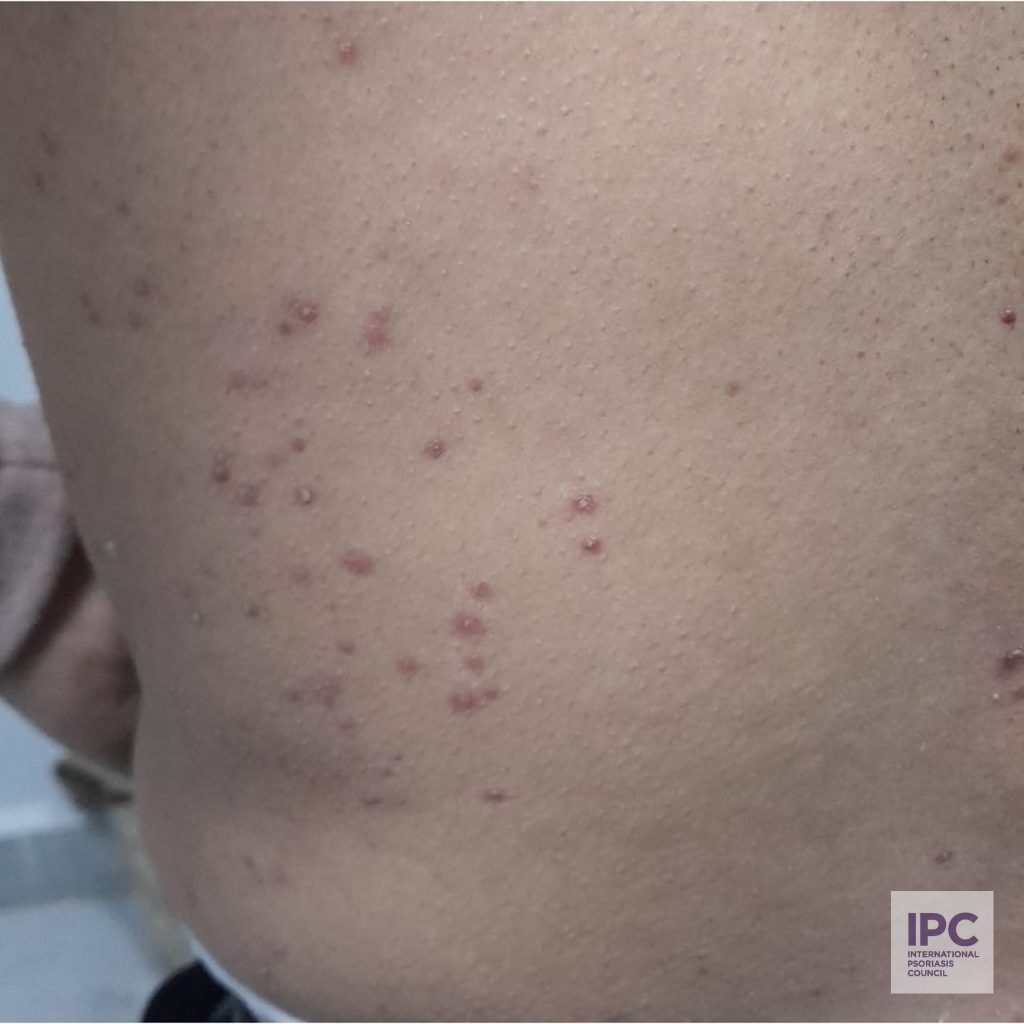
A middle aged male patient presented with purplish plaques. They have been present on his back for several months, but he has not received any treatment.
Country: Bangladesh
Clinical Context: A middle aged male patient presented with purplish plaques. They have been present on his back for several months, but he has not received any treatment.
Phenotype: Plaque psoriasis
Contributed by: Towhida Noor, MBBS, MD
Country: Philippines
Phenotype: Plaque psoriasis
Contributed by: Bryan Guevara, MD
Country: Mauritania
Phenotype: Palmoplantar psoriasis
Contributed by: Nejib Doss, MD
Country: Tunisia
Phenotype: Plaque psoriasis
Contributed by: Nejib Doss, MD
Country: Tunisia
Phenotype: Plaque psoriasis
Contributed by: Nejib Doss, MD
Country: Mauritania
Phenotype: Plaque psoriasis
Contributed by: Nejib Doss, MD
Country: Senegal
Clinical Context: Erythroderma
Phenotype: Erythrodermic psoriasis
Contributed by: Nejib Doss, MD
Country: Tunisia
Phenotype: Plaque psoriasis
Contributed by: Nejib Doss, MD
Country: Libya
Clinical Context: 37-year-old male Libyan patient with a known case of psoriasis vulgaris. Presented with generalized scaly purple plaques on face, trunk and extremities with associated with moderate itching. Previous treatments were topical steroids and methotrexate intramuscular injection.
Phenotype: Plaque psoriasis
Contributed by: Moneer Omran Bugrein, MD
26-year-old male patient with psoriasis vulgaris presented with multiple pink plaques with scaling on the extensor surface of the arms.
Country: Bangladesh
Clinical Context: 26-year-old male patient with psoriasis vulgaris presented with multiple pink plaques with scaling on the extensor surface of the arms.
Phenotype: Plaque psoriasis
Contributed by: Mohammad Rafiqul Mowla, MD, PhD
Country: Philippines
Clinical Context: 44 -year-old patient with plaque type psoriasis. Tested positive for HIV in 2017and has CMV Retinitis. However, viral load is now undetectable.
Phenotype: Plaque psoriasis
Contributed by: Vermen Verallo-Rowell, MD

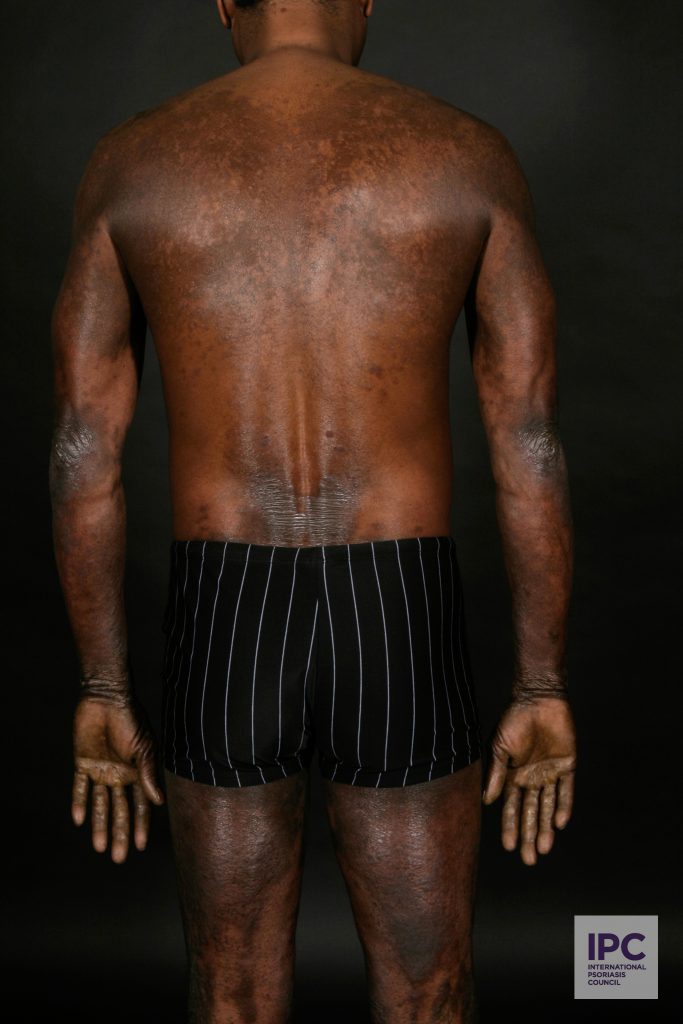
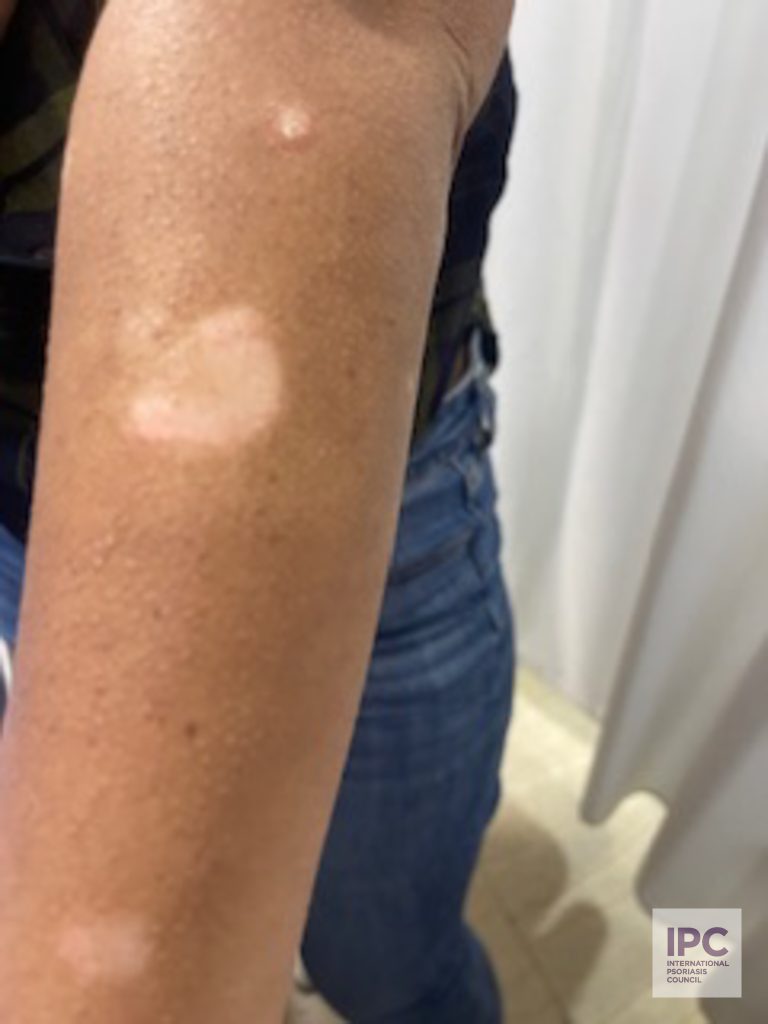
Post-Inflammatory Hyper/Hypopigmentation

In psoriasis, both hyperpigmentation and hypopigmentation can occur as part of the healing process or because of post-inflammatory changes:

  • Hyperpigmentation: Darker patches of skin in areas where psoriasis plaques have healed.  These areas may appear brown, black, or darker shades compared to the surrounding skin, more prominent in individuals with darker skin.
  • Hypopigmentation: Lighter patches in areas where psoriasis has resolved. These areas appear lighter than the surrounding skin, ranging from white to lighter shades of the individual’s natural skin tone, and can be more noticeable in individuals with darker skin.

These pigmentation changes are typically temporary but may persist. Survey results indicate that hyper- and hypopigmentation are more common in patients with darker skin.

Country: Egypt
Contributed by: Mahira El Sayed, MD
Patient presents with PIH over back following clearance of psoriasis lesions. Patient was treated with Apremilast.
Country: India
Clinical Context: Patient presents with PIH over back following clearance of psoriasis lesions. Patient was treated with Apremilast.
Contributed by: Sunil Dogra, MD
Plaque psoriasis
Country: Guinea
Phenotype: Plaque psoriasis
Contributed by: Nejib Doss, MD
Plaque psoriasis
Country: Guinea
Phenotype: Plaque psoriasis
Contributed by: Nejib Doss, MD
Plaque psoriasis
Country: Guinea
Phenotype: Plaque psoriasis
Contributed by: Nejib Doss, MD
Plaque psoriasis
Country: Guinea
Phenotype: Plaque psoriasis
Contributed by: Nejib Doss, MD
Patient presents with PIH over back following clearance of psoriasis lesions. Patient was treated with Methotrexate.
Country: India
Clinical Context: Patient presents with PIH over back following clearance of psoriasis lesions. Patient was treated with Methotrexate.
Contributed by: Sunil Dogra, MD
Country: Egypt
Phenotype: Plaque psoriasis
Contributed by: Mahira El Sayed, MD
Patient presents with brown colored lesions. Post inflammatory hypopigmentation appears at the top with active lesions.
Country: Egypt
Clinical Context: Patient presents with brown colored lesions. Post inflammatory hypopigmentation appears at the top with active lesions.
Phenotype: Plaque psoriasis
Contributed by: Marwa Amer, MD, PhD

Scaling

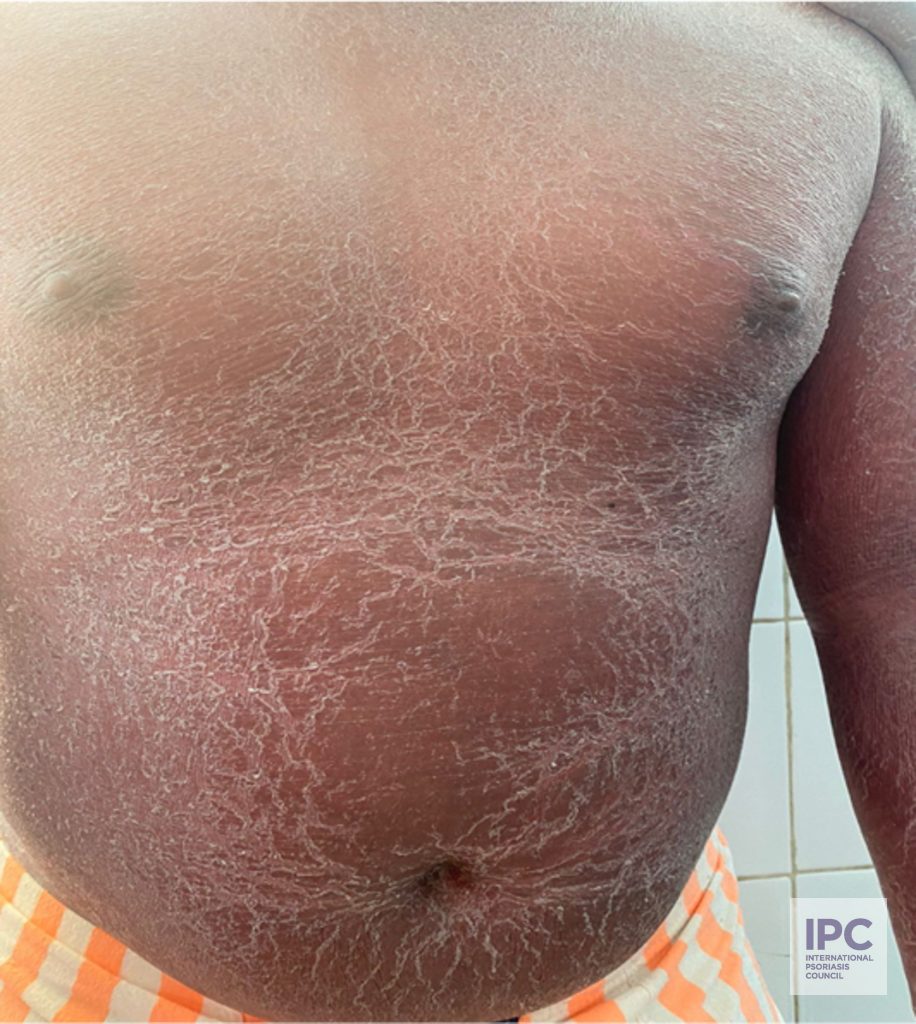
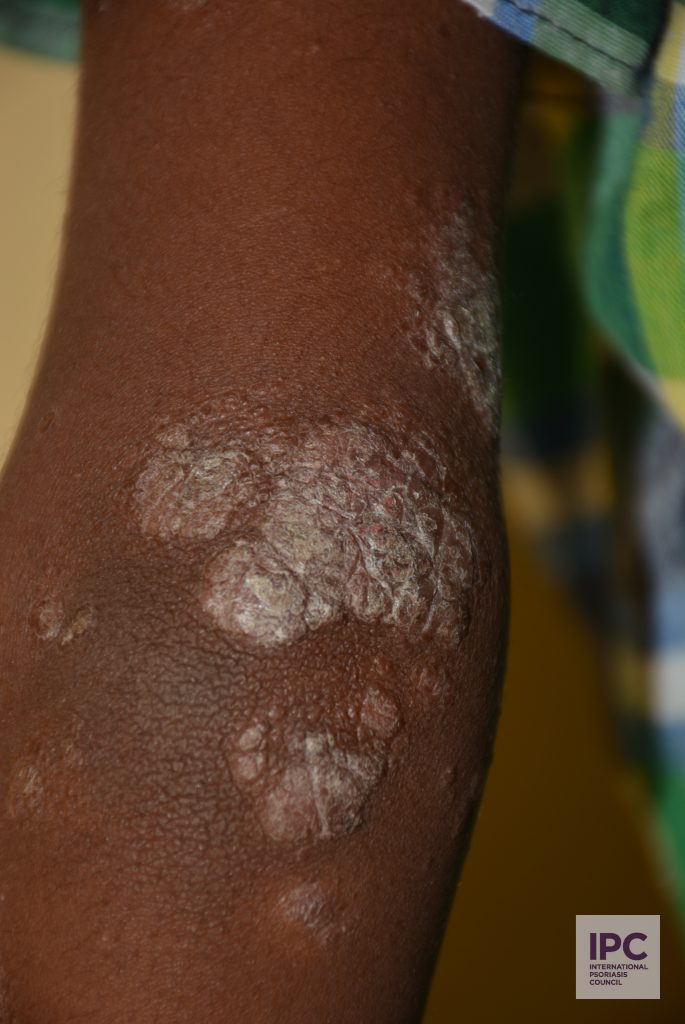
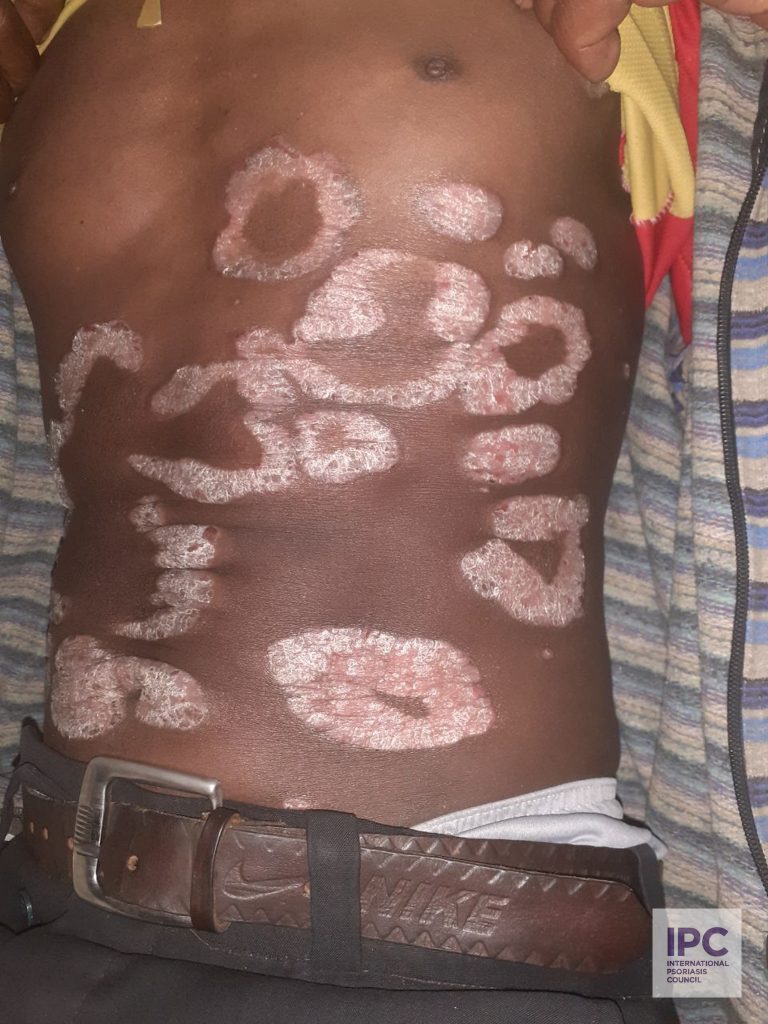
Psoriasis plaques are commonly associated with induration and scaling across all skin types. However, survey results indicate that scaling may appear rougher in people with darker skin, with more uneven, textured layers. Thicker scales may also be present, but this is often due to delayed treatment caused by misdiagnosis or access issues.
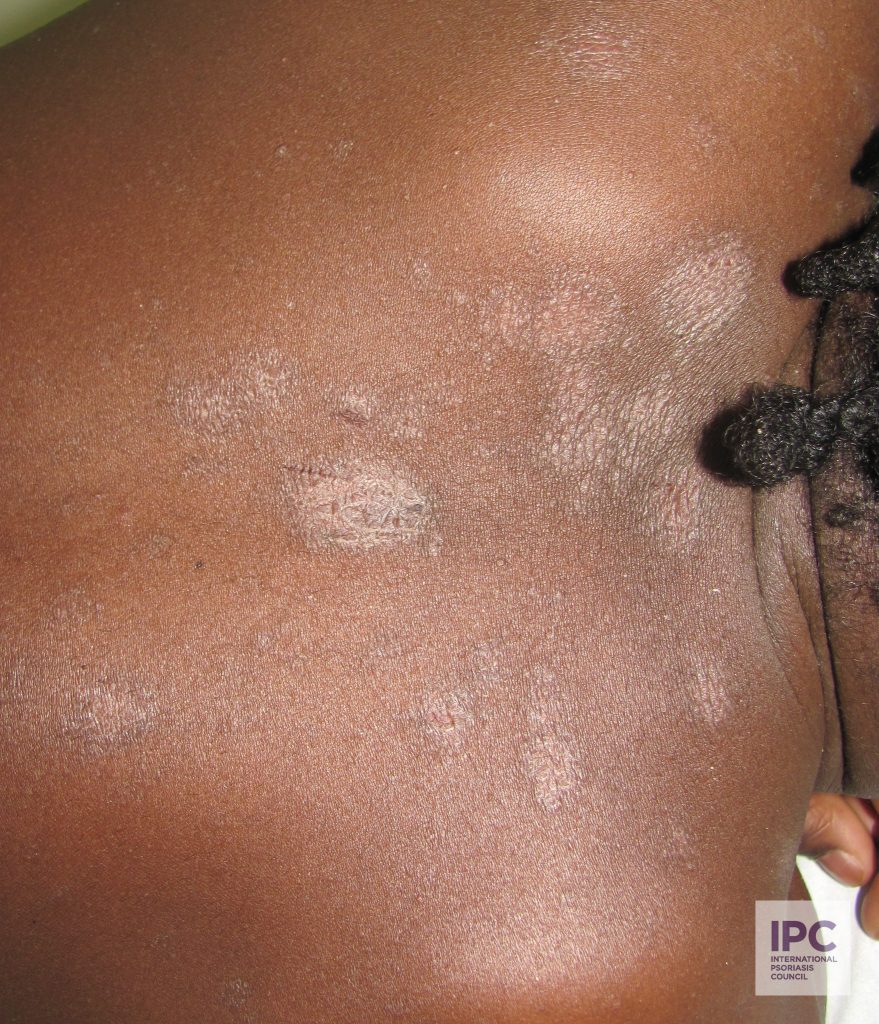
Country: Tunisia
Phenotype: Plaque psoriasis
Contributed by: Nejib Doss, MD
Country: Sudan
Phenotype: Plaque psoriasis
Contributed by: Nejib Doss, MD
Country: Mauritania
Phenotype: Plaque psoriasis
Contributed by: Nejib Doss, MD
Country: Senegal
Phenotype: Plaque psoriasis
Contributed by: Nejib Doss, MD
Country: Senegal
Phenotype: Erythrodermic psoriasis
Contributed by: Nejib Doss, MD
Patient presents with scalp psoriasis with adherent scales.
Country: India
Clinical Context: Patient presents with scalp psoriasis with adherent scales.
Phenotype: Plaque psoriasis
Contributed by: Shekhar Neema, MD
Country: Egypt
Phenotype: Plaque psoriasis
Contributed by: Mahira El Sayed, MD
62-year-old patient presents with plaque type psoriasis mainly on his legs. previously worked in the mines of an island in southern philippines. Hypertensive, overweight to obese. Photocontact and Photodrug Dermatitis
Country: Philippines
Clinical Context: 62-year-old patient presents with plaque type psoriasis mainly on his legs. previously worked in the mines of an island in southern philippines. Hypertensive, overweight to obese. Photocontact and Photodrug Dermatitis.
Phenotype: Plaque psoriasis
Contributed by: Vermen Verallo-Rowell, MD
A 38 -year-old male patient from a rural area visited the dermatology clinic for the first time and treatment naive.
Country: Ethiopia
Clinical Context: A 38 -year-old male patient from a rural area visited the dermatology clinic for the first time and treatment naive.
Phenotype: Plaque psoriasis
Contributed by: Wosen Ketema Bedaso, MD

High Impact Sites

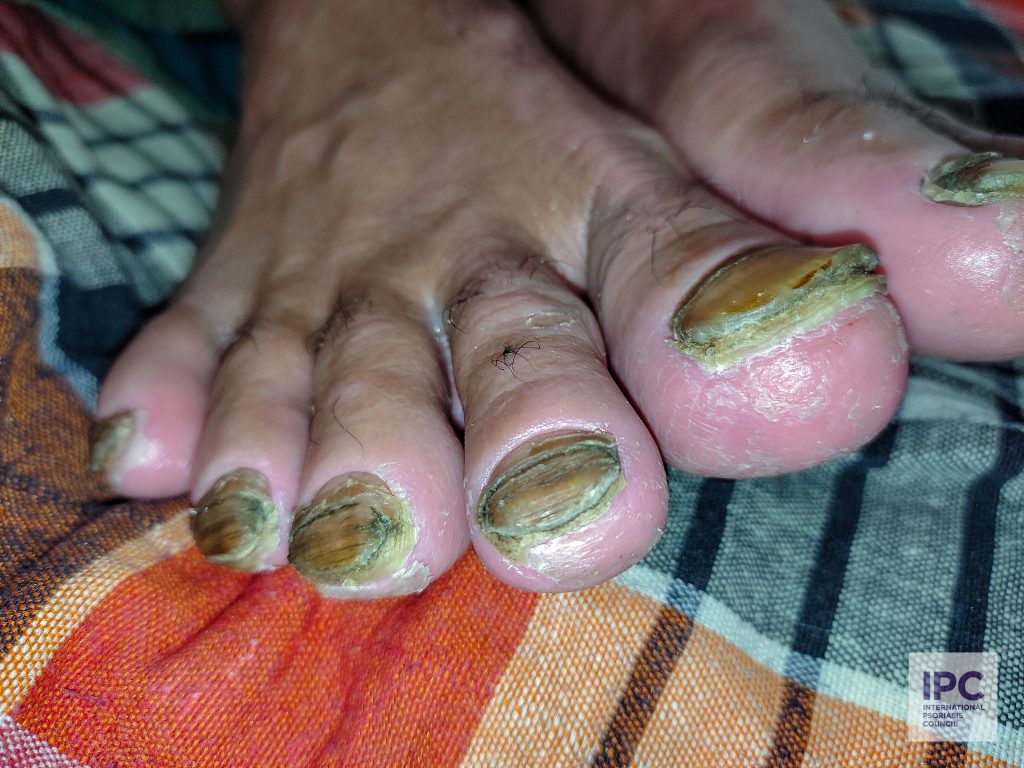
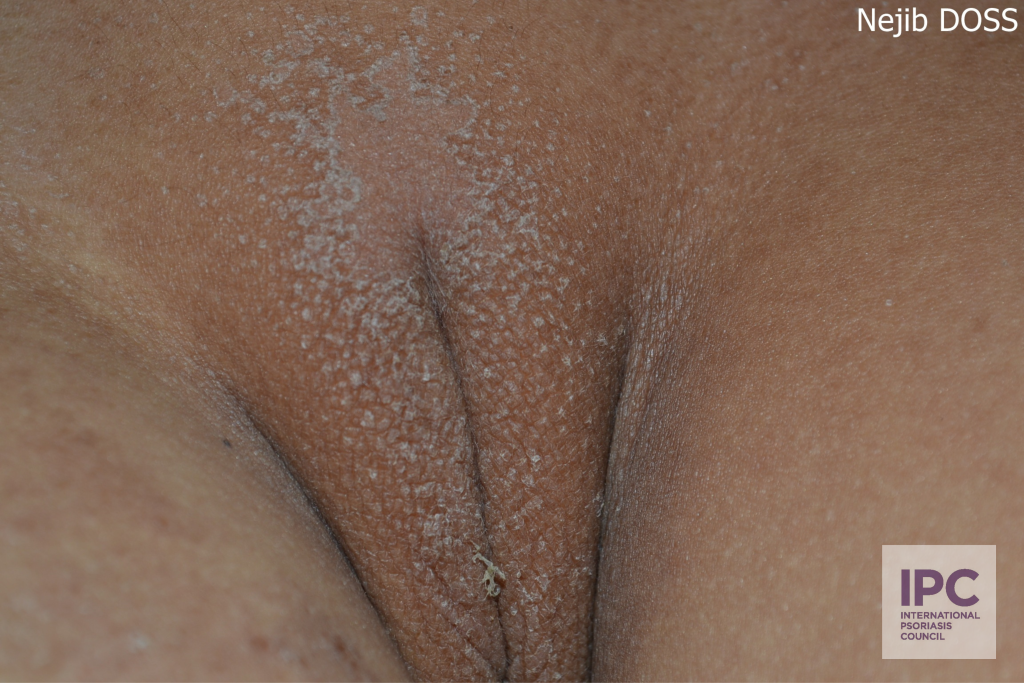
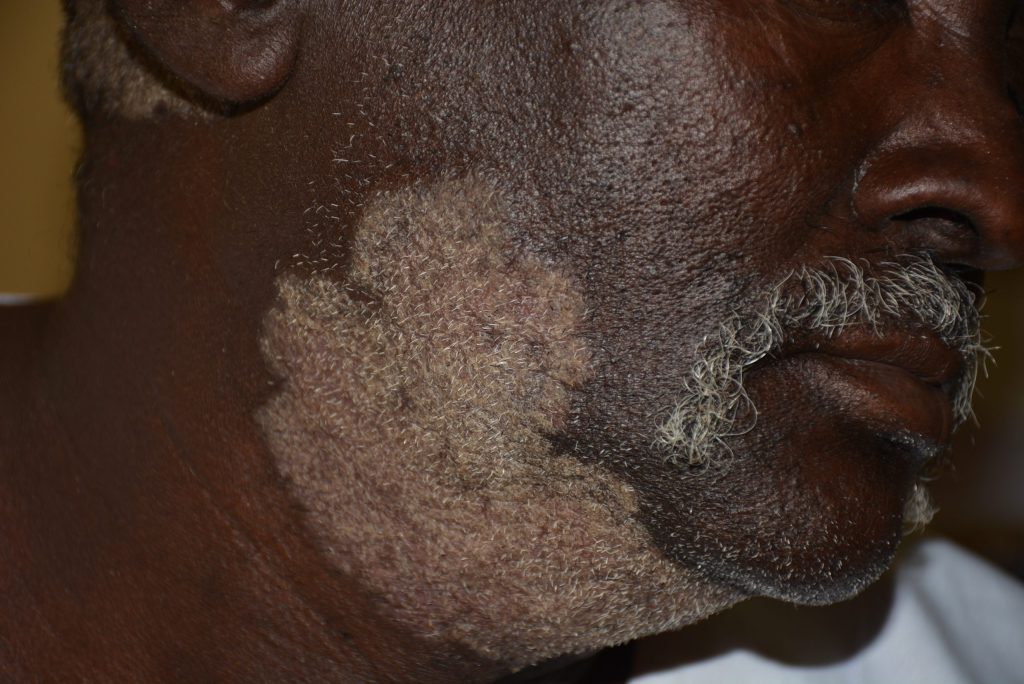
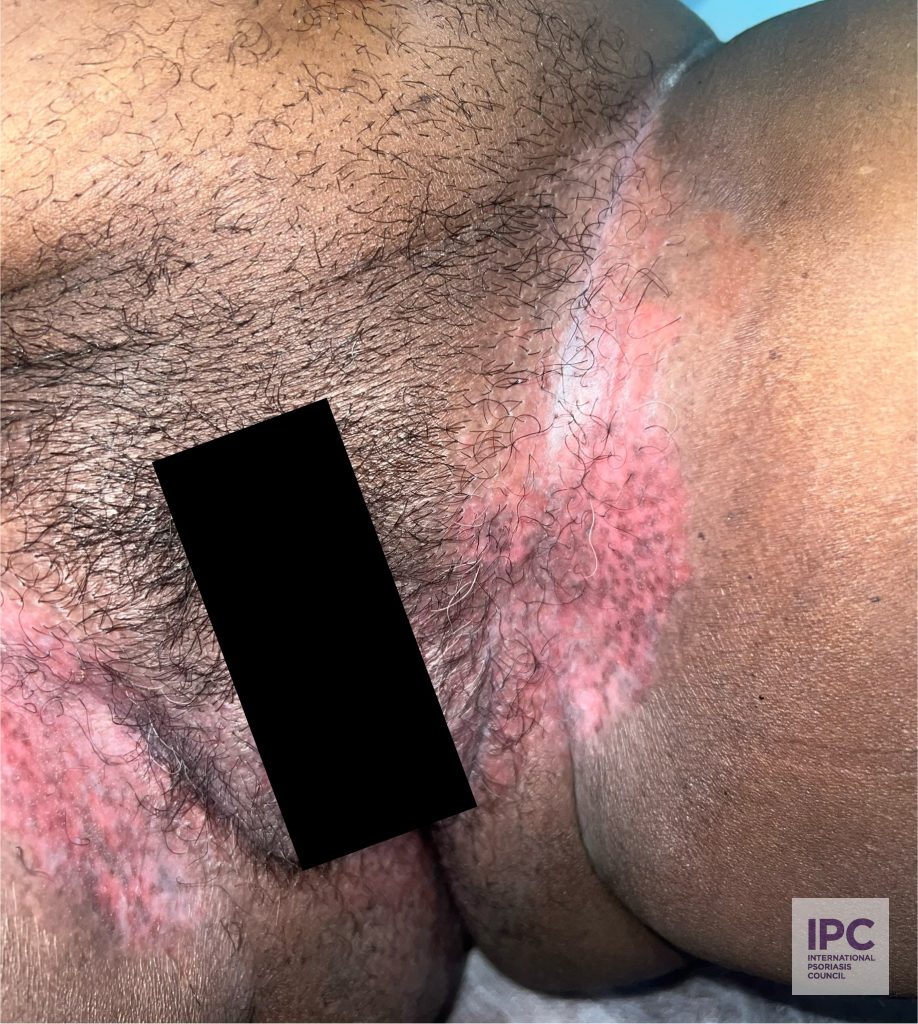
Psoriasis on high-impact sites, such as the scalp, face, palms, soles, genitals, and nails, can be particularly challenging for people with darker skin. In these areas, psoriasis may result in pronounced hyperpigmentation or hypopigmentation, leading to persistent discoloration after lesions heal. Differences in how psoriasis presents on darker skin can lead to underdiagnosis or misdiagnosis, complicating timely treatment. These factors contribute to the complexity of managing psoriasis on high-impact sites in patients with darker skin.

Country: Mauritania
Phenotype: Palmoplantar psoriasis
Contributed by: Nejib Doss, MD
Country: United States
Phenotype: Palmoplantar psoriasis
Contributed by: Mark Lebwohl, MD
A male patient with erythrodermic psoriasis presented with ridging, pitting, oil spots on the nails with subungual hyperkeratosis and mild onycholysis on all toenails.
Country: Bangladesh
Clinical Context: A male patient with erythrodermic psoriasis presented with ridging, pitting, oil spots on the nails with subungual hyperkeratosis and mild onycholysis on all toenails.
Phenotype: Nail psoriasis
Contributed by: Mohammad Rafiqul Mowla, MD, PhD
Country: Senegal
Phenotype: Plaque psoriasis
Contributed by: Nejib Doss, MD
Plaque psoriasis
Country: Tunisia
Clinical Context: Genital psoriasis.
Phenotype: Plaque psoriasis
Contributed by: Nejib Doss, MD
Plaque psoriasis
Country: Tunisia
Clinical Context: Genital psoriasis.
Phenotype: Plaque psoriasis
Contributed by: Nejib Doss, MD
Plaque psoriasis
Country: Guinea
Phenotype: Plaque psoriasis
Contributed by: Nejib Doss, MD
Plaque psoriasis
Country: Guinea
Phenotype: Plaque psoriasis
Contributed by: Nejib Doss, MD
Country: Mauritania
Phenotype: Plaque psoriasis
Contributed by: Nejib Doss, MD
Country: Senegal
Phenotype: Plaque psoriasis
Contributed by: Nejib Doss, MD
Patient presents with scalp psoriasis with adherent scales.
Country: India
Clinical Context: Patient presents with scalp psoriasis with adherent scales.
Phenotype: Plaque psoriasis
Contributed by: Shekhar Neema, MD
Country: Sudan
Phenotype: Plaque psoriasis
Contributed by: Nejib Doss, MD
A 32-year-old male patient presents with scalp psoriasis with rough thick scales and some cracks.
Country: Bangladesh
Clinical Context: A 32-year-old male patient presents with scalp psoriasis with rough thick scales and some cracks.
Phenotype: Plaque psoriasis
Contributed by: Mohammad Rafiqul Mowla, MD, PhD
Plaque psoriasis
Country: Colombia
Phenotype: Plaque psoriasis
Contributed by: César Gonzalez, MD
10-year-old male patient with 2 month history of pruritic rash. Histopathologically confirmed: regular acanthosis, marked compact hyperkeratosis and parakeratosis, munro microabscess, dilated cappillaries in dermal papillae, and lymphohystiocytic perivascular dermal infiltrates seen. Rx: MTX 7.5 mg PO/week Urea 10% in simple cream vehicle daily. Was improving very well at first appointment.
Country: Ethiopia
Clinical Context: 10-year-old male patient with 2 month history of pruritic rash. Histopathologically confirmed: regular acanthosis, marked compact hyperkeratosis and parakeratosis, munro microabscess, dilated cappillaries in dermal papillae, and lymphohystiocytic perivascular dermal infiltrates seen. Rx: MTX 7.5 mg PO/week Urea 10% in simple cream vehicle daily. Was improving very well at first appointment.
Phenotype: Plaque psoriasis
Contributed by: Mimiyas Tadesse Tiruf, MD
Country: Sudan
Phenotype: Plaque psoriasis
Contributed by: Nejib Doss, MD
10-year-old male patient with 2 month history of pruritic rash. Histopathologically confirmed: regular acanthosis, marked compact hyperkeratosis and parakeratosis, munro microabscess, dilated cappillaries in dermal papillae, and lymphohystiocytic perivascular dermal infiltrates seen. Rx: MTX 7.5 mg PO/week Urea 10% in simple cream vehicle daily. Was improving very well at first appointment.
Country: Ethiopia
Clinical Context: 10-year-old male patient with 2 month history of pruritic rash. Histopathologically confirmed: regular acanthosis, marked compact hyperkeratosis and parakeratosis, munro microabscess, dilated cappillaries in dermal papillae, and lymphohystiocytic perivascular dermal infiltrates seen. Rx: MTX 7.5 mg PO/week Urea 10% in simple cream vehicle daily. Was improving very well at first appointment.
Phenotype: Plaque psoriasis
Contributed by: Mimiyas Tadesse Tiruf, MD
Country: Mauritania
Phenotype: Palmoplantar psoriasis
Contributed by: Nejib Doss, MD
A middle aged male patient presents with insidious onset, gradually progressive, dark, raised lesions on hands and feet. Lesions have been present for one year. Examination revealed hyperpigmented indurated plaques over both hands. A diagnosis of palmoplantar psoriasis was made.
Country: India
Clinical Context: A middle aged male patient presents with insidious onset, gradually progressive, dark, raised lesions on hands and feet. Lesions have been present for one year. Examination revealed hyperpigmented indurated plaques over both hands. A diagnosis of palmoplantar psoriasis was made.
Phenotype: Palmoplantar psoriasis
Contributed by: Shekhar Neema, MD
Country: Egypt
Phenotype: Palmoplantar psoriasis
Contributed by: Marwa Amer, MD, PhD
Country: Indian
Phenotype: Palmoplantar psoriasis
Contributed by: Archana Mavoori Bandaru, MD
Country: Bangladesh
Clinical Context: A 38 -year-old male patient presented with erythematous, scaly lesions and desquamation associated with onycholysis and sub-ungual hyperkeratosis.
Phenotype: Palmoplantar psoriasis
Contributed by: Mohammad Rafiqul Mowla, MD, PhD
Palmoplantar psoriasis
Country: Colombia
Phenotype: Palmoplantar psoriasis
Contributed by: César Gonzalez, MD
Country: Egypt
Phenotype: Plaque psoriasis
Contributed by: Marwa Amer, MD, PhD
Country: United States
Phenotype: Palmoplantar psoriasis
Contributed by: Mark Lebwohl, MD
A young patient presents with severe plantar psoriasis.
Clinical Context: Inverse plantar psoriasis in a child
Phenotype: Plaque psoriasis
Contributed by: Emmanuel Mahé, MD
A young patient presents with severe plantar psoriasis.
Clinical Context: Severe plantar psoriasis in a child
Phenotype: Palmoplantar psoriasis
Contributed by: Emmanuel Mahé, MD
Patient presented with numerous scaly plaque on almost all of her body including scalp. There was hyperkeratosis of the palms and soles as well.
Country: Bangladesh
Clinical Context: Patient presented with numerous scaly plaque on almost all of her body including scalp. There was hyperkeratosis of the palms and soles as well.
Phenotype: Palmoplantar psoriasis
Contributed by: Mohammad Rafiqul Mowla, MD, PhD
A 56 -year-old male patient with palmoplantar psoriasis, presents with hyperkeratosis, thick scale and fissure with less pinkish hue on the lesion.
Country: Bangladesh
Clinical Context: A 56 -year-old male patient with palmoplantar psoriasis, presents with hyperkeratosis, thick scale and fissure with less pinkish hue on the lesion.
Phenotype: Palmoplantar psoriasis
Contributed by: Mohammad Rafiqul Mowla, MD, PhD
Plaque psoriasis
Country: Tunisia
Clinical Context: Genital psoriasis.
Phenotype: Plaque psoriasis
Contributed by: Nejib Doss, MD
Plaque psoriasis
Country: Tunisia
Clinical Context: Genital psoriasis.
Phenotype: Plaque psoriasis
Contributed by: Nejib Doss, MD
Patient presents with red, itchy lesions in the groin. He was repeatedly treated as tinea cruris. Examination shows well defined, erythematous plaques in the groin fold. He was diagnosed with inverse psoriasis.
Country: India
Clinical Context: Patient presents with red, itchy lesions in the groin. He was repeatedly treated as tinea cruris. Examination shows well defined, erythematous plaques in the groin fold. He was diagnosed with inverse psoriasis.
Phenotype: Plaque psoriasis
Contributed by: Shekhar Neema, MD
Country: Tunisia
Phenotype: Plaque psoriasis
Contributed by: Nejib Doss, MD
Patient is an Afro-Colombian woman who developed flexural psoriasis several years ago in the axillary, inframammary, inguinal and intergluteal areas. She has a history of multiple topical and oral treatments for fungal infections without resolution. Her medical history includes obesity. She is currently without treatment for psoriasis.
Country: Colombia
Clinical Context: Patient is an Afro-Colombian woman who developed flexural psoriasis several years ago in the axillary, inframammary, inguinal and intergluteal areas. She has a history of multiple topical and oral treatments for fungal infections without resolution. Her medical history includes obesity. She is currently without treatment for psoriasis.
Phenotype: Plaque psoriasis
Contributed by: Carlos Andres Guerrero Arias
A male patient with erythrodermic psoriasis presented with ridging, pitting, oil spots on the nails with subungual hyperkeratosis and mild onycholysis on all toenails.
Country: Bangladesh
Clinical Context: A male patient with erythrodermic psoriasis presented with ridging, pitting, oil spots on the nails with subungual hyperkeratosis and mild onycholysis on all toenails.
Phenotype: Nail psoriasis
Contributed by: Mohammad Rafiqul Mowla, MD, PhD
Nail psoriasis
Country: Sudan
Phenotype: Nail psoriasis
Contributed by: Nejib Doss, MD
Country: Tunisia
Phenotype: Nail psoriasis
Contributed by: Nejib Doss, MD
Country: Kenya
Phenotype: Nail psoriasis
Contributed by: Caroline Wambui Ndarathi, MSc, MD
A young patient presents with inverse plantar psoriasis.
Clinical Context: A young patient presents with inverse plantar psoriasis.
Phenotype: Plaque psoriasis
Contributed by: Emmanuel Mahé, MD
Patient presents with purple lesions.
Country: Egypt
Clinical Context: Patient presents with purple lesions.
Phenotype: Plaque psoriasis
Contributed by: Marwa Amer, MD, PhD
Patient presents with purple lesions.
Country: Egypt
Clinical Context: Patient presents with purple lesions.
Phenotype: Plaque psoriasis
Contributed by: Marwa Amer, MD, PhD
Patient has psoriasis confirmed by a skin biopsy. The patient presents with different types of lesions; plaque to patches and some pustular lesions.
Country: Brazil
Clinical Context: Patient has psoriasis confirmed by a skin biopsy. The patient presents with different types of lesions; plaque to patches and some pustular lesions.
Phenotype: Plaque psoriasis
Contributed by: Jaquelini Barboza Da Silva, MD
Patient is an Afro-Colombian woman who developed flexural psoriasis several years ago in the axillary, inframammary, inguinal and intergluteal areas. She has a history of multiple topical and oral treatments for fungal infections without resolution. Her medical history includes obesity. She is currently without treatment for psoriasis.
Country: Colombia
Clinical Context: Patient is an Afro-Colombian woman who developed flexural psoriasis several years ago in the axillary, inframammary, inguinal and intergluteal areas. She has a history of multiple topical and oral treatments for fungal infections without resolution. Her medical history includes obesity. She is currently without treatment for psoriasis.
Phenotype: Plaque psoriasis
Contributed by: Carlos Andres Guerrero Arias
Patient has psoriasis confirmed by a skin biopsy. The patient presents with different types of lesions; plaque to patches and some pustular lesions.
Country: Brazil
Clinical Context: Patient has psoriasis confirmed by a skin biopsy. The patient presents with different types of lesions; plaque to patches and some pustular lesions.
Phenotype: Plaque psoriasis
Contributed by: Jaquelini Barboza Da Silva, MD
Plaque psoriasis
Country: Colombia
Phenotype: Plaque psoriasis
Contributed by: César Gonzalez, MD
Plaque psoriasis
Country: Colombia
Phenotype: Plaque psoriasis
Contributed by: César Gonzalez, MD
Plaque psoriasis
Country: Guinea
Phenotype: Plaque psoriasis
Contributed by: Nejib Doss, MD
Plaque psoriasis
Country: Guinea
Phenotype: Plaque psoriasis
Contributed by: Nejib Doss, MD
Country: Colombia
Phenotype: Plaque psoriasis
Contributed by: Angela Maria Londoño, MSc, MD
An elderly man presented with purplish plaques with scales that have been present on his legs for 5 years. Upon first presentation, he was treated with topical medicines.
Country: Bangladesh
Clinical Context: An elderly man presented with purplish plaques with scales that have been present on his legs for 5 years. Upon first presentation, he was treated with topical medicines.
Phenotype: Plaque psoriasis
Contributed by: Towhida Noor, MBBS, MD
A middle aged male presented with plaques over both feet and hands. He was treated with tapinarof 1% cream for 1 month.
Country: Bangladesh
Clinical Context: A middle aged male presented with plaques over both feet and hands. He was treated with tapinarof 1% cream for 1 month.
Phenotype: Plaque psoriasis
Contributed by: Towhida Noor, MBBS, MD
Patient presented to our health facility with longstanding untreated psoriasis.
Country: Kenya
Clinical Context: Patient presented to our health facility with longstanding untreated psoriasis.
Phenotype: Plaque psoriasis
Contributed by: Caroline Wambui Ndarathi, MSc, MD
Country: Bangladesh
Phenotype: Plaque psoriasis
Contributed by: Mohammad Samiul Huq, MD
A middle aged male patient presented with numerous hyperkeratotic plaque type lesions predominantly on both extremities with deformity in a few digits. Patient was on treatment with topical steroid.
Country: Bangladesh
Clinical Context: A middle aged male patient presented with numerous hyperkeratotic plaque type lesions predominantly on both extremities with deformity in a few digits. Patient was on treatment with topical steroid.
Phenotype: Plaque psoriasis
Contributed by: Mohammad Rafiqul Mowla, MD, PhD
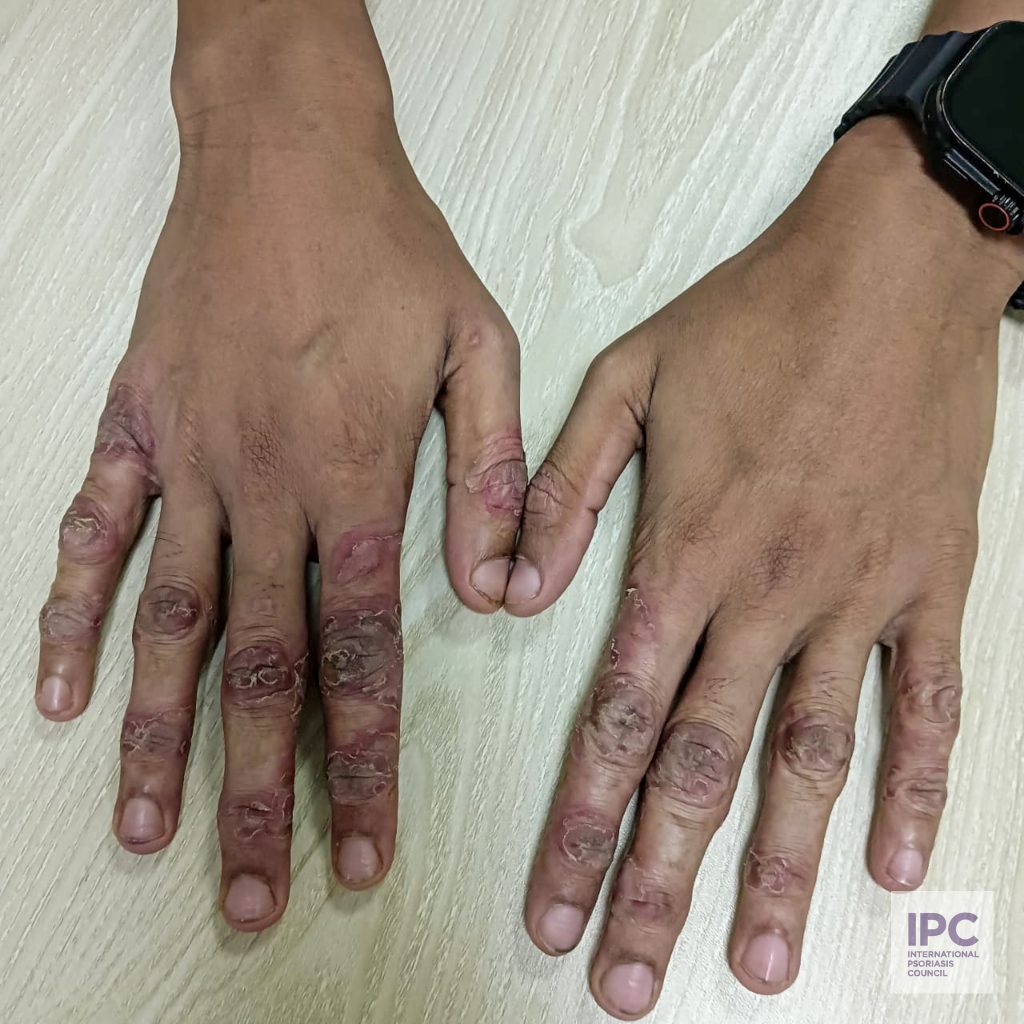
A 22-year-old male patient presents with erythematous, hyperkeratotic plaques with thick scales on the knuckles of both hands.
Country: Bangladesh
Clinical Context: A 22-year-old male patient presents with erythematous, hyperkeratotic plaques with thick scales on the knuckles of both hands.
Phenotype: Plaque psoriasis
Contributed by: Mohammad Rafiqul Mowla, MD, PhD

Phenotypes

The presentation of psoriasis can vary across different skin types. This section highlights key psoriasis phenotypes—erythrodermic, guttate, palmoplantar, and pustular—showing how these variations appear in diverse skin tones.

Country: Mauritania
Phenotype: Palmoplantar psoriasis
Contributed by: Nejib Doss, MD
Country: Senegal
Phenotype: Erythrodermic psoriasis
Contributed by: Nejib Doss, MD
Country: Senegal
Clinical Context: Erythroderma
Phenotype: Erythrodermic psoriasis
Contributed by: Nejib Doss, MD
A young patient presents with severe plantar psoriasis.
Clinical Context: Severe plantar psoriasis in a child
Phenotype: Palmoplantar psoriasis
Contributed by: Emmanuel Mahé, MD
A middle aged male patient presents with insidious onset, gradually progressive, dark, raised lesions on hands and feet. Lesions have been present for one year. Examination revealed hyperpigmented indurated plaques over both hands. A diagnosis of palmoplantar psoriasis was made.
Country: India
Clinical Context: A middle aged male patient presents with insidious onset, gradually progressive, dark, raised lesions on hands and feet. Lesions have been present for one year. Examination revealed hyperpigmented indurated plaques over both hands. A diagnosis of palmoplantar psoriasis was made.
Phenotype: Palmoplantar psoriasis
Contributed by: Shekhar Neema, MD
Country: Egypt
Phenotype: Palmoplantar psoriasis
Contributed by: Marwa Amer, MD, PhD
Guttate psoriasis
Country: Colombia
Phenotype: Guttate psoriasis
Contributed by: César Gonzalez, MD
Country: Indian
Phenotype: Palmoplantar psoriasis
Contributed by: Archana Mavoori Bandaru, MD
Country: Mauritania
Phenotype: Erythrodermic psoriasis
Contributed by: Nejib Doss, MD
Guttate psoriasis
Country: Colombia
Phenotype: Guttate psoriasis
Contributed by: César Gonzalez, MD
45-year-old patient with a history of untreated or inadequately managed psoriasis, with no significant improvement from topical treatments (e.g., corticosteroids or vitamin D analogs). Systemic therapies or biologics had not been administered. Relevant Clinical Information: The plaques presented with thick, grayish scaling and post-inflammatory hyperpigmentation on skin type V. The condition affected high-impact areas such as the scalp, palms, and soles, leading to functional impairment and reduced quality of life.
Country: Egypt
Clinical Context: 45-year-old patient with a history of untreated or inadequately managed psoriasis, with no significant improvement from topical treatments (e.g., corticosteroids or vitamin D analogs). Systemic therapies or biologics had not been administered. Relevant Clinical Information: The plaques presented with thick, grayish scaling and post-inflammatory hyperpigmentation on skin type V. The condition affected high-impact areas such as the scalp, palms, and soles, leading to functional impairment and reduced quality of life.
Phenotype: Guttate psoriasis
Contributed by: Abdelrahman ElwakIl, MSc
Country: Bangladesh
Clinical Context: 47-year old male patient with guttate psoriasis presented with small purple plaques with slight scaling on the trunk.
Phenotype: Guttate psoriasis
Contributed by: Mohammad Rafiqul Mowla, MD, PhD
An 18-year-old male with guttate psoriasis presented with small purple and less pink plaques with some scaling over the extensor arms and trunk.
Country: Bangladesh
Clinical Context: An 18-year-old male with guttate psoriasis presented with small purple and less pink plaques with some scaling over the extensor arms and trunk.
Phenotype: Guttate psoriasis
Contributed by: Mohammad Rafiqul Mowla, MD, PhD
Country: Senegal
Phenotype: Erythrodermic psoriasis
Contributed by: Nejib Doss, MD
Country: Senegal
Clinical Context: Erythroderma
Phenotype: Erythrodermic psoriasis
Contributed by: Nejib Doss, MD
Country: Mauritania
Phenotype: Erythrodermic psoriasis
Contributed by: Nejib Doss, MD
A 36 -year-old male patient presents with exfoliative dermatitis due to psoriasis.
Country: Bangladesh
Clinical Context: A 36-year-old male patient with exfoliative dermatitis due to psoriasis.
Phenotype: Erythrodermic psoriasis
Contributed by: Mohammad Rafiqul Mowla, MD, PhD
A 55 -year-old male patient with psoriasis vulgaris presents with thick rough scales with fissuring on an erythematous base present on the lower limbs.
Country: Bangladesh
Clinical Context: A 55 -year-old male patient with psoriasis vulgaris presents with thick rough scales with fissuring on an erythematous base present on the lower limbs.
Phenotype: Erythrodermic psoriasis
Contributed by: Mohammad Rafiqul Mowla, MD, PhD
65-year-old female presented with exacerbation of pruritic rash of 3 months duration. She had history of follow-up for plaque psoriasis. Took unspecified herbal medicine & sun bathed days before exacerbation.
Country: Ethiopia
Clinical Context: 65-year-old female presented with exacerbation of pruritic rash of 3 months duration. She had history of follow-up for plaque psoriasis. Took unspecified herbal medicine & sun bathed days before exacerbation.
Phenotype: Erythrodermic psoriasis
Contributed by: Mimiyas Tadesse Tiruf, MD
Country: Mauritania
Phenotype: Palmoplantar psoriasis
Contributed by: Nejib Doss, MD
A young patient presents with severe plantar psoriasis.
Clinical Context: Severe plantar psoriasis in a child
Phenotype: Palmoplantar psoriasis
Contributed by: Emmanuel Mahé, MD
A middle aged male patient presents with insidious onset, gradually progressive, dark, raised lesions on hands and feet. Lesions have been present for one year. Examination revealed hyperpigmented indurated plaques over both hands. A diagnosis of palmoplantar psoriasis was made.
Country: India
Clinical Context: A middle aged male patient presents with insidious onset, gradually progressive, dark, raised lesions on hands and feet. Lesions have been present for one year. Examination revealed hyperpigmented indurated plaques over both hands. A diagnosis of palmoplantar psoriasis was made.
Phenotype: Palmoplantar psoriasis
Contributed by: Shekhar Neema, MD
Country: Egypt
Phenotype: Palmoplantar psoriasis
Contributed by: Marwa Amer, MD, PhD
Country: Indian
Phenotype: Palmoplantar psoriasis
Contributed by: Archana Mavoori Bandaru, MD
A 56 -year-old male patient with palmoplantar psoriasis, presents with hyperkeratosis, thick scale and fissure with less pinkish hue on the lesion.
Country: Bangladesh
Clinical Context: A 56 -year-old male patient with palmoplantar psoriasis, presents with hyperkeratosis, thick scale and fissure with less pinkish hue on the lesion.
Phenotype: Palmoplantar psoriasis
Contributed by: Mohammad Rafiqul Mowla, MD, PhD
Patient presented with numerous scaly plaque on almost all of her body including scalp. There was hyperkeratosis of the palms and soles as well.
Country: Bangladesh
Clinical Context: Patient presented with numerous scaly plaque on almost all of her body including scalp. There was hyperkeratosis of the palms and soles as well.
Phenotype: Palmoplantar psoriasis
Contributed by: Mohammad Rafiqul Mowla, MD, PhD
Country: Bangladesh
Clinical Context: A 38 -year-old male patient presented with erythematous, scaly lesions and desquamation associated with onycholysis and sub-ungual hyperkeratosis.
Phenotype: Palmoplantar psoriasis
Contributed by: Mohammad Rafiqul Mowla, MD, PhD
Palmoplantar psoriasis
Country: Colombia
Phenotype: Palmoplantar psoriasis
Contributed by: César Gonzalez, MD
A male patient with pustular psoriasis presented with large scaly erythematous plaque with some pustules on the trunk and upper extremities
Country: Bangladesh
Clinical Context: A male patient with pustular psoriasis presented with large scaly erythematous plaque with some pustules on the trunk and upper extremities
Phenotype: Pustular Psoriasis
Contributed by: Mohammad Rafiqul Mowla, MD, PhD
A 36-year-old male patient presents with pustular psoriasis involving the trunk. The plaques are large with tiny pustules in the vicinity of the lesion with erythematous base.
Country: Bangladesh
Clinical Context: A 36-year-old male patient presents with pustular psoriasis involving the trunk. The plaques are large with tiny pustules in the vicinity of the lesion with erythematous base.
Phenotype: Psoriasis with pustulation
Contributed by: Mohammad Rafiqul Mowla, MD, PhD
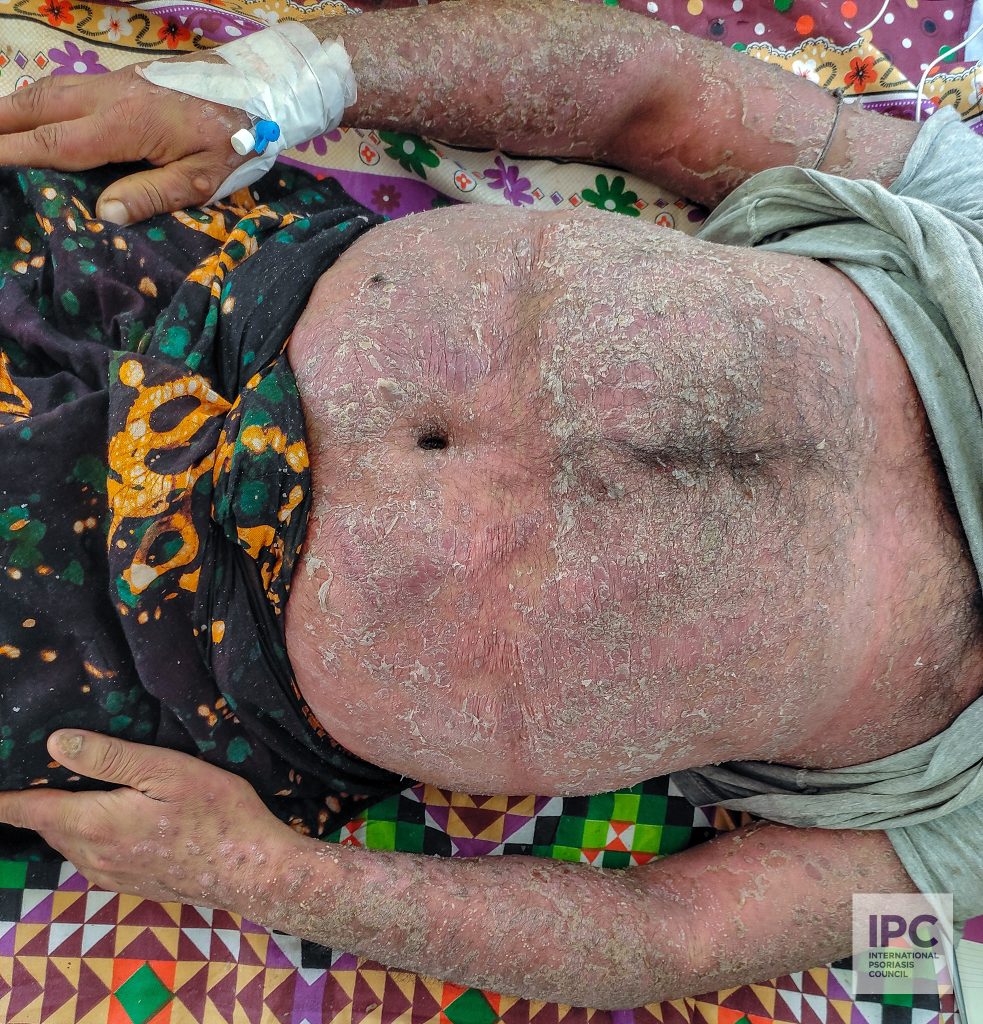
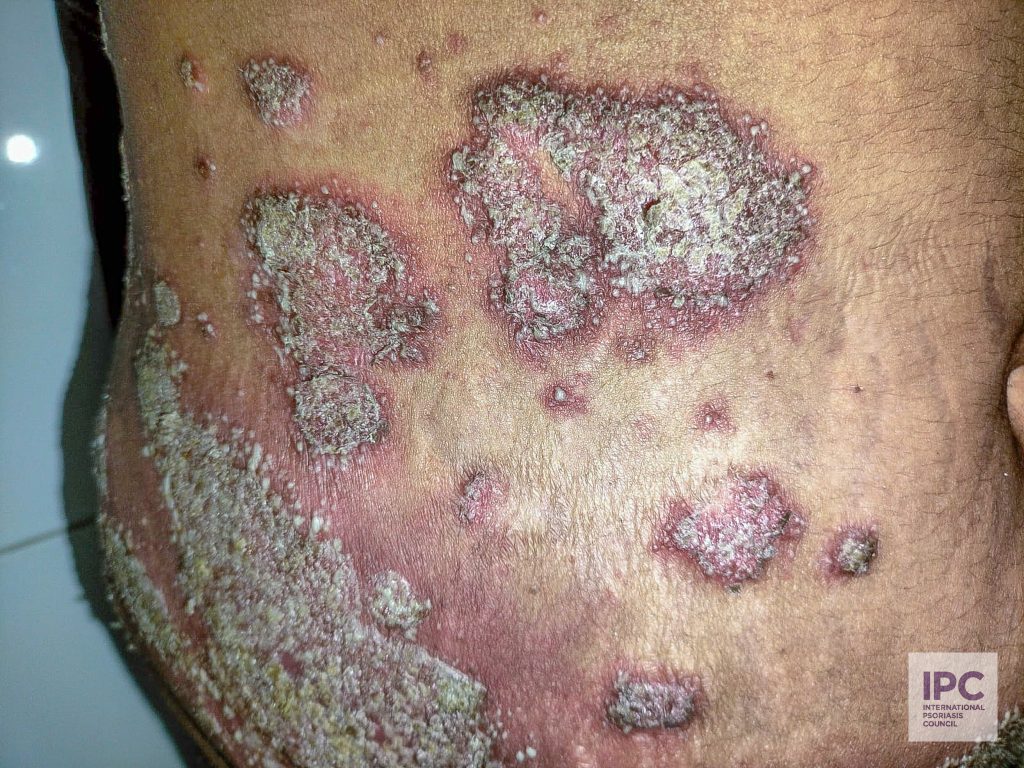
A patient with pustular psoriasis presented with purple plaque on the abdomen with pustules and crust.
Country: Bangladesh
Clinical Context: A patient with pustular psoriasis presented with purple plaque on the abdomen with pustules and crust.
Phenotype: Psoriasis with pustulation
Contributed by: Mohammad Rafiqul Mowla, MD, PhD
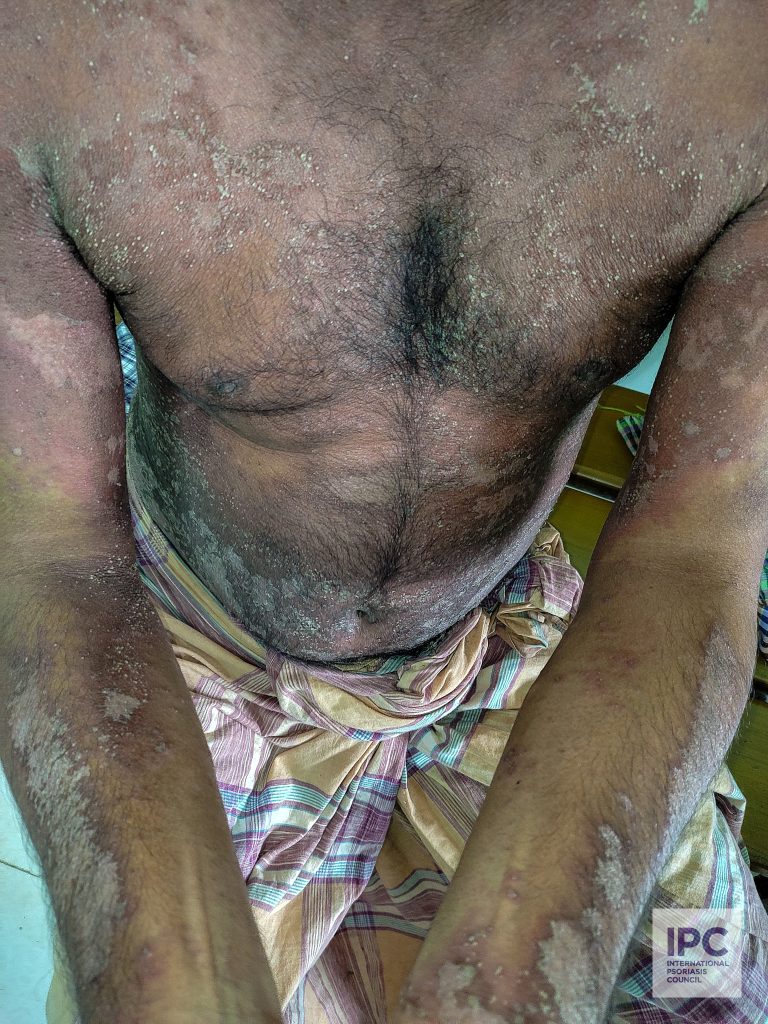
45-year-old male patient with pustular psoriasis presented with large erythematous to purple plaques with pustules and lakes of pus on the trunk and both upper extremities.
Country: Bangladesh
Clinical Context: 45-year-old male patient with pustular psoriasis presented with large erythematous to purple plaques with pustules and lakes of pus on the trunk and both upper extremities.
Phenotype: Pustular Psoriasis
Contributed by: Mohammad Rafiqul Mowla, MD, PhD
A male patient with pustular psoriasis presented with large purplish erythematous plaque with pustules and lakes of pus on the lower extremities.
Country: Bangladesh
Clinical Context: A male patient with pustular psoriasis presented with large purplish erythematous plaque with pustules and lakes of pus on the lower extremities.
Phenotype: Pustular Psoriasis
Contributed by: Mohammad Rafiqul Mowla, MD, PhD
A male patient with pustular psoriasis presented with large purplish erythematous plaque with pustules and lakes of pus on the trunk.
Country: Bangladesh
Clinical Context: A male patient with pustular psoriasis presented with large purplish erythematous plaque with pustules and lakes of pus on the trunk.
Phenotype: Pustular Psoriasis
Contributed by: Mohammad Rafiqul Mowla, MD, PhD

Submit Your Own Photos

IPC is interested in collecting photographs of psoriasis on all of skin, from all regions of the world. You can submit your photos to be added to this educational tool by completing this form.

What's New

Use and Misuse of Systemic Corticosteroids in Psoriasis

In this Take Ten with IPC video, Professor Peter van de Kerkhof discusses the use and misuse of systemic corticosteroids in psoriasis. He questions whether they contraindicate the treatment of psoriasis, while also covering his personal experience in prescribing them.

WATCH NOW

Thursday, May 14, 2026

Use and Misuse of Topical Corticosteroids in Psoriasis

In this Take Ten with IPC video, Professor Peter van de Kerkhof discusses the use and misuse of topical corticosteroids in psoriasis, covering current use, guidelines, and consequences.

WATCH NOW

Thursday, May 14, 2026

Videos Now Available from the IEC & IPC Joint Symposium at AAD

Missed the joint symposium hosted by the International Eczema Council (IEC) and International Psoriasis Council (IPC) at the American Academy of Dermatology (AAD) Annual Meeting? Select presentations from Psoriasis or Dermatitis? When Boundaries Blur and Treatments Flip the Script are now available, covering diagnostic overlap, emerging tools, treatment-related reactions, and practical strategies for managing complex cases across diverse patient populations.

WATCH NOW

Wednesday, May 27, 2026