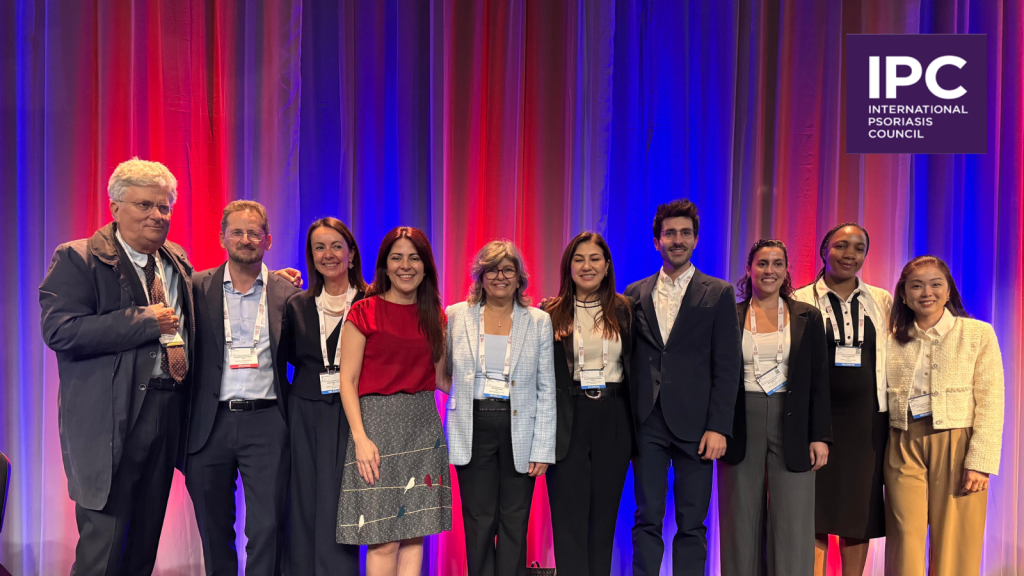
- María Julia Cura, MD | Josep Riera-Monroig, MD | Lily Tumalad, MD, FPDS
- Congress Reports, Comorbidities, Diagnosis, Disease Severity, Genetics, Pathophysiology, & Epidemiology, Quality of Life, Research, Treatment, Types of Psoriasis
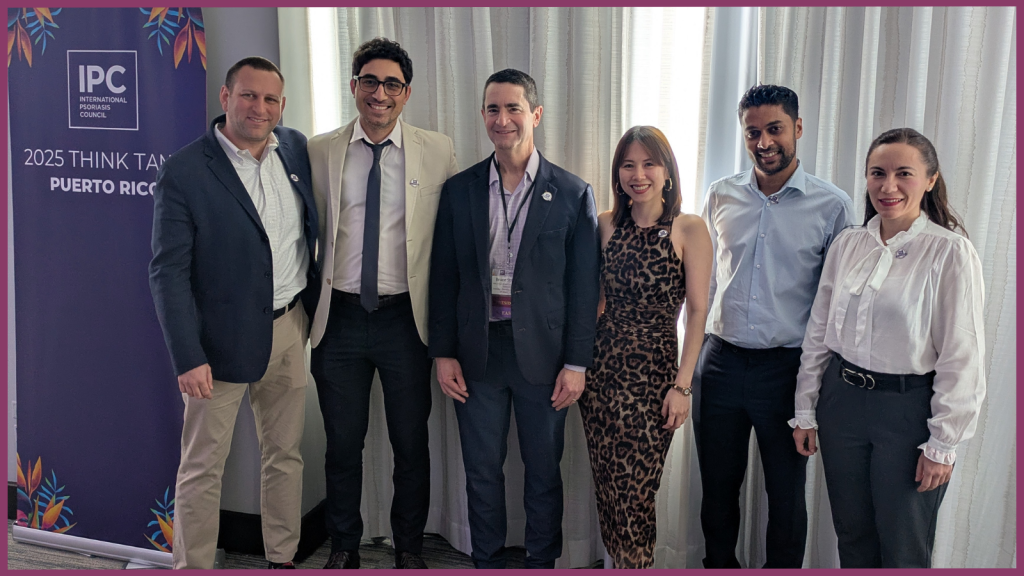
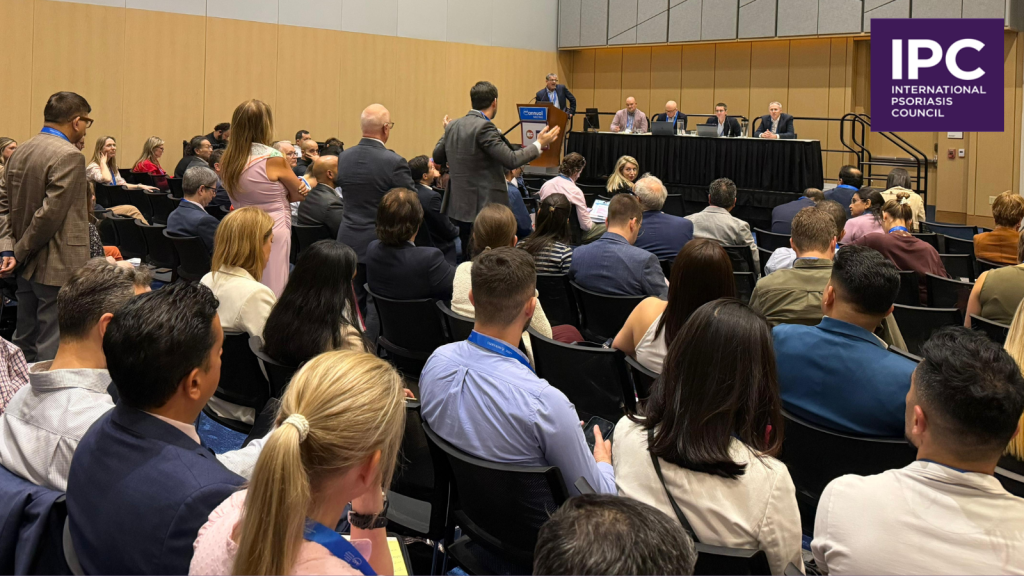
The European Academy of Dermatology and Venereology (EADV) Congress was held September 17–20, 2025, in Paris, France, and brought together more than 20,000 delegates and 600 experts. This year’s meeting featured the IPC Symposium: Psoriasis and Its Unique Challenges, multiple psoriasis-focused sessions, and late-breaking research. Below are the highlights most relevant to psoriasis.
IPC SYMPOSIUM: PSORIASIS AND ITS UNIQUE CHALLENGES
Overview of Differential Diagnosis
Bruce Strober, MD, PhD, IPC President
Dr. Bruce Strober reviewed the broad differential diagnoses of plaque psoriasis, including eczema, lupus, cutaneous T-cell lymphoma, and infections such as syphilis and scabies. He emphasized integrating clinical evaluation, histopathology, and laboratory testing to avoid misdiagnosis.
Case Presentation: Differential Diagnosis
Lyra Tumalad, MD, FPDS, IPC Jr. Councilor
Dr. Lyra Tumalad presented a case initially treated as psoriasis that was ultimately diagnosed as secondary syphilis. The case highlighted the critical need to consider syphilis in atypical, treatment-resistant presentations.
Addressing the Itching and Pain of Psoriasis
Martin Steinhoff, MD, PhD
Professor Martin Steinhoff discussed itch and pain as central symptoms of psoriasis, overturning the outdated view that psoriasis “does not itch.” He outlined neuroimmune mechanisms linking cytokines and altered innervation to symptom burden, highlighting opportunities for new targeted therapies.
Case Presentations: Psoriasis Symptoms
Romina Contreras, MSc, MD, IPC Councilor
Josep Riera-Monroig, MD, IPC Jr. Councilor
Dr. Romina Contreras presented a case of multidomain psoriatic arthritis complicated by biologic failures and paradoxical reactions. Dr. Josep Riera-Monroig presented a case of painful nail psoriasis and stressed the value of nail-specific PROMs such as NPQ10 and NAPPA-QoL to capture disease burden fully.
Psoriasis in Darker Skin Tones
Angela Londoño, MSc, MD, IPC Councilor
Dr. Angela Londoño highlighted the clinical presentation of psoriasis in diverse skin tones, where erythema often appears brown, violaceous, or gray, complicating recognition. She emphasized diagnostic challenges, disproportionate quality-of-life burden, and the underrepresentation of patients of color in clinical trials.
Psoriasis in the Elderly
Peter van de Kerkhof, MD, PhD, IPC Chief Medical Officer
Professor Peter van de Kerkhof discussed psoriasis in older patients, who frequently present with comorbidities and unique quality-of-life priorities. While biologics remain effective and safe, treatment decisions must balance efficacy, safety, and comorbidity management.
Case Presentations: Special Populations
Priscilla Angwenyi, MD, IPC Jr. Councilor
María Julia Cura, MD, IPC Jr. Councilor
Dr. Priscilla Angwenyi shared a case underscoring the psychosocial impact of psoriasis in younger patients. Dr. María Julia Cura presented an elderly patient with multiple comorbidities and treatment-related risks, highlighting the complexity of individualized care.
OTHER PSORIASIS SESSIONS
EADV Free Communication 1 (Psoriasis)
Oras Alabas, MD
Knut Schäkel, MD, PhD
Roberto Bueno Filho, MD, PhD
Melinda Gooderham, MD, IPC Councilor
Denis Jullien, MD, PhD
Laura Ghanem, MSc
Linda Stein Gold, MD, IPC Councilor
Emma Vyvey, MSc
Heber Rew Bright Bright, MSc
This session featured registry analyses, trial updates, and novel therapies. BADBIR registry data reassured pregnancy outcomes in women with psoriasis, while infection risk comparisons revealed differences across systemic therapies. New molecules such as icotrokinra, zasotinib, and ORKA-001 demonstrated promising efficacy.
EADV Free Communication 2 (Psoriasis)
Grace Xiong, MSc
Laura Kuhl, MSc
Kenneth B. Gordon, MD, IPC Councilor
Shakhzoda Uchkunkhonova, MD
Joseph Merola, MD, MMSc, IPC Councilor
Andreas Pinter, MD, IPC Councilor
Lawrence Eichenfield, MD
Andrew Blauvelt, MD, MBA, IPC Board Member
Studies focused on diagnostics, systemic treatment trends, and long-term safety. Imaging studies identified subclinical synovitis in psoriasis patients without musculoskeletal symptoms, suggesting potential for earlier PsA intervention. Data on risankizumab and ixekizumab confirmed strong long-term safety and shed light on cardiometabolic risk. Subgroup analyses of guselkumab and icotrokinra reinforced the value of early intervention.
LATE-BREAKING ABSTRACTS
Maintenance of Response with Icotrokinra, a Targeted Oral Peptide, for the Treatment of Moderate-to-Severe Plaque Psoriasis: Randomized Treatment Withdrawal in Adults (Weeks 24–52) and Continuous Treatment in Adolescents (Through Week 52) From the Phase 3, ICONIC-LEAD Trial
Jennifer Soung, MD
Icotrokinra maintained high PASI 75/90 response rates through week 52 in adults and achieved near-universal clearance in adolescents. The oral IL-23 receptor antagonist demonstrated robust efficacy and favorable safety, supporting its role as a potential alternative to biologics.
Balinatunfib, the First Oral Selective Inhibitor of TNFR1 Signaling, in Plaque Psoriasis: A Double-Blind, Randomized, Placebo-Controlled Phase 2b Study
Fernando Valenzuela, MD, IPC Councilor
Dr. Valenzuela presented data on balinatunfib, which selectively blocks TNFR1 while sparing TNFR2. The trial showed efficacy across endpoints, favorable safety, and reductions in Th17/Th22 cytokines, supporting its potential as a novel oral treatment.
Whole Genome Sequencing Analysis of Generalized Pustular Psoriasis Samples from a Global Clinical Study
Sandra Smieszek, PhD
Whole genome sequencing identified IL36RN and TNIP1 variants as drivers of GPP pathophysiology and treatment response. Patients with IL36RN variants achieved higher response rates to imsidolimab, highlighting precision medicine opportunities.
Predictive Factors for Early Super Response to Bimekizumab in 341 Patients with Psoriasis: A 24-Week Short-Term Multicenter Real-Life Experience
Tubanur Cetinarslan, MD
This real-world study found that higher baseline PASI, palmoplantar involvement, and prior biologic failures predicted reduced early super response. Most patients achieved strong outcomes by week 24 regardless of baseline risk factors.
Phase 1 Clinical Data of ORKA-001, a Novel Half-Life Extended IL-23p19 Monoclonal Antibody with Potential for Once-Yearly Dosing in Plaque Psoriasis
James Krueger, MD, PhD, IPC Councilor
ORKA-001 demonstrated a mean half-life of ~100 days, favorable tolerability, and maintained therapeutic levels for up to 12 months, supporting its potential as a once-yearly therapy.
Dose Reduction of IL-17 and IL-23 Inhibitors in Patients with Plaque Psoriasis Is Non-Inferior to Usual Care: An International Pragmatic Randomized Controlled Trial – The BeNeBio Study
Juul van den Reek, MD, PhD, IPC Councilor
The BeNeBio trial demonstrated that dose reduction strategies maintained psoriasis control while reducing treatment burden and costs. Non-inferiority was confirmed compared to standard dosing.
Safety of a Selective Oral TYK2/JAK1 Inhibitor, AC-201, in Patients with Plaque Psoriasis: A Phase II, Randomized, Double-Blinded, Placebo-Controlled Trial
Xing-Hua Gao, PhD
AC-201 improved PASI scores significantly across multiple regimens, with the 50 mg BID dose achieving PASI 75 in 74% of patients at week 12. The oral therapy showed a safety profile consistent with JAK inhibitors.
We encourage you to download the full 2025 EADV Congress Report for comprehensive coverage of psoriasis-focused sessions, abstracts, and detailed findings.