
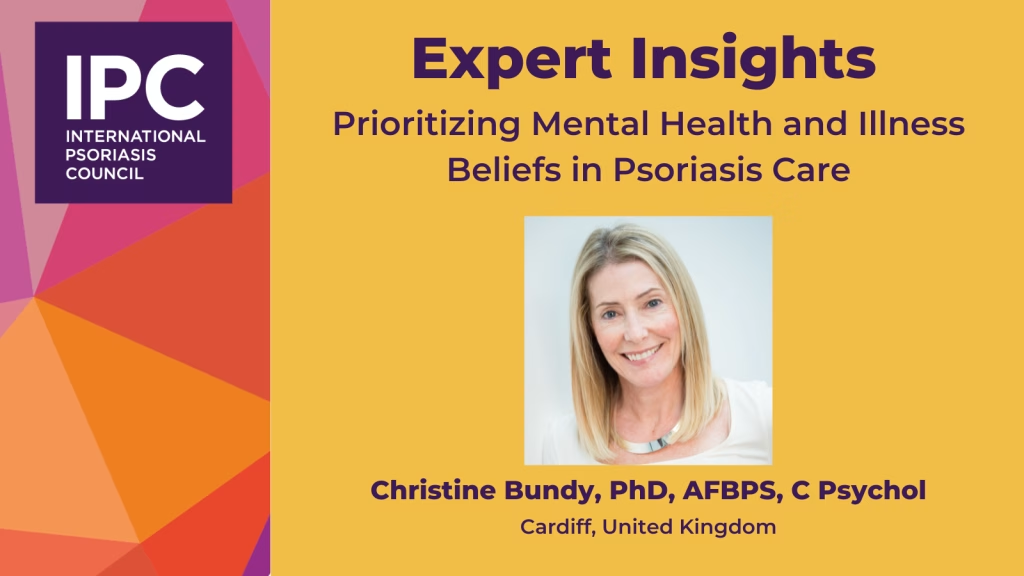
- CHRISTINE BUNDY
- Expert Insights, Quality of Life, Treatment
Christine Bundy, PhD, AFBPS, C Psychol
University of Cardiff
Cardiff, United Kingdom
TERMS TO KNOW
Comorbidities are when two or more diseases are present in a patient at the same time. With psoriasis, one common comorbidity is psoriatic arthritis, but other comorbidities can include anxiety and depression.
Illness beliefs are beliefs that people form over their life that impact how they view their illness and how much control they can have over it.
Medicine beliefs are beliefs that people form over their life that impact how they view medicine, whether it is necessary, and what concerns they may have about it.
THE 101
When it comes to psoriasis and mental health, an estimated:
- Up to 50% of psoriasis patients suffer from depression.
- 30% live with anxiety.
- 10% experience thoughts of suicide.
TIMELINE OF KEY ACHIEVEMENTS
1946: Dr. Eric Wittkower begins studying the relationship between psoriasis and psychological stress.
2022: Happify Health and Almirall announce the launch of Claro — a digital platform designed to help improve mental health for those living with psoriasis in Spain, the United Kingdom, or Italy.
RECENT RESEARCH
Kleyn CE, Talbot PS, Mehta NN, Sampogna F, Bundy C, Ashcroft DM, Kimball AB, van de Kerkhof PCM, Griffiths CEM, Valenzuela F, van der Walt JM, Aberra T, Puig L. Psoriasis and Mental Health Workshop Report: Exploring the Links between Psychosocial Factors, Psoriasis, Neuroinflammation and Cardiovascular Disease Risk. Acta Derm Venereol. 2020 Jan 7;100(1):adv00020. doi: 10.2340/00015555-3375. PMID: 31742649.
Schwartz J, Evers E, Bundy C, Kimball AB. Getting under the Skin: Report from the International Psoriasis Council Workshop on the Role of Stress in Psoriasis. Frontiers in Psychology. 2016 Feb 2https://doi.org/10.3389/fpsyg.2016.00087.
As a Consultant Health Psychologist, Christine Bundy PhD, AFBPS, C Psychol knows that physical health and mental health are crucially intertwined, especially when it comes to psoriasis.
With over 40 years working to improve patient care, Professor Bundy’s research focuses on how patients’ illness and medicine beliefs can affect their mood, self-management, and disease progression.
In a recent presentation, Prof. Bundy shared the effects that mental health can have on psoriasis patients — and their health outcomes. Here, she shares what clinicians can be on the lookout for, what questions they can ask, and the topics she hopes to see uncovered in future research.
Psoriasis — More Than Just a Skin Condition
While psoriasis shows itself on the skin, it is far more than just a skin condition impacting a patient’s mental health, self-esteem, and quality of life. Prof. Bundy asks not if clinicians are measuring the right factors, but if clinicians are measuring all of the right factors — and what other factors may provide insight into a patient’s condition and predicted outcomes.
“Simply focusing on quality of life or mood is not sufficient in giving us the full-rounded picture for how we might help people to self-manage their psoriasis more effectively,” explains Prof. Bundy.
Often, clinicians will assess a patient’s:
- Disease progression and improvement in skin using the Psoriasis Area and Severity Index (PASI) or the Physician’s Global Assessment (PGA)
- Quality of life impact, assessing psoriasis’ impact on their physical, psychological, and social health
- Comorbidities — such as psoriatic arthritis and cardiovascular disease — and their associated risk factors.
Prof. Bundy emphasizes the need to expand this assessment to also include other factors such as a patient’s:
- Alcohol consumption, drug use, and other forms of self-medication
- Mood, including symptoms of anxiety and depression
- Illness and medicine beliefs that can impact their mental health or adherence
“We know that in other long-term conditions, individual beliefs can predict outcomes for a range of long-term conditions, including diabetes functioning and management, cardiovascular disease, chronic fatigue syndrome… and stroke outcomes,” explains Prof. Bundy.
With this information, Prof. Bundy’s research emphasizes how a patient’s beliefs can impact their health outcomes — and their mental health.
How Beliefs Impact Behaviors and Mental Health
When it comes to psoriasis, Prof. Bundy shares that the extent and involvement of skin alone are not enough for clinicians to best predict a patient’s behavior, self-management, adherence, or health outcomes. Illness beliefs — or how someone views their psoriasis is a key component, and it can actually be a better predictor of outcomes than just the severity of someone’s psoriasis.
Prof. Bundy shares five core beliefs as outlined in Illness Representations and Coping with Health Threats that tend to impact clinical outcomes:
- Symptoms: What symptoms does the patient believe or feel is part of their psoriasis?
- Cure: Does the patient think they can be cured? What does “being cured” mean to them?
- Control: How much control does a patient think they or their medicines have over their illness? Do they believe certain factors like weight, smoking, or alcohol use are contributing to their condition?
- Consequences: How do they think their illness or medicine is going to affect their life, their health, their relationships, or even their employment?
- Timeline: How long does the patient think they will need a certain treatment? Are those expectations realistic?
“If patients perceive psoriasis as a threat to their health… [or as] a threat to their identity (as a person, as a family member, as a father, as an employee), this will shape how they think about these five core beliefs and predict their emotional reactions,” says Prof. Bundy.
For example, if a patient reports symptoms that are unrelated to their psoriasis — but the patient thinks those symptoms are related — this overreporting can indicate anxiety. This behavior can provide clinicians insight into a patient’s mental health, potential comorbidities, and even their health outcomes.
What Comes Next — Centering Mental Health in Your Practice
The theme for World Psoriasis Day this year is Mental Health, but as a clinician, this is something that clinicians can prioritize in your work all year long.
The first step clinicians can take is to revisit some of the common questions you ask your patients during their visit. Prof. Bundy acknowledges that it can be difficult for clinicians to identify which people may be experiencing anxiety, depression, or be at risk for suicide due to:
- Patients masking low mood or depression
- Time constraints of the consultation
The second step dermatologists can make, Prof. Bundy shares, is to employ the help of your colleagues in mental health. Insist on dedicated, and preferably integrated, psychological support for your patients. Psoriasis impacts all aspects of a person’s life and coordinated care can help them achieve the best health outcomes.
Another important step is to help patients understand their behavioral choices — and how they are impacting their overall mental and physical health.
“What we have to do as clinicians — whether you’re working as a dermatologist or a health psychologist like me — is we need to switch patients’ thinking away from health-threatening features to health-protective features,” explains Prof. Bundy. This means understanding which factors may be contributing to their psoriasis, how much control they have over them, and how those behaviors may actually be a feature of their anxiety.
Lastly, Prof. Bundy encourages clinicians to expand their assessment of patients with questionnaires that address more than just skin and severity.
She points to:
- The Brief Illness Perception Questionnaire (BIPQ) to assess beliefs;
- ● The Patient Health Questionnaire (PHQ-2) and Hospital Anxiety & Depression Scale (HADS) to assess mood;
- The Dermatology Life Quality Index (DLQI) to assess quality of life; and
- The Goal Attainment Scale to assess behavior change.
With these steps and continued prioritizing of mental health, Prof. Bundy is excited for future research and what it will continue to tell us about how to support patients with psoriasis.