- IPC GENERAL
- Comorbidities, IPC Publications, Research, Treatment
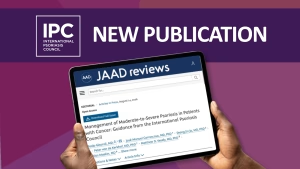
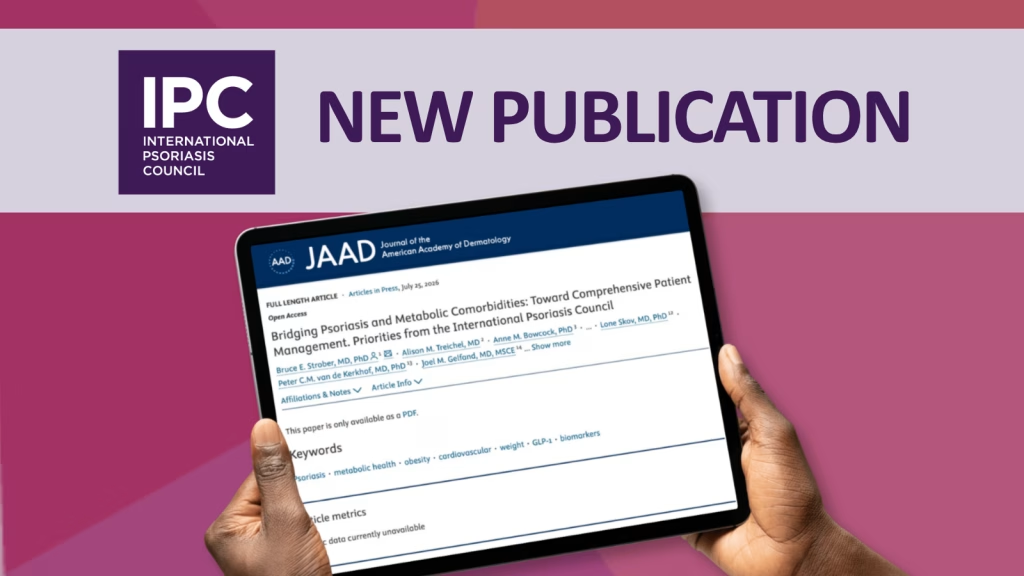
Psoriasis is not only a skin disease. Evidence from genetics, immunology, and large-scale epidemiology studies has redefined it as an inflammatory disease strongly associated with metabolic comorbidities, including obesity, diabetes, cardiovascular disease, and premature mortality. A new IPC paper published in the Journal of the American Academy of Dermatology (JAAD) translates this growing body of evidence into five concrete priorities for clinical practice.
Why Metabolic Health Cannot Wait
Research presented at the 2025 IPC Think Tank confirmed what many clinicians already suspect: psoriasis and cardiometabolic disease run deeper than coincidence. Psoriasis is associated with greatly elevated risks of metabolic syndrome and major adverse cardiovascular events, and that risk increases as skin disease severity increases. Mendelian randomization studies go a step further, showing that obesity and visceral adiposity are not simply downstream consequences of chronic inflammation but may actively contribute to psoriasis pathogenesis. Adiposity, the authors argue, should be considered a primary target of effective psoriasis therapy in overweight or obese patients. Bruce Strober, MD, PhD, IPC President and lead author, reflects on what this means for clinicians. “Psoriasis care cannot stop at the skin. Dermatologists are already seeing these patients regularly, and that access creates a real opportunity to identify cardiometabolic risk early and coordinate the care patients need.”
The Treatment Landscape: What Current Therapies Can and Cannot Do
Biologic therapies, particularly interleukin-17 (IL-17) and interleukin-23 (IL-23) inhibitors, have transformed outcomes in psoriasis for skin and joints. Their metabolic effects, however, remain inconsistent. IL-17 inhibitors reduce skin inflammation and systemic inflammatory markers. They may produce modest gains in endothelial function, liver fibrosis, and vascular health, but they are largely metabolically neutral with respect to glucose, lipids, and blood pressure.
GLP-1 receptor agonists have attracted significant attention as a potential complement to standard therapy. Initial reports suggest disease-modifying effects via weight loss and direct anti-inflammatory actions on immune cells, and genetic studies simulating GLP-1 receptor signaling indicate a protective effect against psoriatic disease. That said, the paper is explicit: GLP-1 receptor agonists are an area of active investigation, not established therapy. Randomized, placebo-controlled trials evaluating them as monotherapy in psoriasis are still needed. IPC Chief Medical Officer Professor Peter van de Kerkhof, MD, PhD, underscores what is at stake. “GLP-1 receptor agonists represent one of the most important questions in psoriasis research right now. The clinical signals are promising, but we need properly powered trials before we can translate that promise into practice.“
The Dermatologist’s Role in Metabolic Screening
Dermatologists are not primary care providers, but they may be some of the most consistent points of contact for patients with moderate to severe psoriasis. The paper outlines a practical opportunity: leverage those frequent visits to screen for cardiometabolic risk using body mass index, glucose, triglycerides, LDL cholesterol, hemoglobin A1c, and blood pressure. When elevated risk is identified, coordination with other specialties can significantly increase preventative benefit, particularly for younger patients who often lack regular primary care follow-up.
Five Priorities From the 2025 IPC Think Tank
A two-round priority-setting exercise at the 2025 IPC Think Tank produced five action items ranked by weighted average (lower score indicates higher priority):

Together, these priorities form a roadmap for bridging dermatology and metabolic medicine, grounded in existing evidence and oriented toward the research and clinical infrastructure that remains to be built.
Read the full paper in the Journal of the American Academy of Dermatology.
IPC has also created a set of summary slides covering the screening criteria, the biologics-versus-GLP-1 comparison, and the five Think Tank priorities, all in one place. Download the slides to reference during patient visits or share with colleagues.