
- IPC GENERAL
- IPC Fellows, IPC News

I am a dermatologist residing in Malmö, Sweden. I currently have a post-doctorate position in Liv Eidsmo´s research group in Copenhagen being a fellow of the BRIDGE Translational Excellence Program funded by the Novo Nordisk Foundation. My childhood was primarily spent in Gran Canaria, in the Canary Islands, before relocating to Sweden at seventeen. My medical studies were completed in Gothenburg.
In 2021, I successfully earned my PhD, focusing my research on biomarkers for assessing psoriasis disease activity and exploring the relationship between psoriasis and comorbidity. As I neared the end of this extensive research journey and prepared for my doctoral defense, I reflected on what lay ahead. During this contemplative phase, I received an email from the IPC, introducing me to their Fellowship Program and the application process. Sometimes, life has a way of offering answers when we least expect it.
The program has provided invaluable insights into physicians’ shared challenges when caring for patients with psoriasis globally. It has also offered me a unique perspective on the disparities in access to treatment, economic resources, and the organization of healthcare systems in various parts of the world.
Throughout this journey, I’ve had the pleasure of forging new friendships and have been deeply touched by the genuine kindness and warmth exhibited by the IPC Staff, Councilors, and other Fellows who are all part of this remarkable program.
“The program is a dynamic platform where individuals with shared interests exchange knowledge and engage. The program's thoughtful organization and friendly atmosphere naturally encourage collaboration and networking.”
The program has significantly enriched and expanded my understanding of psoriasis as a medical condition. Perhaps even more valuable is the opportunity to connect with a network of colleagues who share a deep interest in this disease.
My mentor, IPC Councilor Dr. Fernando Valenzuela, and I began a research initiative during my fellowship program. We engaged with psoriasis patients digitally, collecting their responses to multiple-choice questions about their perceptions of the disease. Our journey began in Chile and subsequently extended to Sweden. With the generous support of IPC Board Member Lone Skov, we successfully disseminated the questionnaire to individuals with psoriasis in Denmark. Juul van den Reek, an IPC Fellow from 2022, is currently preparing to assemble a cohort of Dutch participants for our study.
Establishing this multinational study has been a source of great satisfaction, particularly given the limited financial resources. It has also underscored the considerable potential of digitalizing research efforts. The prospects for investigator-initiated studies and cross-border collaborations appear exceedingly promising.
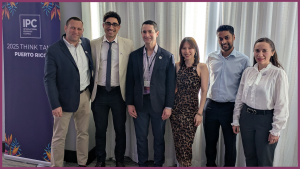
The program is a dynamic platform where individuals with shared interests exchange knowledge and engage. The program’s thoughtful organization and friendly atmosphere naturally encourage collaboration and networking. These interactions occur virtually and in person, including at events during congresses or the annual IPC Think Tank Meeting.
As mentioned previously, the IPC Fellowship Program exudes a welcoming and supportive environment. This spirit of camaraderie naturally extends to offering assistance across a spectrum of needs, whether addressing logistical concerns or providing guidance when tackling complex clinical questions.
The IPC Fellowship Program embodies a remarkable level of ambition, and it’s evident that the IPC has excelled in enlisting the expertise of top global psoriasis specialists as educators and mentors. What truly sets this program apart is its global perspective, a feature that I find quite extraordinary. Fellow participants hail from various corners of the world, creating a fascinating mosaic of viewpoints and backgrounds. Our digital meetings genuinely intrigued me, where participants, spanning many time zones, came together, revealing a diverse blend of seasons – some experiencing the depths of winter. In contrast, others reveled in the warmth of summer.
If you are a young dermatologist or researcher that is passionate about improving the lives of people with psoriasis and wants to expand your horizons, consider applying to participate in the IPC’s International Fellowship Program. Applications for the 2024 program is open through the end of September.