- María Julia Cura , MD and Jennifer Lavina Ngo , MD-MBA, FPDS
- Congress Reports, Genetics, Pathophysiology, & Epidemiology, Research, Treatment
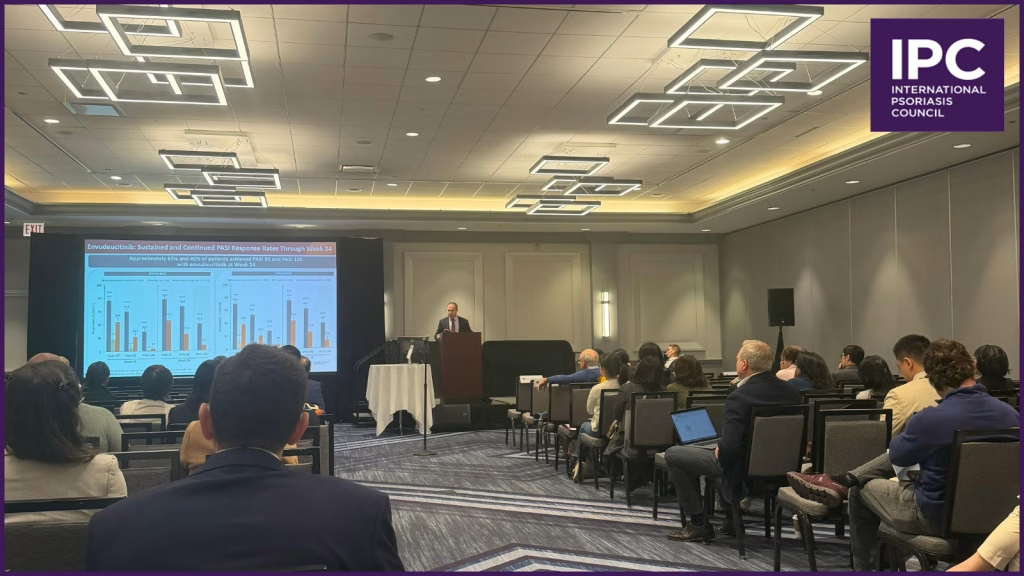
The International Psoriasis Council (IPC) hosted a scientific symposium, The Arc of Disease Control in Psoriasis: Early Interception – Deep Pathway Blockade – Treatment Failure, during the 2026 Society for Investigative Dermatology (SID) Annual Meeting in Chicago, Illinois, United States. The symposium brought together international experts to discuss disease interception, immune memory, molecular profiling, treatment response, and mechanisms of therapeutic escape in psoriasis.
This blog post summarizes the scientific sessions presented during the IPC symposium. Download the full symposium report for additional session details and references.
THE ARC OF DISEASE CONTROL IN PSORIASIS: EARLY INTERCEPTION, DEEP PATHWAY BLOCKADE, AND TREATMENT FAILURE
Intercepting Psoriasis at the Earliest Stages: Lessons from STEP-IN and GUIDE
Knut Schäkel, MD
Professor Knut Schäkel presented findings from the STEP-IN and GUIDE studies examining disease interception and disease modification in psoriasis. The session focused on inflammatory “disease memory,” including epigenetic changes and tissue-resident memory T cells that may contribute to relapse despite clinical remission. Early biologic intervention was associated with greater molecular normalization and longer drug-free remission compared with treatment later in the disease course.
Preventing Psoriatic Arthritis: Can Immune Interception Change the Natural Disease Course?
Shikha Singla, MD
Dr. Shikha Singla reviewed the current evidence on the prevention and early interception of psoriatic arthritis (PsA) in patients with psoriasis. The presentation discussed progression from subclinical inflammation to clinically manifest PsA, including imaging abnormalities and prodromal symptoms. Risk factors such as obesity and physical trauma were reviewed alongside emerging data evaluating GLP-1 receptor agonists and biologic therapies as possible strategies to reduce incident PsA risk.
Implications of Controlling Psoriasis Inflammation: From Molecular Profiling to Comorbidities
Alex Tsoi, MS, PhD, IPC Councilor
Dr. Alex Tsoi discussed how molecular profiling may help define controlled inflammation in psoriasis and improve understanding of treatment response and comorbidity risk. Transcriptomic analyses demonstrated rapid normalization of inflammatory pathways following biologic therapy, particularly with IL-17 inhibition. Persistent epigenetic alterations after treatment resolution and shared genetic susceptibility across psoriasis and immune-mediated comorbidities were also discussed.
Oral Versus Biologics: Targeted or Broader Approaches?
Christopher Bunick, MD, PhD, IPC Councilor
Dr. Christopher Bunick reviewed psoriasis therapeutics through the lens of structural biology and discussed how molecular structure influences treatment efficacy. The presentation compared extracellular and intracellular therapeutic targets, including IL-23, IL-17, TNF-α, TYK2, and PDE4 pathways, and reviewed emerging oral therapies, including oral IL-23 receptor antagonists and next-generation TYK2 inhibitors.
Why Treatment Fails: Interferons, Immune Rewiring, and Biological Escape Mechanisms
Curdin Conrad, MD, IPC Board Member
Professor Curdin Conrad discussed mechanisms contributing to primary and secondary treatment failure in psoriasis. The session reviewed inflammatory patterns involving IL-23/IL-17 signaling, type I interferon activity, and neutrophilic inflammation, as well as anti-drug antibodies and immune escape pathways. Molecular endotyping was presented as an approach to support more individualized therapeutic decision-making.
Clinical Escape in Psoriasis: Paradoxical Reactions and Flip-Flop Phenomena
Wilson Liao, MD, IPC Councilor
Dr. Wilson Liao reviewed paradoxical inflammatory reactions associated with biologic therapies, including paradoxical psoriasis, eczema, and psoriasiform eruptions. The presentation focused on competing immune pathways and “flip-flop” inflammatory phenomena involving TH1, TH2, TH17/22, and innate immune circuits. Future approaches using immune profiling and spatial transcriptomics to identify patients at risk for paradoxical reactions were also discussed.
We encourage you to download the full symposium report for detailed summaries and references.