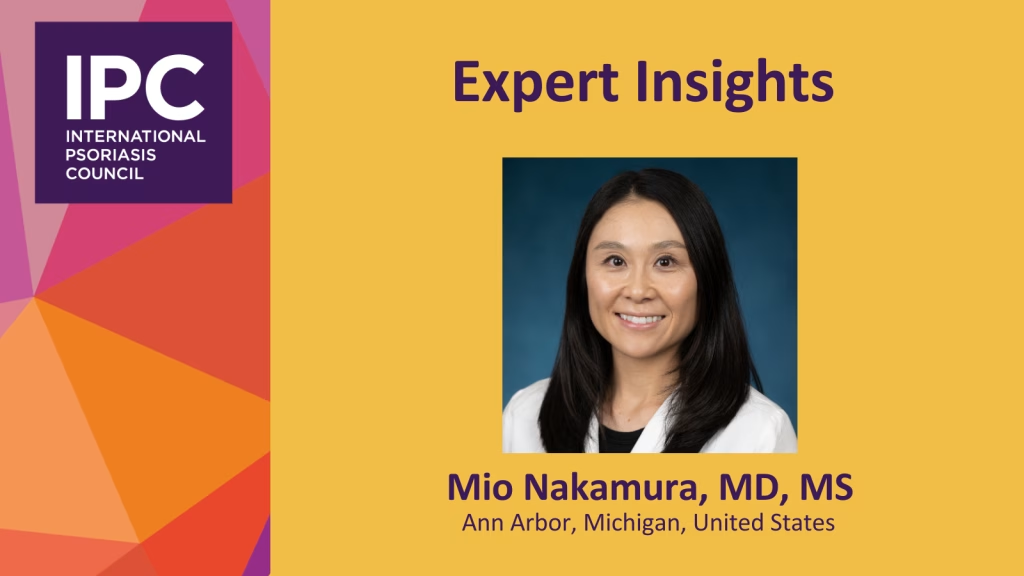
- Mio Nakamura, MD, MS
- Expert Insights, Quality of Life, Treatment

As physicians, we meet many patients in our clinics every day, and each patient’s personality often makes these interactions distinctive. Personality is the unique way of relating to self, others, and the world. In the medical setting, personality is important because it can affect how a patient presents with and manages their illness, relates to the clinician, and responds to treatments and procedures. Furthermore, personality features are often heightened during times of stress, such as when one is ill or hospitalized. Therefore, physicians may encounter personality traits more prominently in the clinical setting.
Importantly, understanding these dynamics is intended to strengthen empathy, communication, and patient outcomes, rather than stigmatize individuals with mental health conditions.
Physicians need to adapt to patients’ personalities and communication styles. While personalities themselves may not change, clinicians can adjust their approach to better align with the patient’s perspectives and needs. Specifically, we must make thoughtful predictions about which comments and interventions may be best received, which may jeopardize the doctor-patient relationship, and which may facilitate collaboration toward optimal outcomes. However, this can sometimes be challenging when patients show traits associated with certain personality disorders.
Patients with personality disorders may present unique communication and management challenges in clinical settings, as these conditions are characterized by persistent patterns of thinking and behavior that can affect interpersonal relationships, emotional regulation, and medical interactions. These interactions can sometimes be challenging for both patients and clinicians, particularly when communication styles and expectations differ.
When seeing a patient with a personality disorder, there are a few key tips to keep in mind. First, it is important to recognize personality traits or patterns that may be influencing the interaction. Next, we should seek to understand the underlying psychological conflicts and emotional needs contributing to these behaviors. Lastly, we can adjust our communication and management approach accordingly.
Let’s use borderline personality disorder (BPD) as an example. BPD is characterized by a pattern of instability in interpersonal relationships, self-image, and affect. People with BPD may exhibit a phenomenon called “splitting,” which is a tendency to view others in extremes, such as either wholly good or wholly bad. In addition, they often experience rapidly shifting moods and intense emotions. Some patients may also demonstrate impulsive behaviors, including self-harm, suicide attempts, substance abuse, and risky sexual behaviors.
In the medical setting, a patient with BPD may show marked variability in how they experience and communicate about their illness. They may express strong emotional responses to their medical condition. There may also be instability in the physician-patient relationship. Some patients may distrust health care providers due to prior experiences in which they felt dismissed or insufficiently supported. They may have seen multiple providers previously, and earlier clinical relationships may have been negatively affected by communication difficulties or unmet emotional needs. Prior providers may sometimes be viewed negatively within the context of “splitting,” a defense mechanism associated with BPD.
When approaching patients with BPD in the dermatology setting, it is important to recognize that many of their emotions and behaviors may stem from a fear of abandonment or prior negative experiences within the health care system. Clinicians should avoid minimizing the patient’s concerns and should acknowledge the emotional impact that chronic skin disease can have, even when reactions may appear disproportionate to the clinical presentation. Because these patients may be particularly sensitive to perceived abandonment, scheduling regular follow-up appointments may help support continuity and strengthen the therapeutic relationship.
Although these interactions can sometimes be demanding, it is important to maintain appropriate clinical boundaries and avoid unnecessary treatments or procedures. Extensive attempts to directly challenge perceptions or behaviors may sometimes escalate tension or erode trust within the therapeutic relationship. Instead, clinicians should acknowledge the patient’s concerns, communicate clearly and empathetically, and explain the reasoning behind the management plan.
As illustrated in this example with BPD, recognizing patterns that may influence communication and understanding the underlying psychological factors can help clinicians adjust their interactions and management approach to better support the patient relationship and overall care experience.
References
- Personality Disorders in Dermatology: A Review of Patient Characteristics, Associated Dermatologic Conditions, and Pearls for Management. Reynolds KA, Rew J, Nakamura M. Clin Dermatol. 2023;41(1):105-111. doi:10.1016/j.clindermatol.2023.03.009.
- Personality Disorders and the “Difficult” Dermatology Patient: Maximizing Patient Satisfaction. Nakamura M, Koo J. Clin Dermatol. 2017;35(3):312-318. doi:10.1016/j.clindermatol.2017.01.009.