- Allison Truong, MD, FAAD
- Comorbidities, Disease Severity, Expert Insights, Quality of Life, Research, Treatment Guidelines
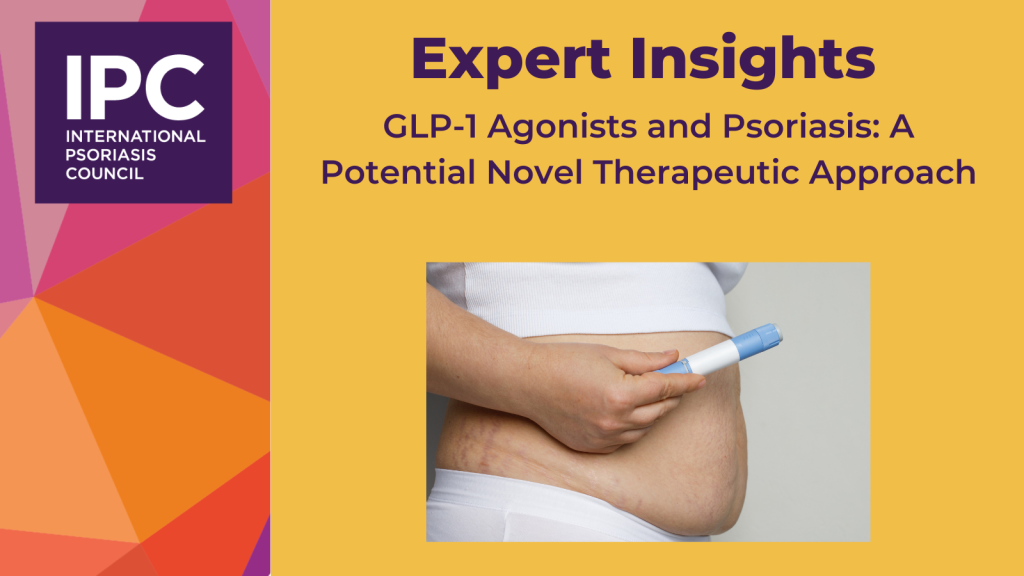
- GLP-1 agonists, originally developed to treat type 2 diabetes and obesity, are now being explored as a potential therapy for psoriasis.
- Obesity contributes to systemic inflammation and is a known risk factor for psoriasis and psoriatic arthritis, with higher BMI linked to increased disease severity.
- Weight loss through diet, exercise, or bariatric surgery has been shown to improve psoriasis outcomes and response to treatment.
- Preliminary studies suggest GLP-1 agonists may help improve psoriasis symptoms, though larger clinical trials are still needed to confirm their effectiveness.
- GLP-1 agonists may offer a promising new approach to managing psoriasis by reducing body fat and inflammation, addressing both conditions simultaneously.
Psoriasis, Obesity, and the Potential Role of GLP-1 Agonists
Psoriasis is a chronic immune-mediated skin condition characterized by systemic inflammation. Obesity is a known risk factor for psoriasis, often contributing to both its onset and severity, in addition to its associated comorbidities such as metabolic syndrome, cardiovascular disease, and dyslipidemia.1 Glucagon-like peptide-1 (GLP-1) agonists are novel therapeutic agents developed to manage type 2 diabetes and obesity by regulating blood sugar levels and increasing satiety. Given the link between psoriasis and obesity, addressing obesity may offer a promising approach to improving psoriasis outcomes in those affected by both conditions. GLP-1 agonists are currently being explored as a therapeutic strategy, not only for obesity but also as an adjunctive treatment for psoriasis and chronic inflammatory conditions.
GLP-1 Agonists Help Maintain Blood Sugar Levels
GLP-1 agonists, also known as GLP-1 receptor agonists, GLP-1 analogs, or incretin mimetics, are medications that stimulate the pancreas to produce more insulin after meals, helping to regulate blood glucose levels within a normal range. Additionally, GLP-1 agonists slow gastric emptying, reduce postprandial glucagon, lower food intake, and increase satiety. The United States Food and Drug Administration (FDA) has approved GLP1-agonists for managing type 2 diabetes, with several also approved for treating obesity without diabetes. Since the approval of the first GLP-1 agonist, exenatide, in 2005, the list of GLP-1 agonists has continued to expand. It now includes dulaglutide (Trulicity), exenatide (Byetta), exenatide extended release (Bydureon BCise), liraglutide (Victoza), lixisenatide (Adlyxin), semaglutide subcutaneous (Ozempic), and semaglutide tablets (Rybelsus). A related class of medications called dual GLP-1/GIP (glucose-dependent insulinotropic polypeptide) receptor agonist is also available as tirzepatide (Mounjaro).
The Role of Adipocytes in Systemic Inflammation
The FDA currently approves semaglutide and liraglutide to help treat obesity. Obesity is a common health condition characterized by the accumulation of excess body fat. It is typically diagnosed using the body mass index (BMI), which is calculated by dividing an individual’s body weight in kilograms by the square of the height in meters. The World Health Organization (WHO) classifies BMI in adults in the following way: A BMI between 18.5-24.9 is normal, 25-29 is overweight, and more than 30 is obesity.2 Although recently, new evidence suggests that focusing on an individual’s metabolic state may provide a more comprehensive measure of obesity, such as central adiposity measures (including visceral adiposity index and waist circumference), systolic blood pressure, and markers of insulin resistance.3
“GLP-1 agonists, which have shown effectiveness comparable to bariatric surgery, offer promise in treating not only diabetes and obesity but also chronic inflammatory skin conditions such as psoriasis.”
The Link between Obesity, Psoriasis, and Psoriatic Arthritis
Obesity contributes to systemic inflammation by producing inflammatory complement factors, adipokines, cytokines, and chemokines by adipocytes.2 Key cytokines, including TNF-alpha, IL-6, and IL-17, produced by adipose tissue, play a known pivotal role in the pathogenesis of psoriasis.2 As a result, obesity is considered a low-grade inflammatory condition that may exacerbate patients with concurrent psoriasis. As demonstrated in the study by Langan et al., a population-based, cross-sectional study from the Health Improvement Network Study, which included 44,715 individuals, psoriasis was found to be significantly associated with metabolic syndromes (adjusted odds ratio 1.41, 95% confidence interval [CI] 1.31–1.51).4 The study also revealed a dose-response relationship with obesity prevalence increasing by 14%, 34%, and 66% in individuals with mild, moderate, and severe psoriasis, respectively.4
Furthermore, obesity is not only a risk factor for psoriasis but also may contribute to disease progression and the development of psoriatic arthritis, the most common comorbidity associated with psoriasis affecting 6-10% of psoriasis patients.5 A cohort study involving 75,39 individuals with psoriasis over a 15-year period, representing the broader United Kingdom population, found that obesity was associated with a higher risk of developing PsA.6 Similarly, the Nurses Health Study II in the United States, involving 89,049 women over 14 years, revealed that higher BMI was associated with an increased likelihood of developing PsA.7
Treating Obesity has been Shown to Improve Psoriasis
Patients with lower body mass index tend to respond better to psoriasis treatments. For example, a multicentric retrospective study of 504 psoriasis patients treated with biologics found that subjects with a BMI <30 were more likely to achieve complete resolution as compared to those who were obese (54.90 vs. 43.45% at week 12; 66.84 vs. 56.55% at week 24).8 In support of this theory, a case report highlighted a patient who achieved full remission of psoriasis from bariatric surgery, which is often considered a permanent weight loss solution.9 Similarly, weight loss in diet and exercise have also been shown to help prevent and improve psoriasis.10
Although current studies show mixed results, GLP-1 agonists have also demonstrated the potential to improve psoriasis. There is still a lack of large-scale randomized controlled trials examining GLP-1 agonists and psoriasis, although some are currently underway. In a small study involving 25 patients with type 2 diabetes randomized to liraglutide versus controls, psoriasis symptoms improved in those on liraglutide.11 Another smaller study of seven obese patients with psoriasis and type 2 diabetes on liraglutide also showed BMI reduction and improvement in psoriasis plaques.12 Conversely, in a separate study of 20 obese patients without diabetes who were randomized to liraglutide versus placebo for 8 weeks, no significant changes were observed in the psoriasis area and severity index (PASI), dermatology life quality index (DLQI or high sensitive C-reactive protein (hsCRP) levels in the liraglutide group compared to the placebo group.13 However, the liraglutide treatment did result in a significant reduction in cholesterol, as well as weight loss of 4.7 ± 2.5 kg, compared with 1.6 ± 2.7 kg.13
Obesity and Psoriasis Share Similar Inflammatory Profiles
Obesity and psoriasis are distinct conditions yet share similar inflammatory pathways, each exacerbating the other. While weight loss through diet and exercise has been attempted to manage psoriasis successfully, these approaches are challenging to maintain over time. Bariatric surgery, often considered a permanent solution for obesity, is not accessible or suitable for everyone. GLP-1 agonists, which have shown effectiveness comparable to bariatric surgery, offer promise in treating not only diabetes and obesity but also chronic inflammatory skin conditions such as psoriasis. Although the therapeutic effects of GLP-1 agonists on psoriasis remain unclear, their potential benefits may stem from their anti-inflammatory properties and the ability to reduce body fat, which could contribute to improved outcomes for weight loss and psoriasis. Further research is needed to explore the therapeutic effects of GLP-1 agonists on psoriasis and the underlying mechanisms driving their use.
References
- Czarnecka A, Zabłotna M, Purzycka-Bohdan D, et al. An Observational Study of 147 Psoriasis Patients: Overweightness and Obesity as a Significant Clinical Factors Correlated with Psoriasis. Medicina (Kaunas). 2023;59(11):2006. Published 2023 Nov 15. doi:10.3390/medicina59112006.
- MacDonald I, Liu SC, Huang CC, et al. Associations between Adipokines in Arthritic Disease and Implications for Obesity. Int J Mol Sci. 2019;20(6):1505. doi:10.3390/ijms20061505.
- Mintoff D, Agius R, Fava S, et al. Investigating Adiposity-Related Metabolic Health Phenotypes in Patients with Hidradenitis Suppurativa: A Cross-Sectional Study. Journal of Clinical Medicine. 2023; 12(14):4847. doi.org/10.3390/jcm12144847.
- Langan SM, Seminara NM, Shin D, et al. Prevalence of Metabolic Syndrome in Patients with Psoriasis: A Population-based Study in the United Kingdom. J Investig Dermatol. 2012;132(3 Pt 1):556-562. doi:10.1038/jid.2011.365.
- MacDonald I, Liu SC, Huang CC, et al. Associations between Adipokines in Arthritic Disease and Implications for Obesity. Int J Mol Sci. 2019;20(6):1505. doi:10.3390/ijms20061505.
- Thorvardur JL, Yanyan Z, Yuqing Z, et al. Obesity and the Risk of Psoriatic Arthritis: A Population-based Study. Ann Rheum Dis. 2012;71(8):1273-1277. doi:10.1136/annrheumdis-2012-201299.
- Sobhan M, Farshchian M. Associations between Body Mass Index and Severity of Psoriasis. Clin Cosmet Investig Dermatol. 2017 Nov 24;10:493-498. doi: 10.2147/CCID.S147236.
- Gisondi P, Del Giglio M, Di Francesco V, et al. Weight Loss Improves the Response of Obese Patients with Moderate to Severe Chronic Plaque Psoriasis to Low-dose Cyclosporine Therapy: A Randomized, Controlled, Investigator-blinded Clinical Trial. Am J Clin Nutr. 2008;88(5):1242-1247. doi:10.3945/ajcn.2008.26427.
- Nicolescu AC, Bucur Ș, Giurcăneanu C, et al. Prevalence and Characteristics of Psoriasis in Romania-First Study in Overall Population. Journal of Personalized Medicine. 2021; 11(6):523. doi.org/10.3390/jpm11060523.
- Paroutoglou K, Papadavid E, Christodoulatos GS, et al. Deciphering the Association between Psoriasis and Obesity: Current Evidence and Treatment Considerations. Curr Obes Rep. 2020 Sep;9(3):165-178. doi: 10.1007/s13679-020-00380-3.
- Lin L, Xu X, Yu Y, et al. Glucagon-like peptide-1 Receptor Agonist Liraglutide Therapy for Psoriasis Patients with Type 2 diabetes: A Randomized-controlled Trial. J Dermatolog Treat. 2022;33(3):1428-1434. doi:10.1080/09546634.2020.1826392.
- Chen P, Xu X, Lin L, et al. Treatment with Liraglutide, a Glucagon-like Peptide-1 Analogue, Effectively Improves Skin Lesions in Psoriasis Patients with Type 2 Diabetes: A Prospective Cohort Study. Diabetes Res Clin Pract. 2019;150:47-54. doi:10.1016/j.diabres.2019.03.002.
- Faurschou A, Gyldenløve M, Rohde U, et al. Lack of Effect of the Glucagon-like Peptide-1 Receptor Agonist Liraglutide on Psoriasis in Glucose-tolerant Patients–A Randomized Placebo-Controlled Trial. J Eur Acad Dermatol Venereol. 2015;29(3):555-559. doi:10.1111/jdv.12629.