- IPC GENERAL
- IPC News, IPC Partners, Research
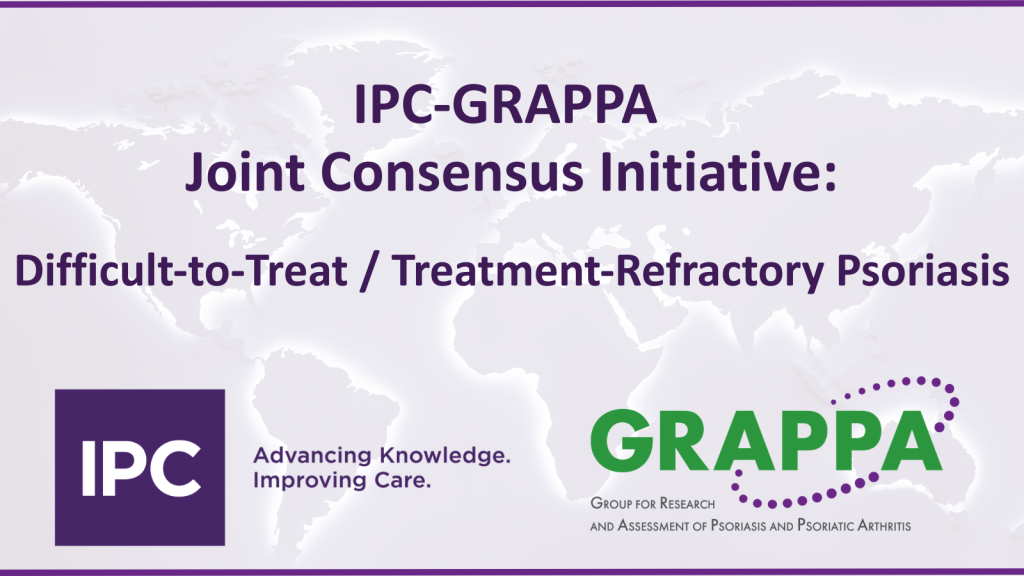
The International Psoriasis Council (IPC) and the Group for Research and Assessment of Psoriasis and Psoriatic Arthritis (GRAPPA) are partnering on a new global consensus initiative focused on difficult-to-treat and treatment-refractory psoriasis.
By bringing together expertise in dermatology and rheumatology, this effort aims to establish clear definitions, address gaps in terminology, and identify research and clinical management priorities. The initiative will follow a structured, international consensus process, with outputs including peer-reviewed publications and practical guidance to support care worldwide.
Why This Initiative Is Needed
Despite advances in treatment, a subset of patients continues to experience persistent disease burden or inadequate response to multiple therapies. At the same time, terminology such as “difficult-to-treat” and “treatment-refractory” psoriasis is used inconsistently across clinical practice and research, making it challenging to compare studies, guide treatment decisions, and align on care pathways.
A Structured, Global Approach
The initiative is designed as a 15-month, multi-phase consensus process led jointly by IPC and GRAPPA. It will include a global Steering Committee and Working Group, bringing together dermatology and rheumatology perspectives along with patient input.
Key phases include a scoping review, stakeholder surveys, and iterative consensus development using established methodologies, followed by broad community endorsement and dissemination.
Planned Outputs
The collaboration will result in:
- Consensus definitions for difficult-to-treat and treatment-refractory psoriasis
- Operational criteria to support use in clinical practice and research
- A joint IPC and GRAPPA manuscript and related publications
- Practical tools to support implementation in clinics, registries, and trials
Looking Ahead
By aligning terminology and establishing clear definitions, this initiative aims to support more consistent clinical decision-making, improve research comparability, and ultimately enhance care for people living with psoriasis.