- IPC GENERAL
- Congress Reports, Drug Approvals, Psoriasis Around the World, Research, Treatment
INTRODUCTION
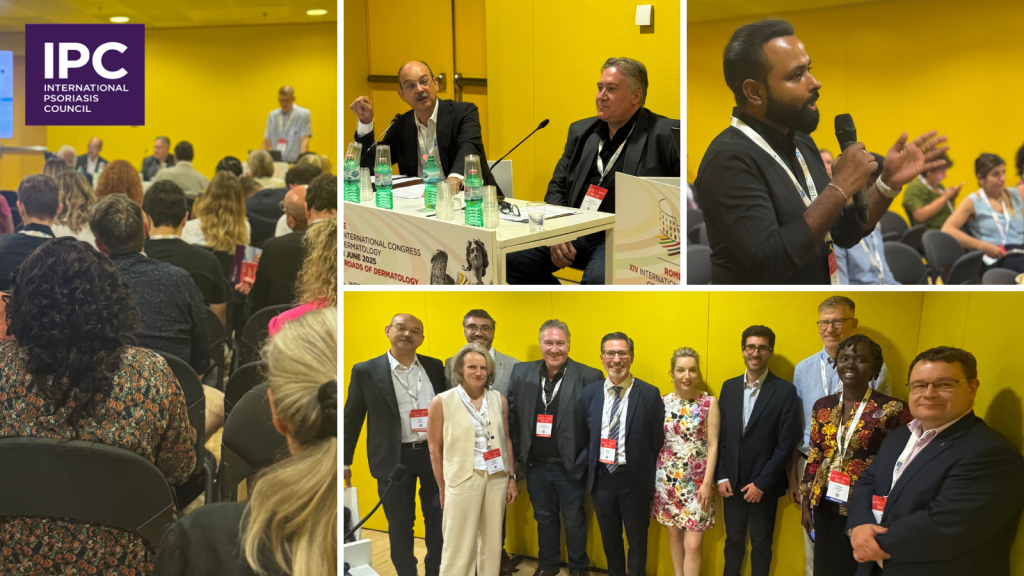
Held in Rome, Italy, the XIV International Congress of Dermatology (ICD) brought together global dermatology leaders to discuss pressing skin health topics. As part of this prestigious event, the International Psoriasis Council (IPC) hosted a half-day symposium titled Advancing Biosimilars and Optimizing Psoriasis Treatment on June 18, 2025. Featuring Councilors and Fellows from across five continents, the IPC-led program offered a comprehensive look at biosimilars’ development, regulation, and regional uptake, followed by case-based discussions on treatment optimization. This blog post summarizes each presentation from the IPC symposium, highlighting the latest developments in biosimilar use and strategies for optimizing psoriasis treatment worldwide.
SECTION 1: BIOSIMILARS
Development and Quality Standards of Biosimilars
Thomas Kirchlechner, PhD, Austria
Regulatory Uptake and the Impact on Healthcare Costs (UK example)
Catherine Smith, MD, United Kingdom
Regional Update of Biosimilars – Europe
Adam Reich, MD, PhD, Poland
Regional Update of Biosimilars – Asia
Yuling Shi, MD, PhD, China
Regional Update of Biosimilars – Latin America
Fernando Valenzuela, MD, Chile
Regional Update of Biosimilars – Africa
Olusola Ayanlowo, MSc, MD, Nigeria
SECTION 2: TREATMENT OPTIMIZATION
Treatment Optimization
Paolo Gisondi, MD, Italy
Clinical Case: Treatment Optimization with Biologics or Biosimilars
Josep Riera-Monroig, MD, Spain
Clinical Case: Treatment Optimization with Combination Therapy
Maria-Angeliki Gkini, MD, MSc, PhD, FRCP, United Kingdom
SECTION 1: BIOSIMILARS
Development and Quality Standards of Biosimilars
Thomas Kirchlechner, MSc, PhD
SANDOZ
Kundl, Austria
Dr. Thomas Kirchlechner opened the symposium with a foundational overview of biosimilar development and regulatory standards. He defined biosimilars as biologic products highly similar to an approved reference product, with no clinically meaningful differences in safety, purity, or potency. The term “biosimilar” reflects a product that has undergone a stringent regulatory approval pathway supported by analytical and clinical data.
Unlike traditional drug development, which begins with large-scale clinical trials, biosimilar development emphasizes a “totality of evidence” approach. This includes detailed structural and functional analyses, pharmacokinetics (PK), and pharmacodynamics (PD), which are more sensitive than clinical efficacy trials in detecting potential differences between a biosimilar and its reference product. Kirchlechner noted that numerous studies have shown clinical efficacy trials rarely influence regulatory decisions for biosimilars and often fail to predict approval outcomes when analytical and PK data are strong.¹ ²
He described how regulatory science has evolved to support more streamlined development processes. Regulatory agencies such as the Medicines and Healthcare products Regulatory Agency (MHRA), European Medicines Agency (EMA), and US Food and Drug Administration (FDA) have begun accepting reduced clinical trial requirements when analytical evidence is sufficient.³ This evolution is intended to address the growing “biosimilar void,” or the lack of competition for many biologics, and to increase patient access to cost-effective treatments.
Finally, Kirchlechner outlined the high manufacturing standards that underpin biosimilar quality at Sandoz. These include adherence to quality-by-design principles, current Good Manufacturing Practices (cGMP), and International Council for Harmonisation (ICH) guidelines, with rigorous oversight of internal and external production processes.⁴
References
- Kirsch-Stefan J, Reusch M, Tadayoni R, et al. BioDrugs. 2023;37:855-871.
- Guillen G, Woodcock J, Behrman R, et al. Clin Pharmacol Ther. 2023;113:108-123.
- European Medicines Agency. Statement on the scientific rationale supporting interchangeability. https://www.ema.europa.eu/en/documents/public-statement/statement-scientific-rationale-supporting-interchangeability-biosimilar-medicines-eu_en.pdf. Accessed June 2024.
- US Food and Drug Administration. Current Good Manufacturing Practice (CGMP) Regulations. https://www.fda.gov/drugs/pharmaceutical-quality-resources/current-good-manufacturing-practice-cgmp-regulations. Accessed September 2022.
Regulatory Uptake and the Impact on Healthcare Costs (UK example)
Catherine Smith, MD, IPC Board Member
St John’s Institute of Dermatology, Guys and St Thomas’ Hospitals
London, United Kingdom
IPC Board Member Dr. Catherine Smith presented an overview of the United Kingdom’s approach to biosimilar adoption, emphasizing the importance of regulatory structure, clinician engagement, and real-world implementation. She outlined how multiple factors, including prescriber confidence, professional networks, infrastructure capacity, and national health commissioning policies, have shaped biosimilar uptake in the United Kingdom.
In general, the introduction of the earlier biosimilars (infliximab, etanercept) was relatively slow compared to adalimumab, in part driven by the ambitious target set by the UK government that 90 percent of new patients be started on adalimumab biosimilars within 3 months of launch, and 80 percent of existing patients were switched within the first year.¹ Data from the British Association of Dermatologists Biologic Interventions Register (BADBIR) provided insights into real-world switching outcomes. Factors such as being male made switching more likely, whereas those with diabetes or more severe disease were less likely to switch to the biosimilar.² Data from BADBIR and other large-scale data sources in Spain and France also confirmed that adalimumab biosimilars are as effective as the originator in new starters. Notably, however, drug survival was somewhat attenuated in those who switched (from the originator) compared to those who continued, possibly related, at least in part, to the nocebo effect, and underscoring the need for clinician-led pathways and consistent follow-up.³
Looking forward, NHS England estimates that broader adoption of biosimilars, including those for ustekinumab, could generate up to £1 billion in savings by 2028. These cost-avoidance opportunities depend on early planning, multi-stakeholder education, and a supportive regulatory framework.⁴ The substantial reduction in drug-acquisition costs of these highly effective medicines means that in certain settings, their earlier introduction in the treatment pathway may be cost-effective.
References
- NHS England. Commissioning Framework for Biological Medicines (Including Biosimilars). https://www.england.nhs.uk/long-read/commissioning-framework-for-best-value-biological-medicines/. Accessed July 2025.
- Mason KJ, Yiu ZZN, Warren RB, et al. Br J Dermatol. 2023;189(1):e45-e54. doi:10.1093/bjd/ljad107
- Rezk MF, Pieper B. Pharmaceutical Medicine. 2024;38(2):119–130. doi:10.1007/s40290-024-00541-y
- Prichard A. NHS England. Statement on Biosimilar Opportunity. 2025.
Regional Uptake of Biosimilars – Europe
Adam Reich, MD, PhD, IPC Councilor
University of Rzeszów
Rzeszów, Poland
IPC Councilor Dr. Adam Reich presented an overview of biosimilar uptake across Europe, highlighting both the progress and persistent disparities between countries. Biosimilars, highly similar to reference biologics in structure, efficacy, and safety, represent a growing share of pharmaceutical expenditures. As of 2022, the European biosimilars market was valued at approximately 9 billion euros, accounting for about 11 percent of all biologics.
He provided country-specific examples demonstrating how financial incentives and national policies have influenced biosimilar adoption. In France, hospitals were rewarded with up to 30 percent of the savings generated from prescribing biosimilars, resulting in more than 80 percent market penetration by volume in the hospital setting in 2021.¹ In Ireland, a program offering €500 to clinical departments for each patient initiated or switched to a biosimilar led to a rapid increase in etanercept use from 2 percent to over 45 percent within one year.²
In England, biosimilars reached a 72 percent market share by revenue, supported by Clinical Commissioning Groups that manage physician budgets and encourage cost-effective prescribing. Germany has seen similar success, with biosimilar use reaching 78 percent, aided by prescription quotas and gain-sharing models.¹ Spain, while somewhat lower at 62 percent, has focused on hospital-based prescribing.
In contrast, Poland continues to lag. Although an estimated 160,000 to 200,000 individuals have moderate to severe psoriasis, fewer than 7,000 patients were treated with biologics in 2024.³ Dr. Reich noted that while biosimilar-related savings in Poland have improved access to innovative treatments, biosimilars’ uptake remains limited.
He concluded that national incentive models tailored to local healthcare systems are essential for ensuring biosimilar adoption and sustaining long-term healthcare affordability.
References
- IQVIA. Incentives for Using Biosimilars in France and Europe. https://www.iqvia.com/-/media/iqvia/pdfs/france/white-paper/incentives-for-using-biosimilars-in-france-and-europe.pdf. Published 2022. Accessed June 15, 2025.
- IQVIA. Incentives for Using Biosimilars in France and Europe (Ireland section). https://www.iqvia.com/-/media/iqvia/pdfs/france/white-paper/incentives-for-using-biosimilars-in-france-and-europe.pdf. Published 2022. Accessed June 15, 2025.
- Reich A, Adamski Z, Chodorowska G, et al. Psoriasis. Diagnostic and Therapeutic Recommendations of the Polish Dermatological Society. Part 1. Dermatol Rev/Przegląd Dermatologiczny. 2020;107(2):92-108. doi:10.5114/dr.2020.95258.
Regional Uptake of Biosimilars – Asia
Yuling Shi, MD, PhD, IPC Councilor
Shanghai Skin Disease Hospital, Tongji University School of Medicine
Shanghai, China
IPC Councilor Dr. Yuling Shi provided an overview of biosimilar availability and adoption in Asia, primarily focusing on China. While biologic therapies have significantly advanced the treatment of psoriasis, access remains limited due to high costs and insurance restrictions. Despite clinical need, many patients with a high disease burden but limited body surface area involvement cannot obtain biologics.
In response, several biosimilars have been developed and approved in China. For infliximab, the biosimilar GB242 (Jiayoujian®) demonstrated similar pharmacokinetics, safety, and immunogenicity to the reference product in both phase I and phase III studies.¹ The adalimumab biosimilar TQ-Z2301 (Taibowei®) was found to be equivalent in efficacy and safety to its reference in patients with ankylosing spondylitis. Etanercept biosimilar Yisaipu®, combined with methotrexate, also showed positive outcomes in moderate to severe plaque psoriasis.²
For ustekinumab, QX001S (Sailexin®) demonstrated pharmacokinetic biosimilarity and a numerically higher PASI 75 response rate than the originator, although this was not statistically significant.³ As of 2025, no biosimilars for interleukin (IL)-17 or IL-23 inhibitors are available in China due to ongoing patent protections.
However, several novel biologics developed domestically, including ebedarokimab ( anti-IL12 IL23), vunakizumab (anti-interleukin (IL)-17A) , and xeligekimab (anti-interleukin (IL)-17A), are showing encouraging results in clinical trials.⁴ These agents reflect growing innovation in psoriasis care across China and the broader Asia region.
References
- Liu Y, Wang L, Zhou Y, et al. Drug Des Devel Ther. 2022;16:1805-1814.
- Zhang L, Yang H, Zhang Y, et al. J Dermatolog Treat. 2023;34(1):e1-e7.
- Li J, Xu J, Chen Y, et al. Expert Opin Biol Ther. 2024;24(3):253-260.
- Shi Y, Zhang W, Sun X, et al. Chin J Dermatol. 2024;57(5):345-352.
Regional Uptake of Biosimilars – Latin America
Fernando Valenzuela, MD, IPC Councilor
University of Chile, University of the Andes
Santiago, Chile
IPC Councilor Dr. Fernando Valenzuela presented a regional analysis of biosimilar adoption across Latin America, highlighting the opportunities and ongoing challenges in expanding access to biologic therapies. While national regulatory authorities approve biosimilars in most countries, real-world integration into clinical practice remains variable.
Dr. Valenzuela conducted a cross-sectional, web-based survey of psoriasis experts across the region to understand current trends better. Respondents reported that anti–tumor necrosis factor (TNF) biosimilars are generally available in public systems. However, automatic interchangeability policies and requirements for step therapy vary widely. In many countries, patients are not consistently informed when switched between biosimilars or from an originator biologic, raising concerns about pharmacovigilance and patient trust.
Most respondents agreed that biosimilars have improved access to biologic therapies and increased affordability, and reported advantages included broader treatment availability and expanded coverage within public healthcare systems. At the same time, barriers persist. These include limited physician familiarity, absence of patient support programs, concerns about efficacy, and institutional policies that create uncertainty in prescribing decisions. Some clinicians also cited stock shortages and the presence of multiple biosimilars for the same agent, making product selection difficult.¹
Dr. Valenzuela concluded that while biosimilars offer a critical path to equitable care in Latin America, successful implementation depends on harmonized national policies, consistent prescriber education, and transparent patient communication. Strengthening infrastructure for pharmacovigilance and fostering clinician trust will be essential to optimize biosimilar uptake and improve long-term outcomes across the region.
References
- Moorkens E, Vulto AG, Huys I. Biosimilars in Latin America: A Review of the Landscape. Pharmaceuticals (Basel). 2020;13(12):430.
- Gamboa O, et al. Improving Access to Biologic Therapies Through Biosimilars in Latin America: Policy Considerations. Lancet Reg Health Am. 2023;17:100388.
Regional Uptake of Biosimilars – Africa
Olusola Olabisi Ayanlowo, MSc, MD, IPC Councilor
University of Lagos, Nigeria: Lagos University Teaching Hospital
Lagos, Nigeria
IPC Councilor Dr. Olusola Ayanlowo explored the current landscape of biosimilar use across Africa, highlighting both the promise and the practical barriers to broader adoption. While biosimilars are considered an essential strategy for improving access to biologic therapies, their uptake across the continent remains limited and uneven.
In many African countries, the regulatory environment for biosimilars is still emerging. Some, such as South Africa and Egypt, have made progress in developing approval frameworks and pharmacovigilance systems. In contrast, others rely heavily on guidance from the World Health Organization (WHO) and the European Medicines Agency (EMA). Nigeria, for example, has approved a limited number of biosimilars through its National Agency for Food and Drug Administration and Control, based on external regulatory models rather than a stand-alone biosimilar policy.¹
Barriers to uptake include inconsistent regulatory processes, limited public insurance coverage, high out-of-pocket costs, and skepticism among prescribers and patients. Infrastructure challenges, such as inadequate cold chain systems, restrict availability in rural and underserved regions.²
Despite these limitations, Dr. Ayanlowo emphasized the continent’s growing potential. Rising rates of noncommunicable diseases are increasing demand for biologic therapies, and biosimilars offer a more affordable option. Regional and international initiatives, including support from the WHO, the African Medicines Agency, and the Partnership for African Vaccine Manufacturing, are creating opportunities to streamline regulatory pathways and expand local production.³
She concluded that with improved education, supportive health policies, and investment in infrastructure, biosimilars could significantly enhance access to life-saving treatments across Africa.
References
- Rathore AS, Bhargava A. Biosimilars in Developed Economies: Overview, Status, and Regulatory Considerations. Regul Toxicol Pharmacol. 2020;110:104525. doi:10.1016/j.yrtph.2019.104525
- Perry T, ed. Biosimilars or Biologics: What’s the Difference? Therapeutics Letter. 2019;123. https://www.ncbi.nlm.nih.gov/books/NBK598450/. Accessed June 2025.
- World Health Organization. Regional Frameworks and Guidance on Biosimilars. https://www.who.int/publications/i/item/9789240027794. Accessed June 2025.
SECTION 2: TREATMENT OPTIMIZATION
Treatment Optimization
Paolo Gisondi, MD, IPC Councilor
University of Verona
Verona, Italy
IPC Councilor Dr. Paolo Gisondi provided a comprehensive overview of treatment optimization strategies for patients with psoriasis, focusing on individualizing biologic therapy to maximize efficacy while minimizing risks and costs. He defined treatment optimization as tailoring medical treatment to achieve the best therapeutic outcome with the least harm, based on clinical, pharmacologic, and practical considerations.
When disease control is achieved, treatment optimization may involve reducing the frequency of drug administration. This strategy, known as “spacing,” has been shown in trials such as the GUIDE study and the BeNeBio study to maintain clinical control in selected patients using agents like guselkumab and other biologics.¹ ² However, Dr. Gisondi noted that reduced dosing could increase the risk of anti-drug antibody development, particularly with more immunogenic biologics.
He also shared real-world data from his clinical practice in Verona, including a prospective study evaluating as-needed dosing of risankizumab after achieving remission. Patients who relapsed could return for re-initiation, allowing for reduced drug exposure without loss of control.³
In contrast, patients who do not achieve remission may require dose escalation, increased frequency, or combination therapy. Dr. Gisondi reviewed safety data from phase 3 studies showing that alternate dosing strategies for secukinumab, bimekizumab, and ustekinumab did not significantly increase adverse events.⁴
He concluded by discussing scenarios in which combination therapy may be appropriate, such as adding methotrexate to adalimumab or combining a Janus kinase inhibitor with a biologic.⁵ Despite promising results, he emphasized the need for more randomized controlled trials to guide these strategies and to understand their impact on comorbidities such as cardiovascular disease and psoriatic arthritis.
References
- Atalay S, van den Reek JM, Prens EP, et al. Acta Derm Venereol. 2021;101(5):adv00463.
- van der Schoot LS, van Bezooijen JS, de Jong EM, et al. Trials. 2021;22:707.
- Gisondi P, Facheris P, Girolomoni G. J Eur Acad Dermatol Venereol. 2022;36:e713-e715.
- Augustin M, Thaçi D, Reich K, et al. Br J Dermatol. 2022;186(6):942-954.
- Yiu ZZN, Mason KJ, Warren RB, et al. JAMA Dermatol. Published online June 4, 2025. doi:10.1001/jamadermatol.2025.1463.
Clinical Case: Treatment Optimization with Biologics or Biosimilars
Josep Riera, MD, IPC Jr. Councilor
Hospital Clínic de Barcelona
Barcelona, Spain
IPC Jr. Councilor Dr. Josep Riera shared three clinical cases illustrating how treatment optimization with biologics or biosimilars can be safely and effectively implemented in real-world settings. Each case involved biologic-naïve patients with moderate to severe plaque psoriasis and demonstrated personalized approaches to adjusting dosing intervals over time.
In the first case, a 28-year-old woman with facial and scalp psoriasis started adalimumab biosimilar therapy. After achieving Psoriasis Area and Severity Index (PASI) 0 at three and six months, the treatment interval was progressively extended from every three to every six weeks over a two-year period, maintaining disease control throughout.
The second case involved a 74-year-old man with significant comorbidities, including diabetes, obesity, and latent tuberculosis. He had long-standing psoriasis with large plaques and genital involvement. After previous therapies provided limited benefit, he was started on risankizumab. The patient achieved PASI 0 within five months, demonstrating the efficacy of anti–interleukin (IL)-23 therapy even in older patients with complex health profiles.
The third case featured a 32-year-old woman with a history of guttate and plaque psoriasis. After treatment with adalimumab, she transitioned to ixekizumab, initially administered every four weeks, then spaced to every six weeks. She later resumed the original dosing schedule due to recurrence, highlighting the need for flexibility and individualized monitoring.
Dr. Riera concluded that optimization is feasible for select patients, especially those who are biologic-naïve, demonstrating a strong initial response. The absence of psoriatic arthritis, nail involvement, and early disease control may support interval extension. However, standardized guidelines are lacking, and decisions must be tailored to patient characteristics and preferences.
References
- Chen C, Zeng W, Jiang L, et al. Personalized Medicine for Psoriasis: Current Progress and Future Prospects. MedComm (2020). 2023;4(4):e315.
- Gisondi P, Facheris P, Girolomoni G. J Eur Acad Dermatol Venereol. 2022;36:e713-e715.
- Masson Regnault M, Barnetche T, Misery L, et al. Time to Relapse After Discontinuing Systemic Treatment for Psoriasis: A Systematic Review. Am J Clin Dermatol. 2022;23(4):433-447.
Clinical Case: Treatment Optimization with Combination Therapy
Maria-Angeliki Gkini, MD, MSc, PhD, FRCP, IPC Jr. Councilor
Barts Health NHS Trust and Queen Mary University
London, United Kingdom
IPC Jr. Councilor Dr. Maria-Angeliki Gkini presented a complex case of treatment optimization involving combination therapy in a 38-year-old woman with severe psoriasis and psoriatic arthritis (PsA). The patient had multiple comorbidities, including obesity, dyslipidemia, diabetes, and depression, and was initially treated with methotrexate and topicals.
Due to limited improvement and functional impairment, adalimumab biosimilar was initiated. Despite dose escalation to weekly injections, joint symptoms flared, prompting the addition of methotrexate. Although this combination improved skin and joint outcomes, the patient later developed new-onset hidradenitis suppurativa (HS), raising concern for a paradoxical reaction.¹ After evaluating adalimumab serum levels and antibody status, the treatment was switched to secukinumab with continued methotrexate. HS symptoms improved, and disease control was maintained, but elevated liver enzymes led to a multidisciplinary decision to discontinue methotrexate.
In subsequent months, apremilast was added to manage joint symptoms, reflecting the need for further optimization. Although there is limited evidence supporting the combination of secukinumab with methotrexate or other agents, case reports and observational studies suggest that dual or triple therapy may be effective in select patients with difficult-to-control disease.² ³
Dr. Gkini emphasized the importance of measuring biologic drug levels and antibody formation to guide clinical decisions, particularly in patients with loss of response. She also noted that paradoxical reactions may require drug class switching or combination therapy. A personalized, multidisciplinary approach remains critical when managing PsA with overlapping comorbidities and treatment challenges.
References
- Macca L, Girolomoni G, Malara A, et al. Hidradenitis Suppurativa and Psoriasis: The Odd Couple. Front Med (Lausanne). 2023;10:1208817.
- van der Kraaij G, Arends S, Spoorenberg A, et al. Adalimumab with Methotrexate vs. Adalimumab Monotherapy in Psoriasis: First-year Results of a Single-blind Randomized Controlled Trial. J Invest Dermatol. 2022;142(9):2375-2383.e6.
- Damiani G, Pacifico A, Maronese CA, et al. Secukinumab Loss of Efficacy is Counteracted by Combination Therapy: Real-life Data from an Italian Cohort. Pharmaceuticals. 2022;15(1):95.