

- Allison Truong, MD, FAAD
- Expert Insights, Quality of Life, Treatment

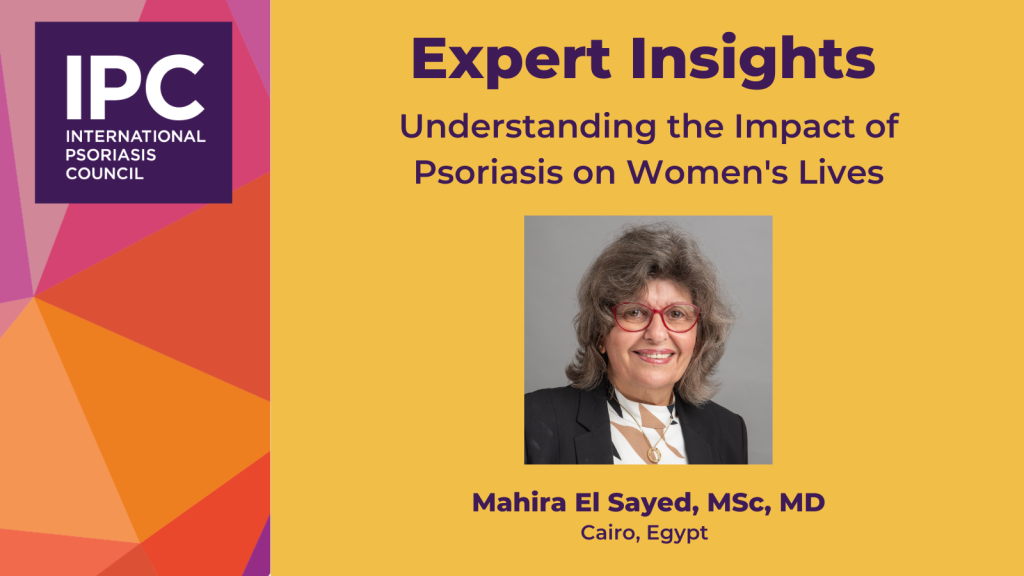
As a Professor of Dermatology and Venereology at Ain Shams University, Head of the Egyptian Board of Examinations, and member of the Ministry of Health committee for biological treatment of psoriasis, Dr. El Sayed has been committed to improving outcomes for psoriasis patients throughout her career. In a recent interview, Dr. El Sayed shared her clinical expertise in managing psoriasis in women at different life stages.
Tailored Management Strategies are Required for Women at Different Life Stages
Women with psoriasis face many considerations throughout their lives, such as during puberty, pregnancy, post-partum, and menopause. The impact of hormonal fluctuations, psychosocial stressors, and the need for tailored treatment strategies to address disease activity at different life stages make psoriasis more complex to manage in women.
“I have to consider a married woman at any age who has not had children. A lot of pregnancies are unplanned,” says Dr. El Sayed. For women of childbearing age, Dr. El Sayed reminds healthcare providers to consider safer medications during pregnancy. For example, acitretin is absolutely contraindicated and requires a prolonged period off the medication before pregnancy, whereas methotrexate, although also unsafe during pregnancy, can be discontinued and reinitiated more quickly.
Although psoriasis typically improves with pregnancy and tends to flare in the post-partum period. Dr. El Sayed notes that there are exceptions to this pattern. Dr. El Sayed prefers treating with certolizumab, an Fc-free anti-tumor necrosis factor (anti-TNF) drug, if available for women with moderate-severe psoriasis who are pregnant or breastfeeding. But if not readily available, her alternative is cyclosporine, which is not secreted in breast milk. As a reminder, she reminds providers to check the patient’s blood pressure while on cyclosporine to ensure the mother does not develop post-partum eclampsia. Other options for pregnancy and lactation for milder cases may include narrowband UVB and topical therapies.
A clinical scenario for a post-partum breastfeeding patient in a psoriasis flare may involve clinical visits every two months while on cyclosporine until breastfeeding ends. Then, overlapping another treatment, such as a biologic, while gradually tapering off cyclosporine.
Fortunately, according to Dr. El Sayed, all biologics and biosimilars are readily available in Egypt, but they remain expensive. National health insurance, private insurance programs, and state sponsorships may reimburse some or all of the cost. However, some patients may still have to pay out-of-pocket expenses. Biologics are life-saving for patients with psoriasis but may still be cost-prohibitive to some.
Psoriasis imposes a significant burden of disease on women's lives, not just physically but emotionally and socially.
Women with Psoriasis Suffer from Decreased Quality of Life
The burden of psoriasis in women contributes to lower happiness, more stress, more loneliness, and higher stigmatization. Social stigma can affect women with psoriasis more profoundly than men. “The cosmetic appearance of the disease and its exposed areas can affect the patient’s quality of life, well-being, psyche, and psychology,” says Dr. El Sayed.
Women of childbearing age, in particular, may feel added pressure. Some are brought in by their families who worry about the condition’s impact on their chances of marriage. Others may already be married but feel self-conscious, ashamed, or embarrassed about revealing their condition to their partners. To address these concerns, Dr. El Sayed encourages patients to bring their partners or spouses to appointments, where she educates them about the non-contagious nature of psoriasis. In some cases, psoriasis can even prevent women from seeking marriage altogether, as they may fear judgment or rejection due to their skin condition.
Future Directions for Women with Psoriasis
Psoriasis imposes a significant burden of disease on women’s lives, not just physically but emotionally and socially. Healthcare providers caring for this population must remain attentive, adjusting treatment plans to accommodate the various life stages women experience. Since conducting clinical trials in pregnant women with psoriasis remains challenging due to ethical concerns, treatment for this vulnerable patient population will continue to rely on clinical experience as well as a deep understanding of drug mechanisms and pharmacology.


Comments are closed.